Michael Smith
Editors’ Note:In October 2009, Michael Smith landed in Tokyo, Japan, accompanied by a colleague and students from the British school he taught at. Their third day in Japan sees the troupe in Hiroshima. Next on their itinerary would be Oita, Kyoto, and Tokyo again before Michael and company fly back West. Hiroshima for now; the rest in the next two instalments.
Day 3
Tokyo to Hiroshima
Following breakfast in a restaurant near the hotel, we departed Tokyo for Hiroshima. Starting from the oldest section of the high-speed Shinkansen network, the Tokaido, we transferred seamlessly onto the Sanyo Shinkansen line, heading at rapid speed for our destination of Hiroshima. The system was built to connect distant Japanese regions with Tokyo, thus aiding economic growth.
This was my first experience of high-speed rail. It is difficult to relate to the incredible raw speed of Japanese inter-city travel. I did a little experiment once we had reached what I judged to be top speed. I chose an approaching point approximately 100 metres from the trackside, then timed how long it stayed within my field of vision. The result was somewhere between one and two seconds. Naturally, this is only a rough experiment, but I hope it relates to the reader just how fast we were moving. (I later learned that the maximum operating speed is 320 km/h or 200 mph). Inside the carriage, however, the journey was perfectly smooth and quiet. To say I was impressed would be an understatement.
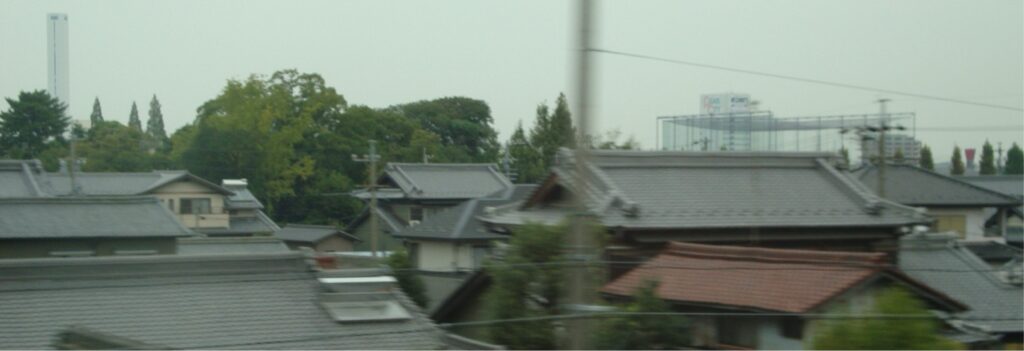
We travelled through one long, interminable conurbation. There were occasional areas of rural greenery, but these soon passed, to be replaced by more urban sprawl, Tokyo, followed by Yokohama, and so on. And every so often, I saw large structures, several storeys high, made entirely of poles and netting. I eventually worked out that these were driving ranges for the golf-crazy Japanese.
Not long after leaving Tokyo, we passed Mount Fuji, which was not quite the advertisers’ image we had been expecting. Most travel photos show the volcano as a background to beautiful blossom (sakura), amid perfect, rolling countryside. Our view proved to be a stark contrast to this. Smog hung over bleak industrial landscape, creating the impression of Fuji being some giant, twentieth-century slagheap blighting a mining town in northern England.
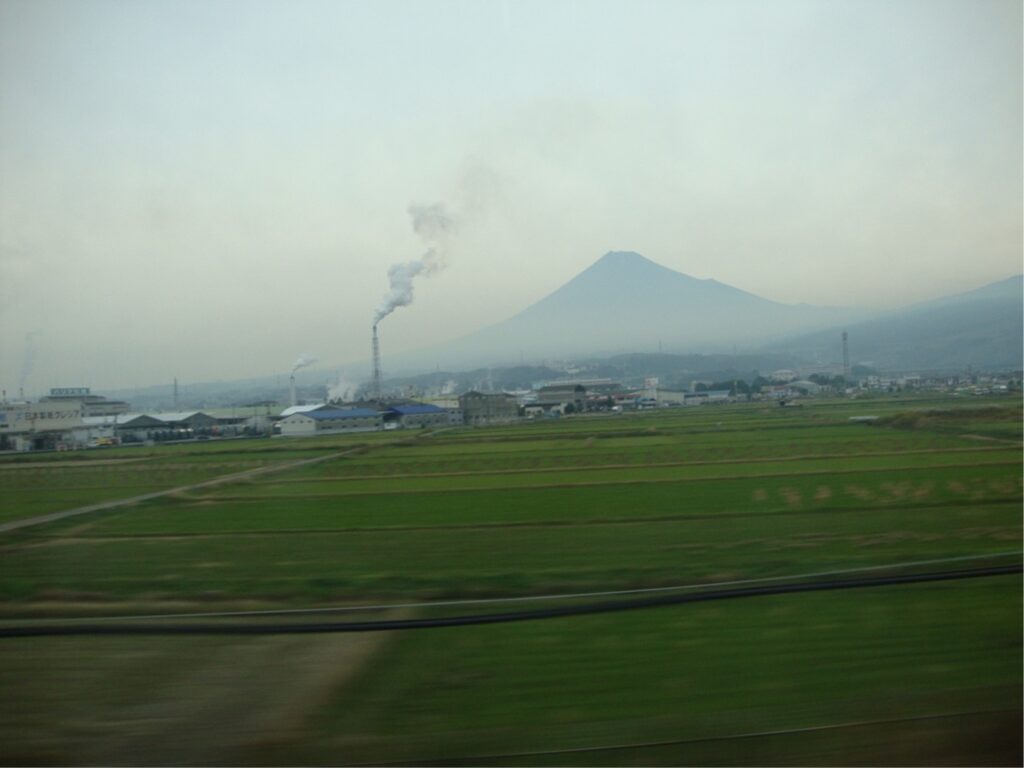
Mount Fuji is the highest mountain in Japan (3,776 m or 12,389 ft), and although classed as an active volcano, its last eruption was at the start of the eighteenth century. It is a major historic site, and one of Japan’s ‘Three Holy Mountains’. In 2013 it was added to the World Heritage List, and according to UNESCO, has “inspired artists and poets and been the object of pilgrimage for centuries.” Perhaps not today, though.
Hiroshima
Okonomi-mura
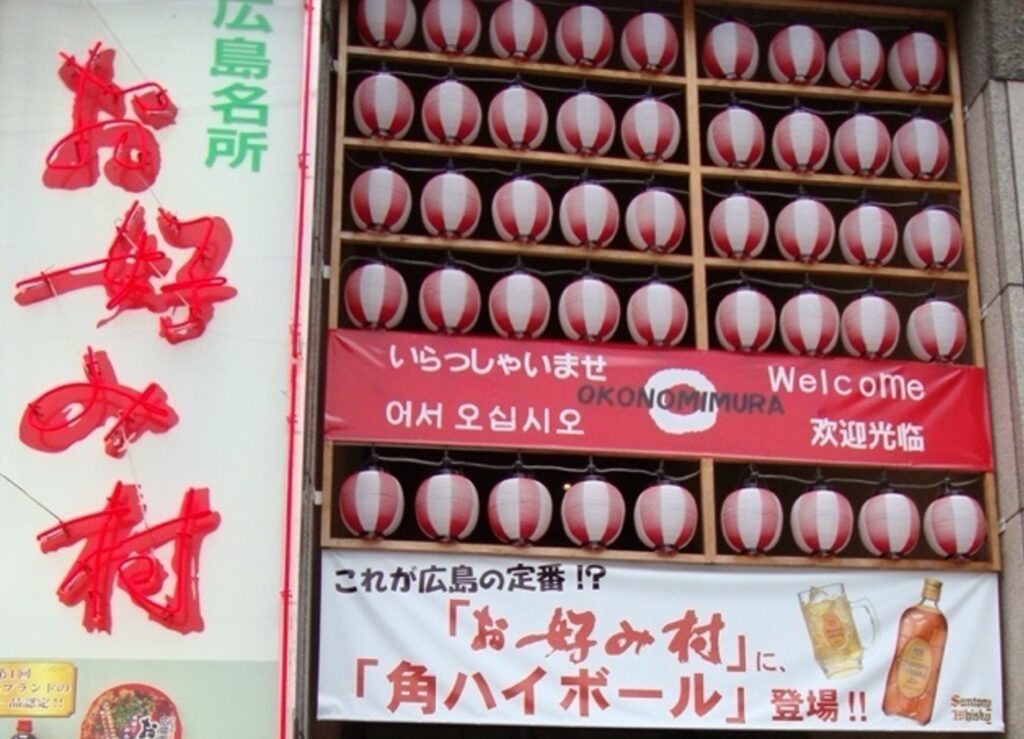
Although I had several preconceived ideas about Tokyo, this was not true of Hiroshima. Upon arrival, our first destination was Okonomi-mura (literally, ‘Okonomiyaki Village’), a collection of twenty-five ‘restaurants’ each serving a slightly different version of the local delicacy, Okonomiyaki. Altogether there are over 2000 such places throughout the city.
The original recipe, called Issen yōshoku, was simply a thin pancake topped with green onions and bonito flakes or shrimp. However, during the food scarcity following the atomic bombing of 1945, this recipe was adapted to become a cheap way for the surviving residents to eat, and since ingredients were difficult to obtain, many of the chefs began making it ‘cooked how you like it’ (or okonomiyaki), using whatever ingredients were available.
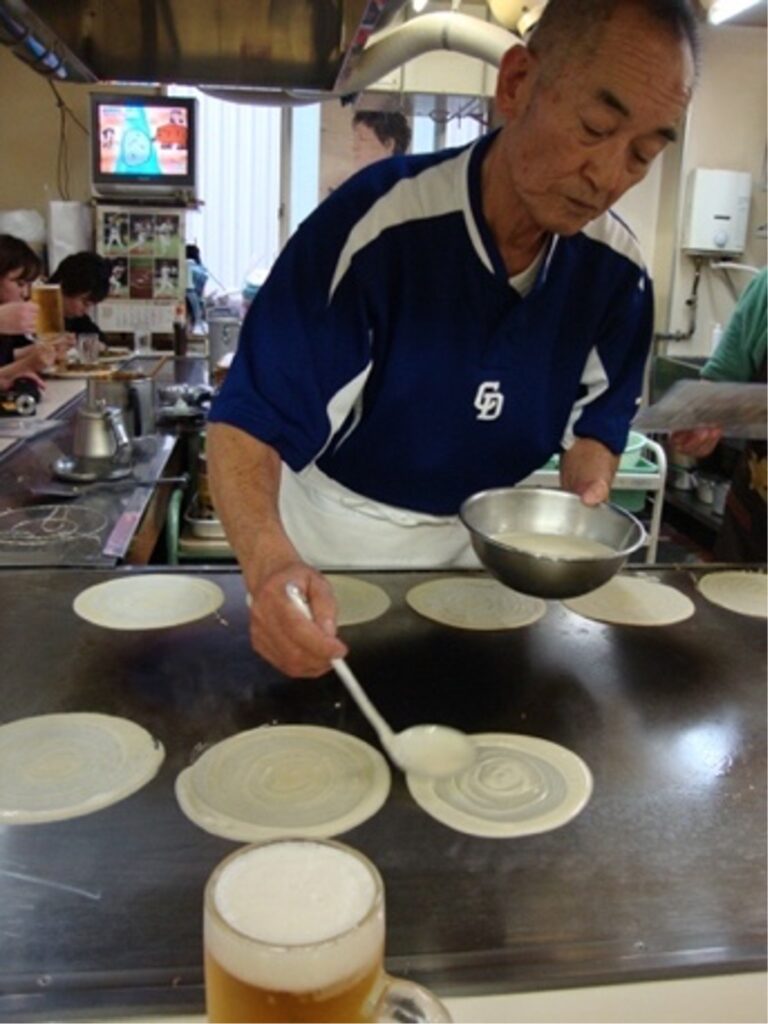
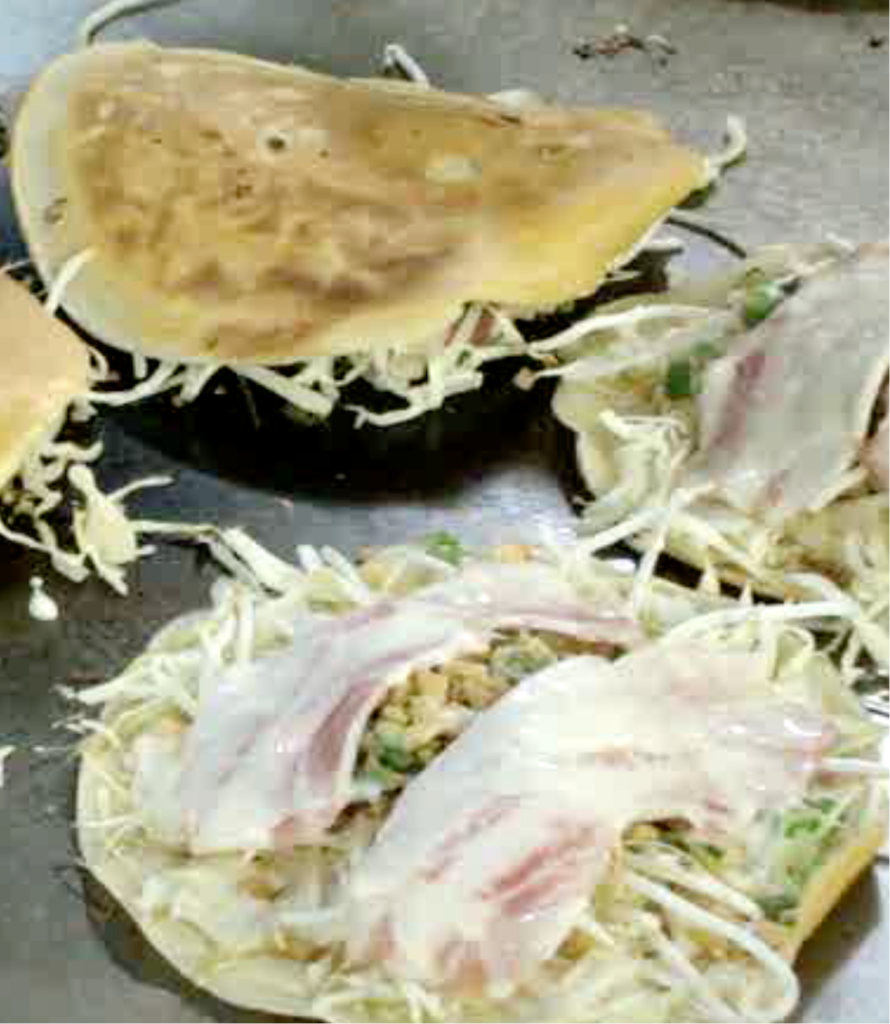
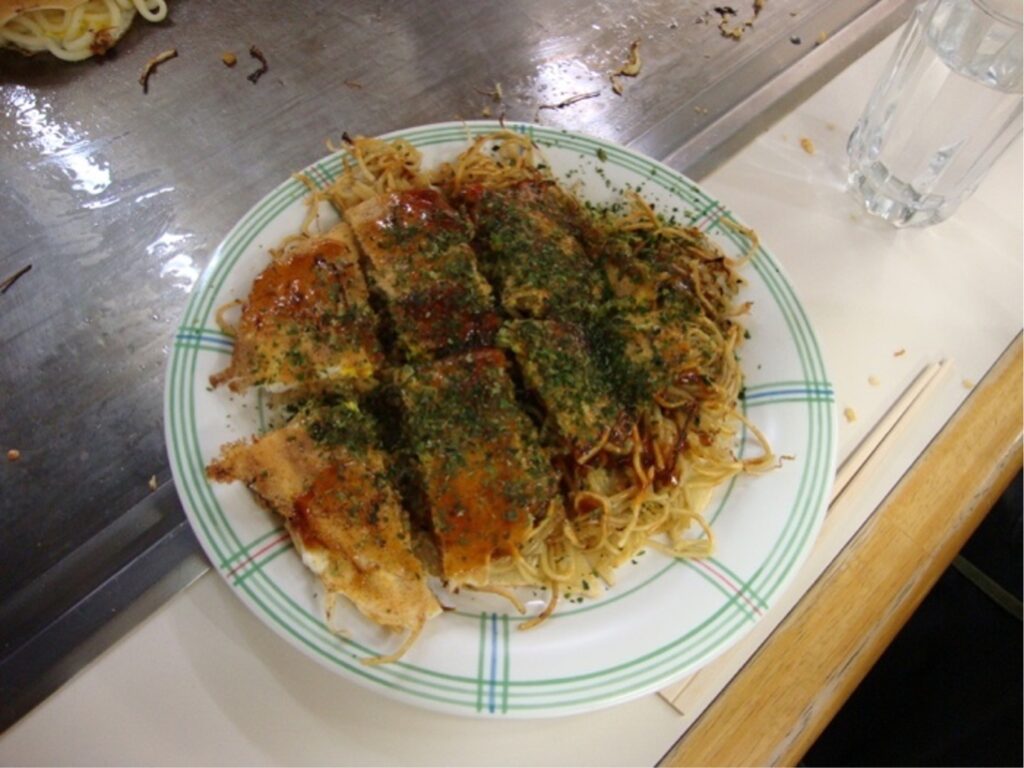
But our experience was much more than the ingredients; it was akin to street theatre. We sat around a counter made entirely of two large, rectangular hot plates, upon which our okonomiyaki were to be prepared before our very eyes. The process began with the making of pancakes, upon which would soon be layered cabbage, pork, cheese, bean sprouts, noodles (yakisoba, udon), a fried egg, and all topped with a speciality okonomiyaki sauce. The whole process took about half an hour (the couple behind the counter were catering for the whole of our group), but the wait was worth it, as the final dish was absolutely delicious.
Peace Park
Replete from our amazing lunch experience, we headed on foot for the Hiroshima Peace Park and Museum. The horrors of August 6, 1945, are well documented elsewhere; what we found, over sixty years later, was indeed a Peace Park. In addition to being a park that promotes peace, it is also a very peaceful place to be.
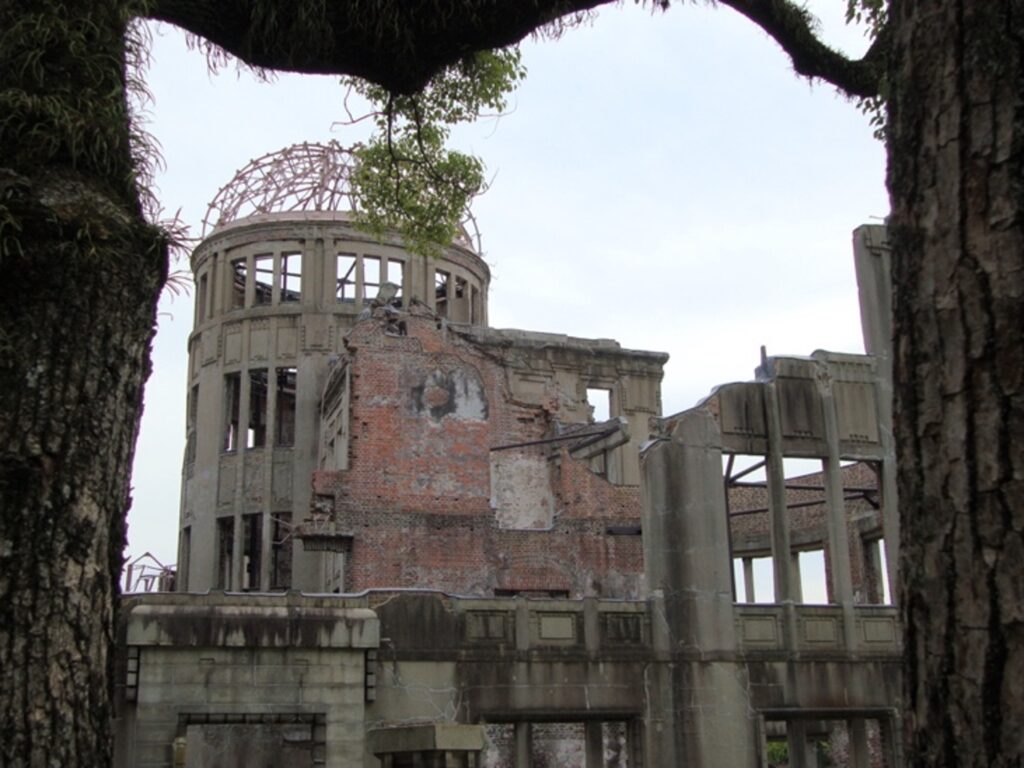
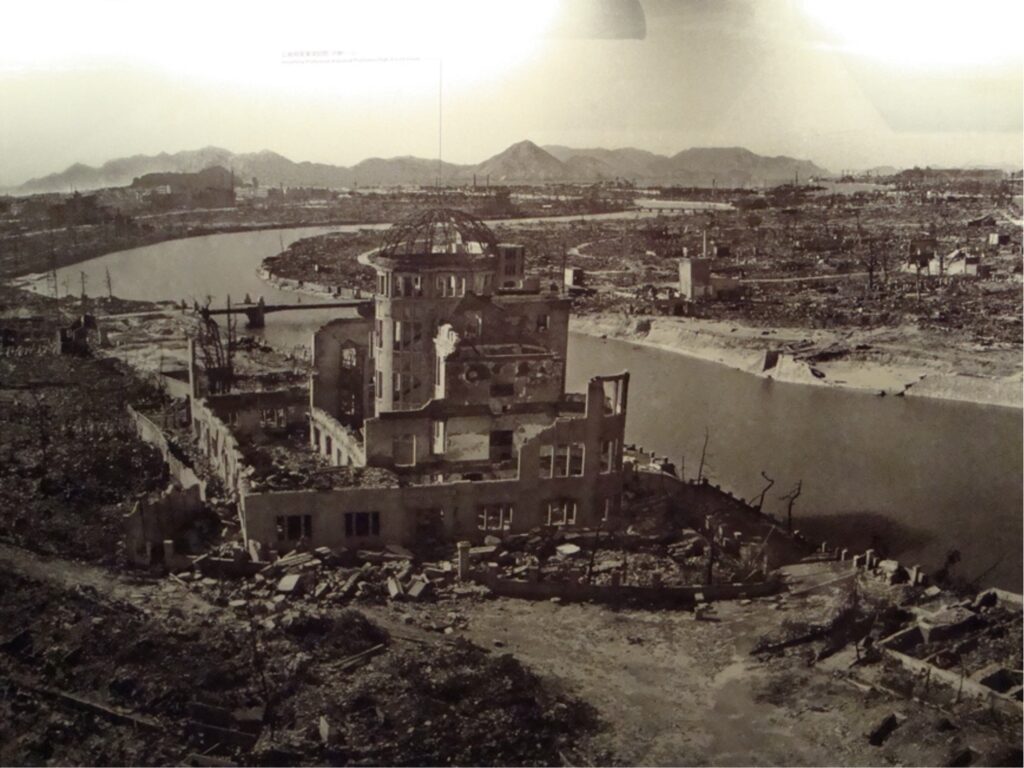
One of the first things noticeable is the A-Bomb Dome, formed from the skeletal ruins of the former Hiroshima Prefectural Industrial Promotion Hall, the building closest to the ground zero (hypocenter) of the nuclear bomb.
Following petitioning from many citizens, in December 1995, this place received status as a World Heritage Site. A plaque, placed at the A-Bomb Dome on April 25, reads:
As a historical witness that conveys the tragedy of suffering the first atomic bomb in human history and as a symbol that vows to faithfully seek the abolition of nuclear weapons and everlasting world peace, Genbaku Dome was added to the World Heritage List in accordance with the “Convention Concerning the Protection of World Cultural and Natural Heritage (World Heritage Convention).” December 7, 1996, Hiroshima City
Across the road from the A-Bomb Dom is the small Jizō Statue, a bodhisattva known as a protector of children and travelers. It is believed this statue stood directly below the A-bomb, ‘Little Boy’, when it detonated 600 metres above the city. The bomb’s intense thermal radiation bleached the surrounding stone, while the statue provided a shield for the plinth, creating a permanent ‘shadow’.
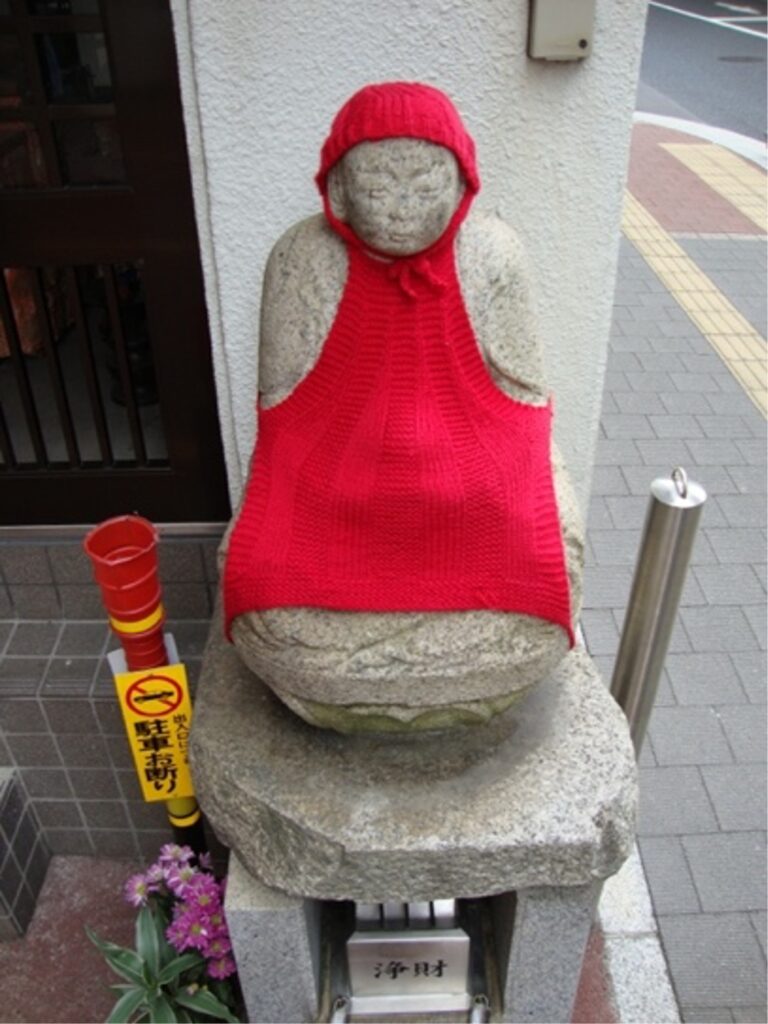
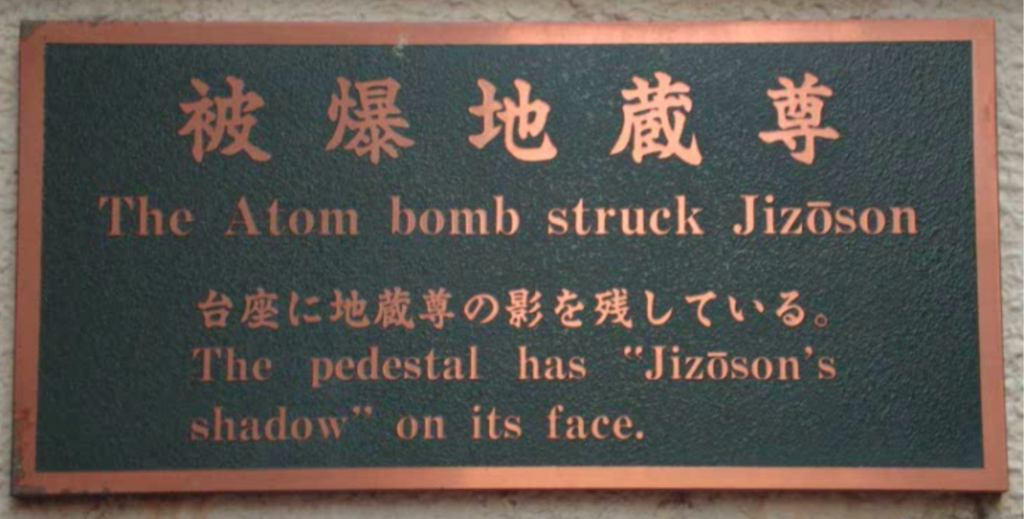
From here, we explored the Peace Park, with its ever-present serene calm, a deliberate contrast to the brief but intense violence of 8:14 on the morning of August 6, 1945. Our destination, though, was the Peace Museum.
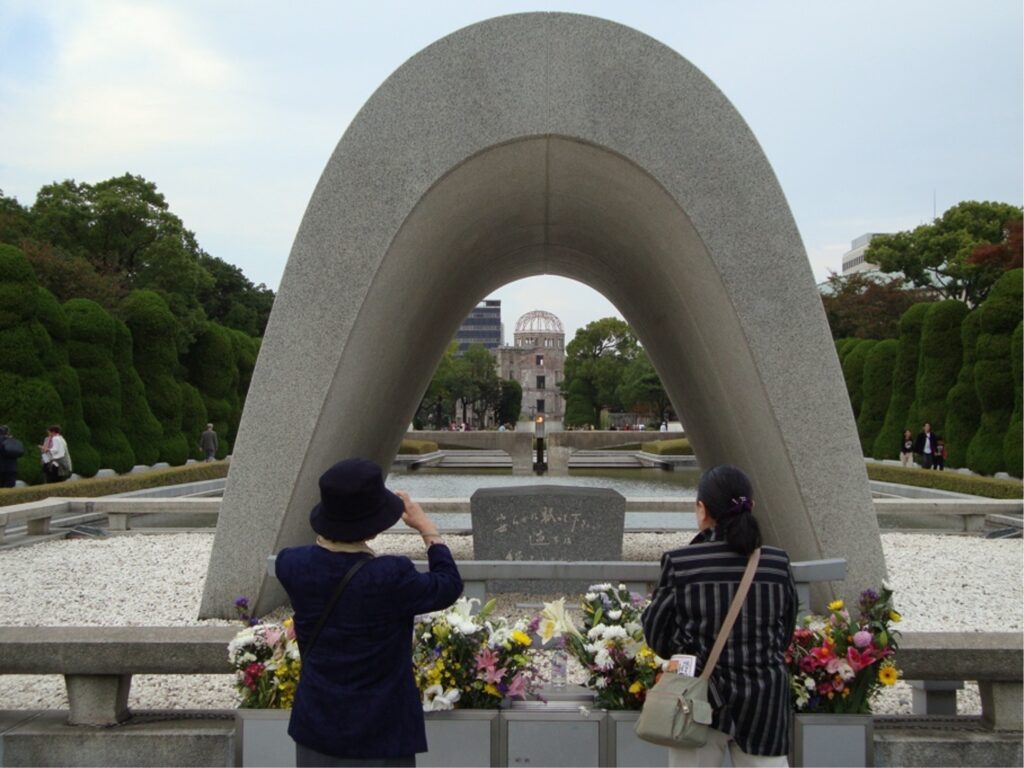
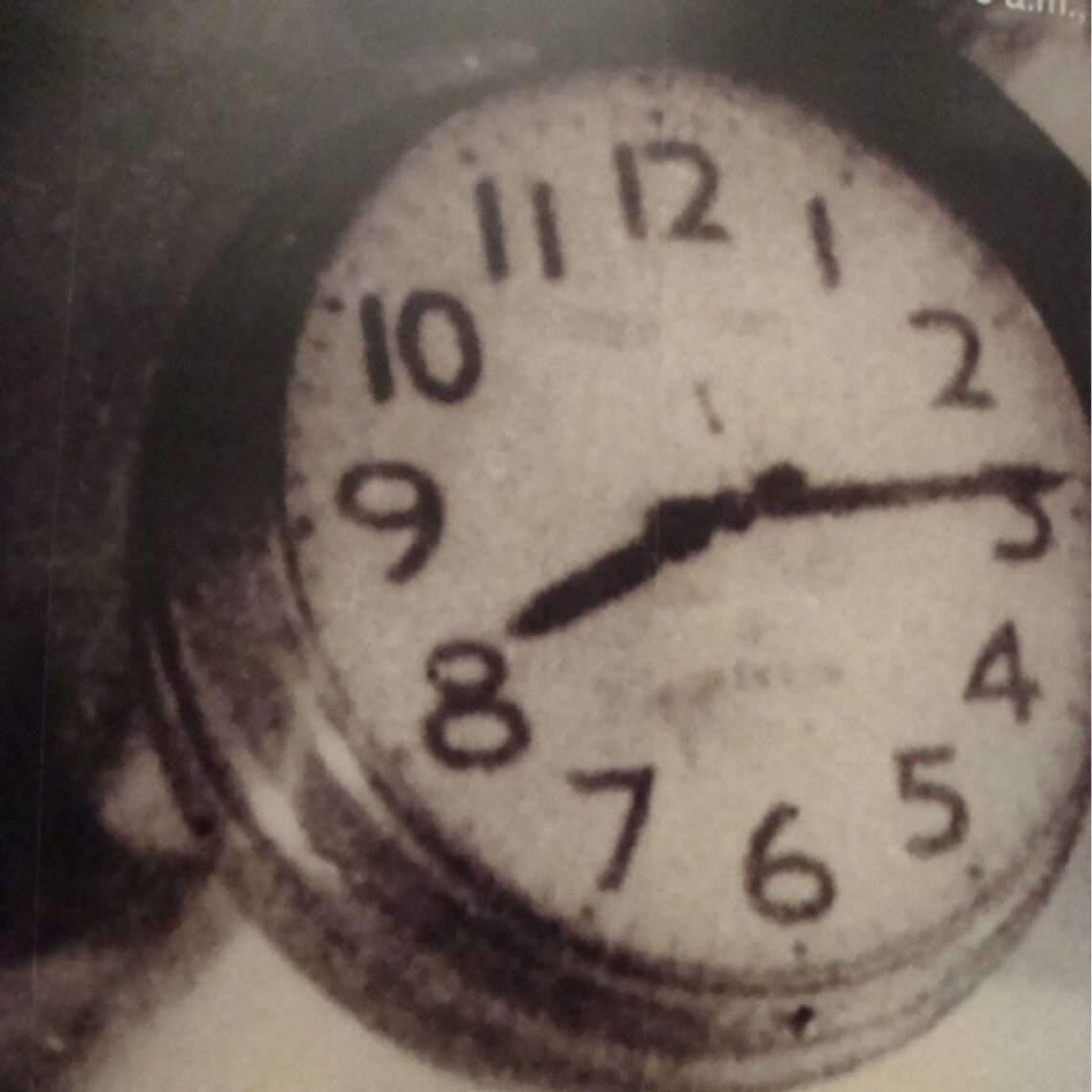
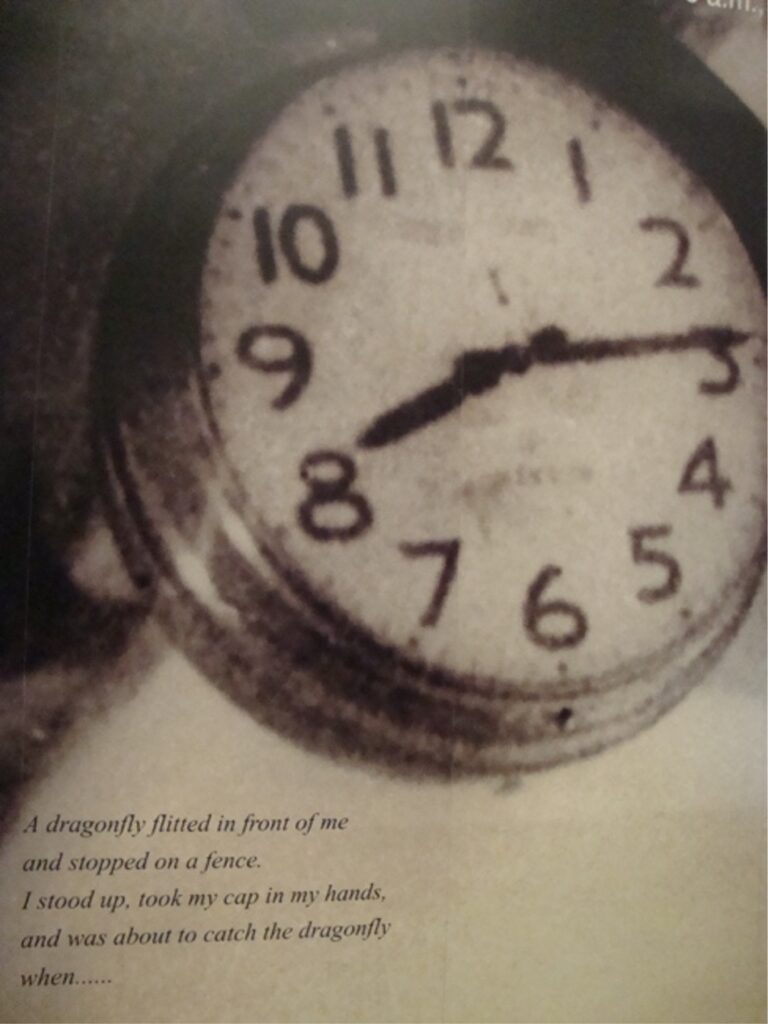
In layout and style, Hiroshima Museum is no different to many other museums around the world; nevertheless, it was to leave a lasting impression on us all. The photographs made more of an impact than the ‘before and after’ models of the city. Clocks had been frozen in time at 8:14 on August 6, 1945. Vistas of utter devastation. And Hiroshima’s surviving citizens.
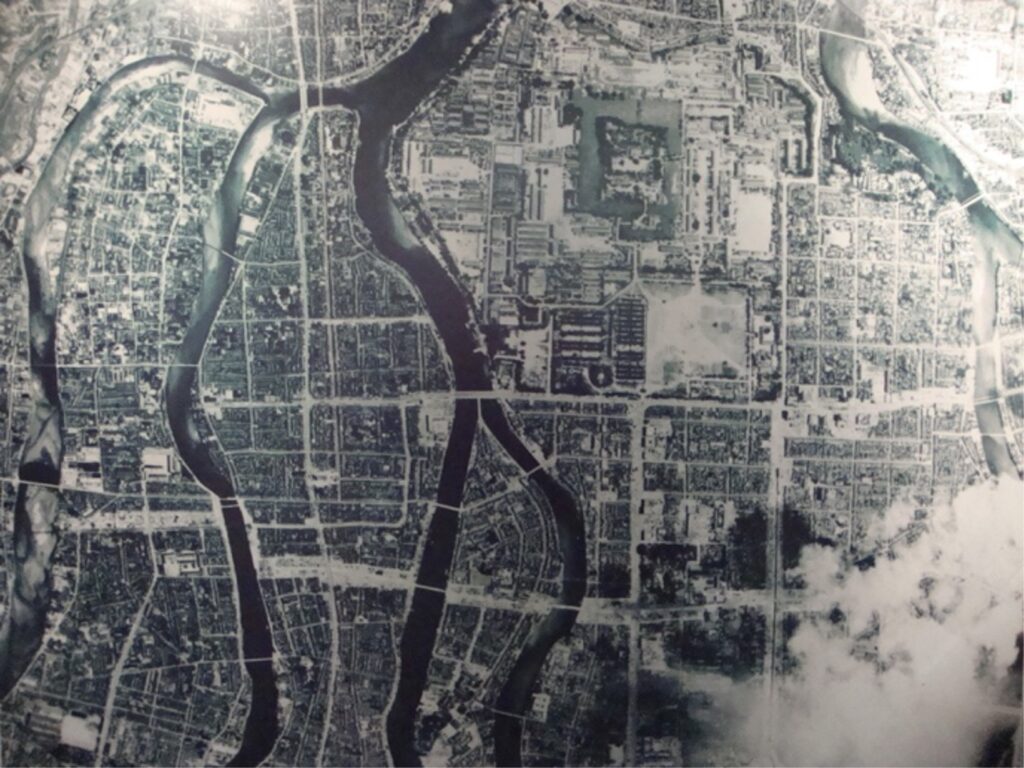
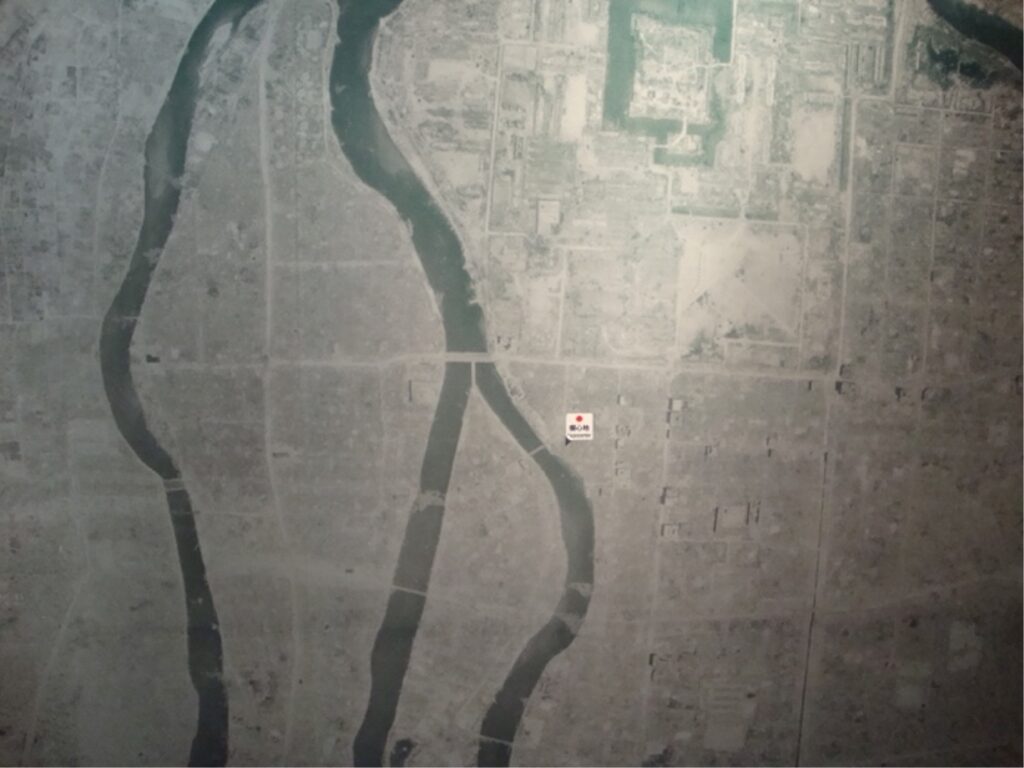
Aerial photographs were another vivid demonstration of the power of the Atomic bomb. The first image is of a large, prosperous city; the second shows how little was left. In the centre of each photograph is the target used by the crew of the B-29 Superfortress bomber, ‘Enola Gay’, when dropping ‘Little Boy’. At the top of the island in the river is a T-shaped bridge. This was the intended target; they missed by only a few metres. Just below the T-shaped bridge now stands the Peace Park containing the museum we were visiting.
Adjacent to the photographs were descriptions in several languages of the history of the world’s first A-bomb. Most striking, though, was the difference between the Japanese version of that day and our own Western version of the same event. Our students wandered around the museum in increasing silence. Once finished, they sat outside in the reception area, each lost in their own thoughts and emotions. I can honestly say that I have never known students on a school trip to be so quiet.
In the growing gloom of dusk, we left the museum to visit Hiroshima Castle, sometimes called the ‘Carp Castle’. Constructed in the 1590s, much of the castle was dismantled in the Meiji era, before being destroyed by the atomic bomb of 1945. We were seeing the replica of the original main keep, which was rebuilt in 1958.
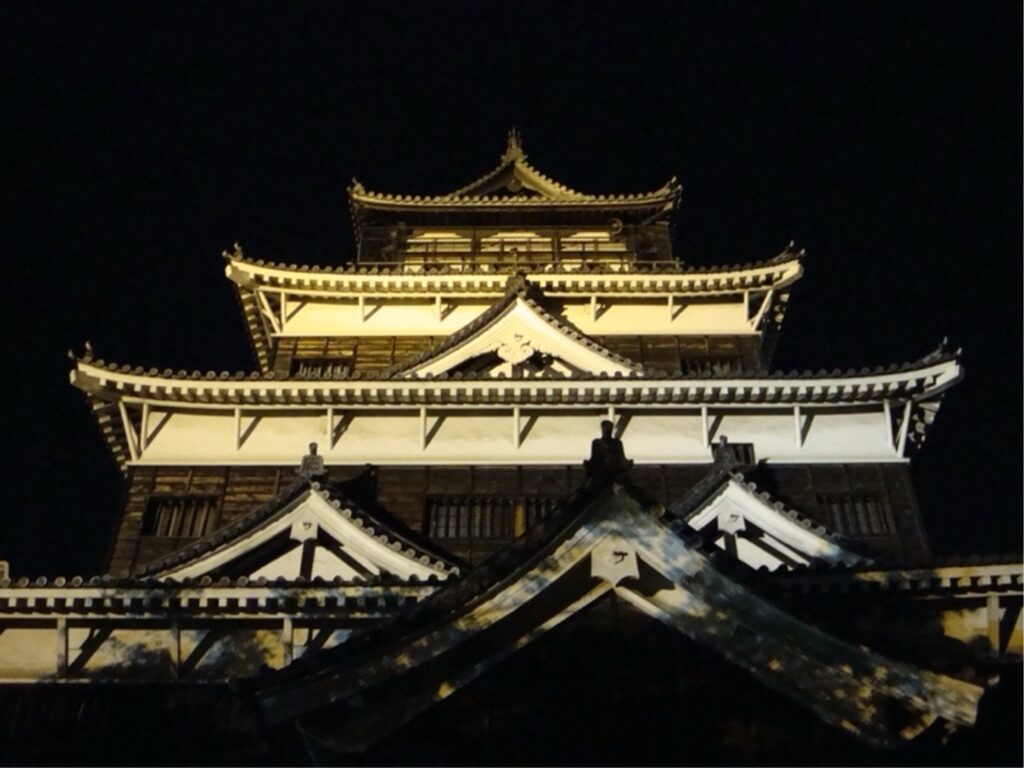
Before returning to our hotel, we caught a little more Japanese culture in a nearby park. Musicals were in full swing in different parts of the park, each using traditional instruments and vocal styles. There were also food stalls, but in complete contrast to the intricate food preparations we had witnessed at lunchtime, here we saw chicken ‘roasted’ the quick way—with a blow-torch!
In the end, Hiroshima, though fascinating, left me with a feeling of a lost opportunity; given their post-atomic bomb blank canvas, the city designers had, in my opinion, missed a wonderful opportunity to create a very modern, innovative city. In the end, however, I was left feeling that, outwardly at least, modern Hiroshima was quite a boring city.
In the past year, Michael Smith’s fiction has appeared in Fabula Argentea, Witcraft, Literally Stories, Microromance, Heimat Review, The Hooghly Review, Little Old Lady Comedy, and many other online literary journals. To date, he has self-published a historical fantasy called Dinner Time, two volumes in the Gruseltal series, and three collections of short stories, Fonts, Songs, and L < M, all available from online bookstores.
Website: https://frucht-schleifen.weebly.com/
Photos by Michael Smith