Whenever I come back from the mountains, I tend to become more reflective and try to do mundane tasks more mindfully and less perfunctorily. In the dense forest of high hills, even village people speak very meditatively. Being a fan of good conversations, I adore the magic of inwardness, silence, and deep contemplation of thoughts in those villagers. But alas, these values are now obsolete, and some new species of mountain dwellers have emerged in the past five years. The idiosyncrasies of these newly evolved species that I observed in my recent trip to Kausani led me to journal the evolution of scarred mountains.
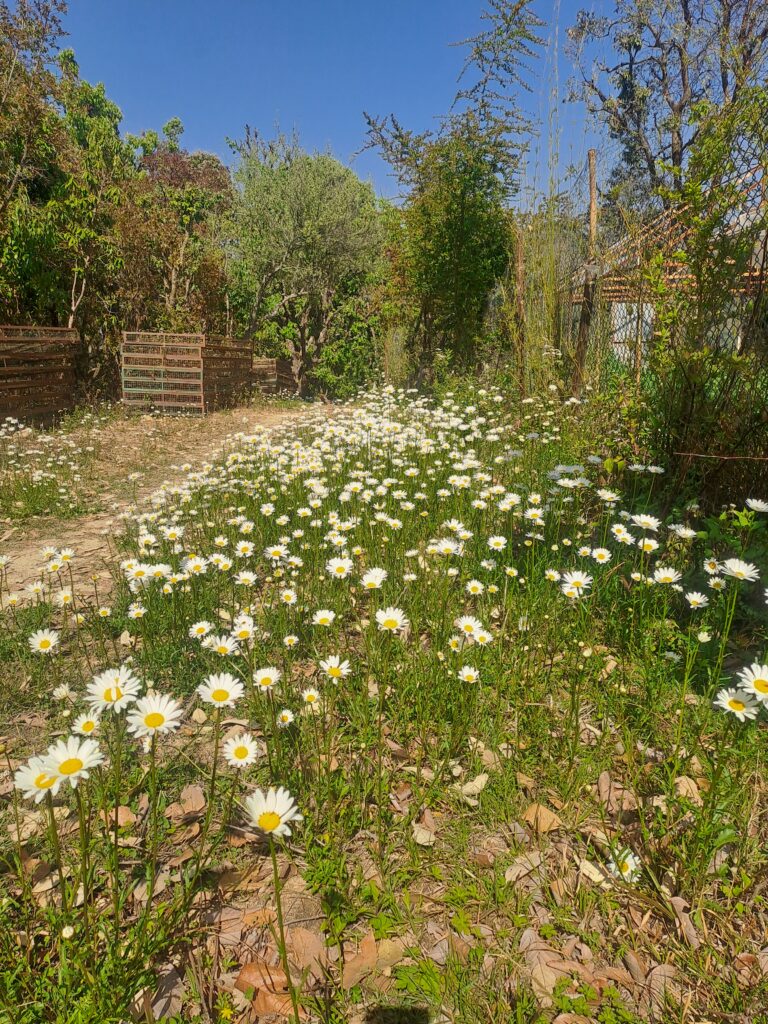
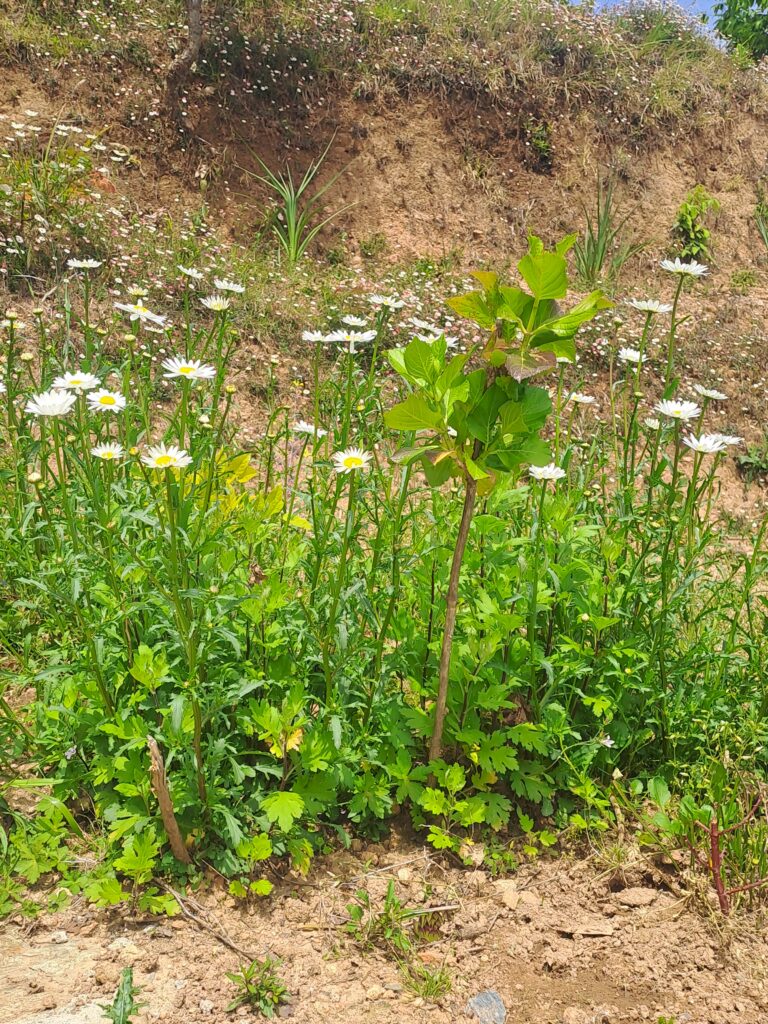
My hills this time were agog with oxeye daisies (Leucanthemum vulgare), common daisies (Bellis perennis), and primrose jasmine (Jasminum mesnyi). Almost every slope had hosted a display of the profligacy of these wildflowers. The spring, like a proud parent, was flaunting the triumphs of her children in her full splendour. Witnessing the unearthly beauty of oxeye daisy flower beds, I felt that I would prefer these humble wild weeds over any of their exotic contemporaries, such as roses, azaleas, or lilies. But amidst the festivities and fervour of spring, something disturbed me deeply. The meditative countenance and a soothing discernment of mountain-dwellers is now confined only to villagers or people living on far-flung slopes.
The first species of mountain-dwellers that have evolved in the past few years are self-acclaimed cultured right-wing owners of picturesque estates. In an evolutionary stage, they seem to have evolved from conservative feudal lords and shrewd capitalists. They sound mild but are an obnoxious concoction of patriarchy, paunch, and plutocracy. Often listening to bhakti music in their leisure hours, they reek strongly of anti-feminism and ignorance. Apart from criticising Nehru, Gandhi, and modern medicine, they sing paens of traditional Indian conventions that confine Indian women to familism. The bhakti they practice is devoid of any kind of detachment and nurturing of individual aspirations. This mutated version of the epochal cultural movement of India appeared extremely grotesque to me. Also, I, among the individuals of this new species, appear like an archetypal slut as a solo traveller.
Another species is a little refined intellectual left-winger listening to electronic music despite the omnipresent music of serene silence on these hills. They stay up late at night and prefer satiation with alcohol, drugs, and techno music. The creatures of these species can be found trekking on hills and recognizing wild species of flora and fauna in the clothes they wore three days ago. I often find them while coming back from my long treks in the afternoon. Some of them I met knew some botanical names of wildflowers and could pronounce them correctly. It is only in this faction that I find oxymoronic individuals, such as a pianist who is a drunkard or a researcher of the history of Indian classical music getting up at late afternoon. Being a fan of both bhakti and rock music, I am incomprehensible to both factions. They offer me alcohol often in the jungles, but are disappointed when I tell them that I drink only coffee and that too without sugar.
There are a few more contrarities in the traits of both species. The individuals of the former species own big libraries, yet they cannot name even a single author they have read extensively. The individuals of the latter species are good explorers and roam the entire day on the slopes of mountains, but still do not care about the intake of food. Their day comprises alternate periods of sleeping and roaming. Detesting the extreme cognitive dissonance in both species, I try to ward them with a harmless weapon called a book. For the former group, I carry the renowned works of existential and individualist literature by Sartre, Camus, André Gide, and Simone de Beauvoir since they do not believe that such a world of individual liberty exists, nor do they venture into these treatises. Hence, the ideas expressed in these books are a sacrilege to them. For the latter group, I keep the works of lesser-known authors of Hindi or any regional language, as these works are not considered erudite among the Anglophile pseudo-elites.
All these developments have scarred my mountains and the legacy of Kasar Devi temple, where Viveknanda meditated, and Kausani, where most of the creations of Sumitranandan Pant, the stalwart of romanticism in Hindi literature, took the shape of letters. I wonder what Frank S. Smythe would have thought about the deterioration of mountains today when he completed his climb of Mount Kamet in 1931. He describes the silence of this region in his book The Valley of Flowers as, “That day there was no wind, not the lightest breathing of the atmosphere, and I knew a silence such as I have never known before. I felt that to shout, or talk would be profane and terrible, that this silence would shatter in dreadful ruin about me, for it was not the silence of man or earth but the silence of space and eternity.”
Daisy photographs by author

Gunjan Joshi is an author, poet, and editor who admires classics in every form. Bliss for her is witnessing the silence of cedar trees, reading an old hardback in a quaint coniferous village, and relishing glimpses of historic art forms. Pastures of Wild Asters is her first book. Some of her writings can be accessed here.
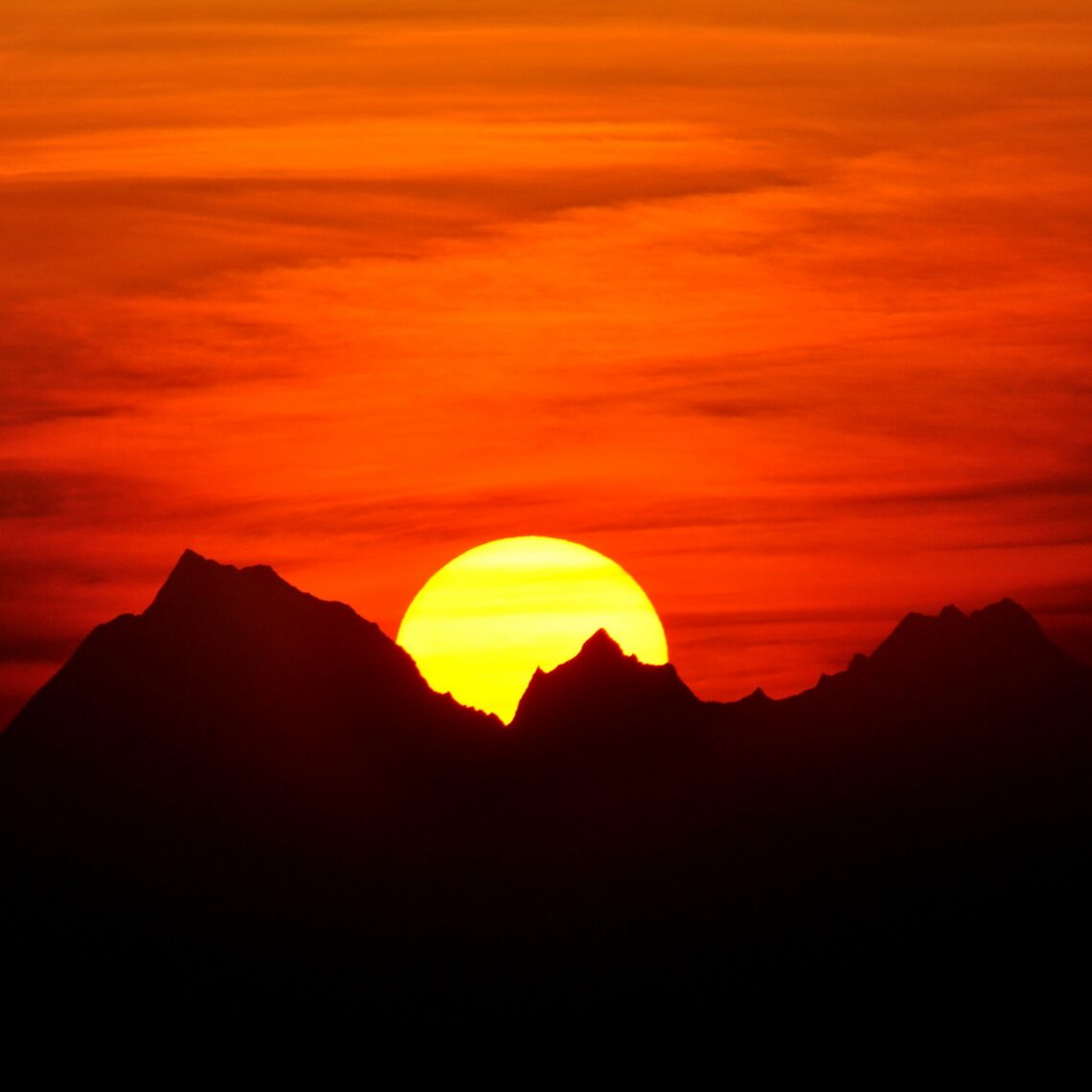
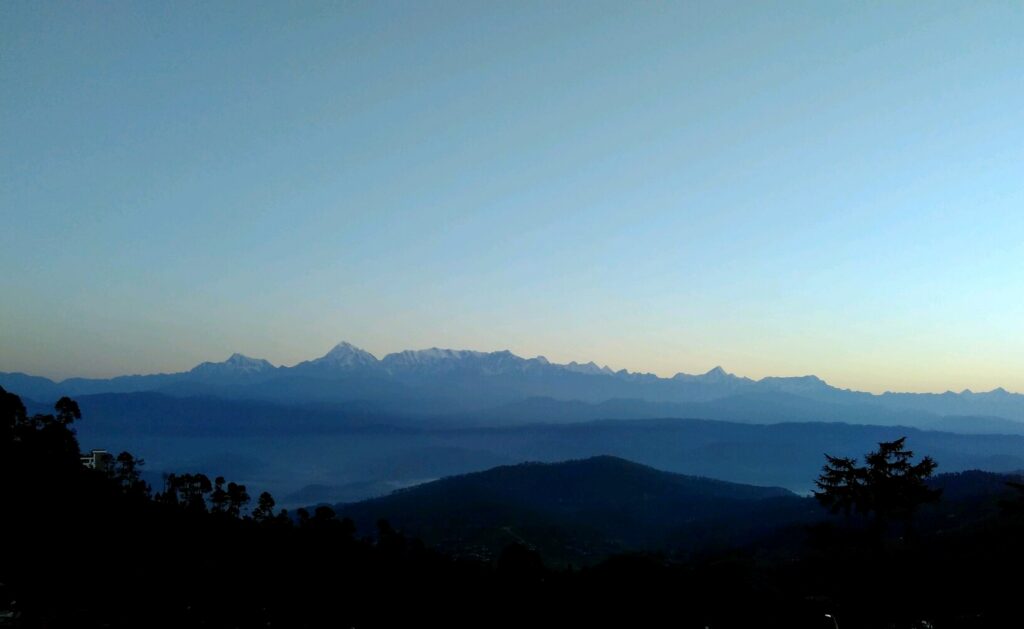
Featured photo: Sunrise from Kausani, Almora by Abhijit Kar Gupta (Wikimedia Commons)