Maureen Tai
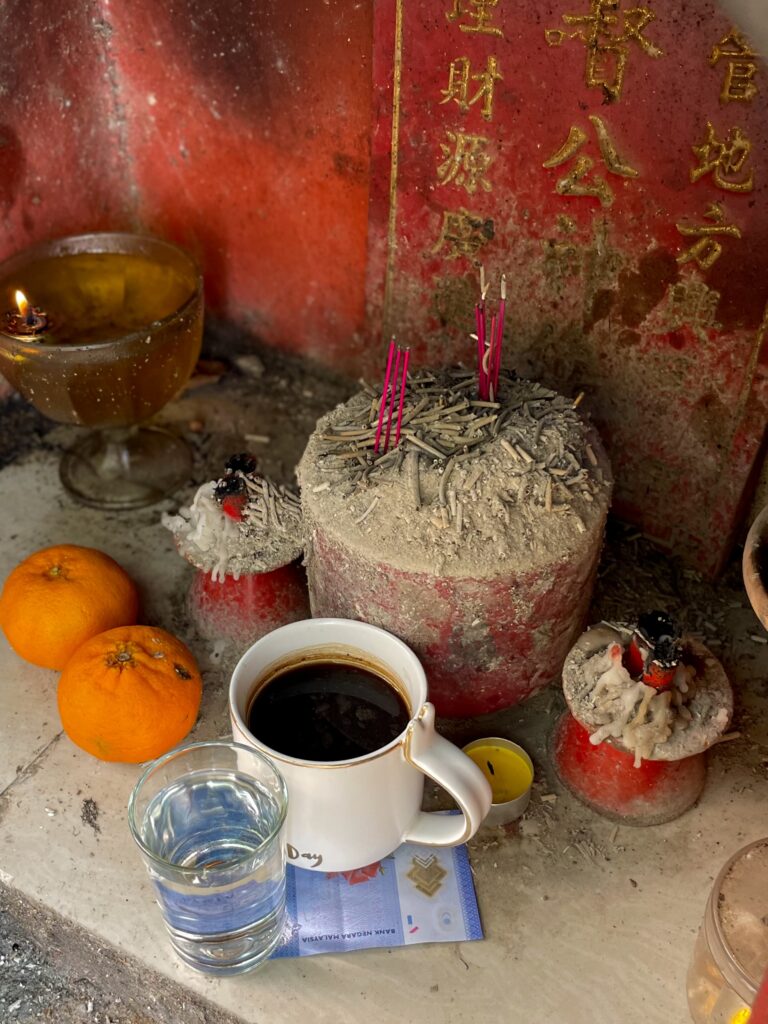
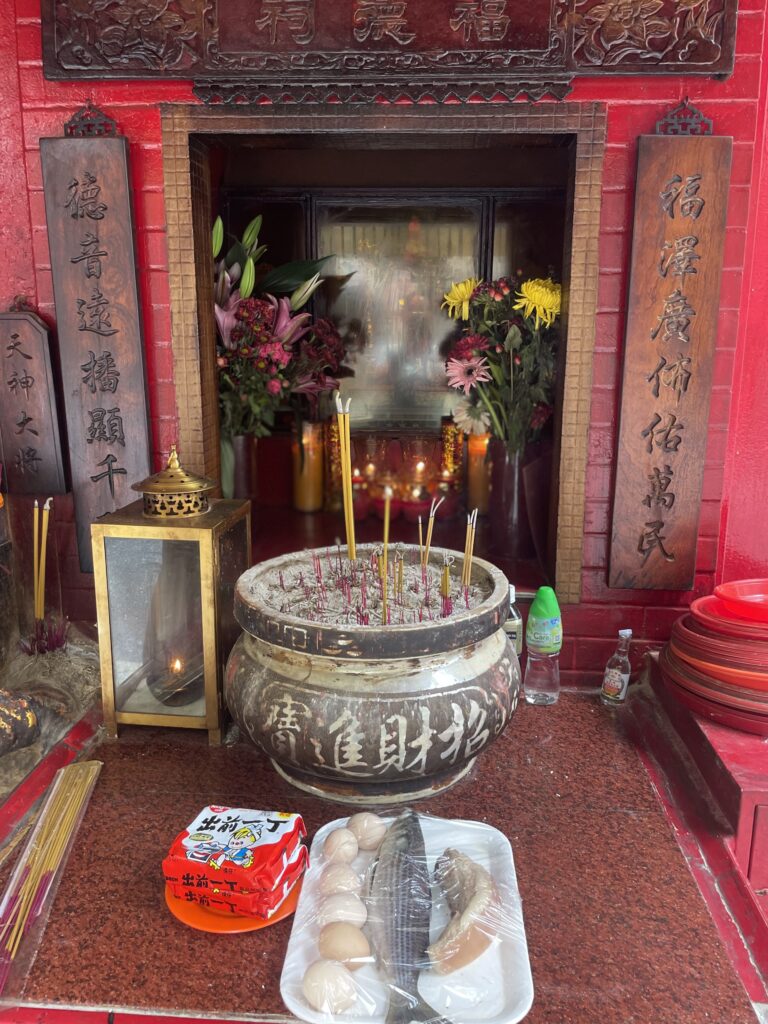
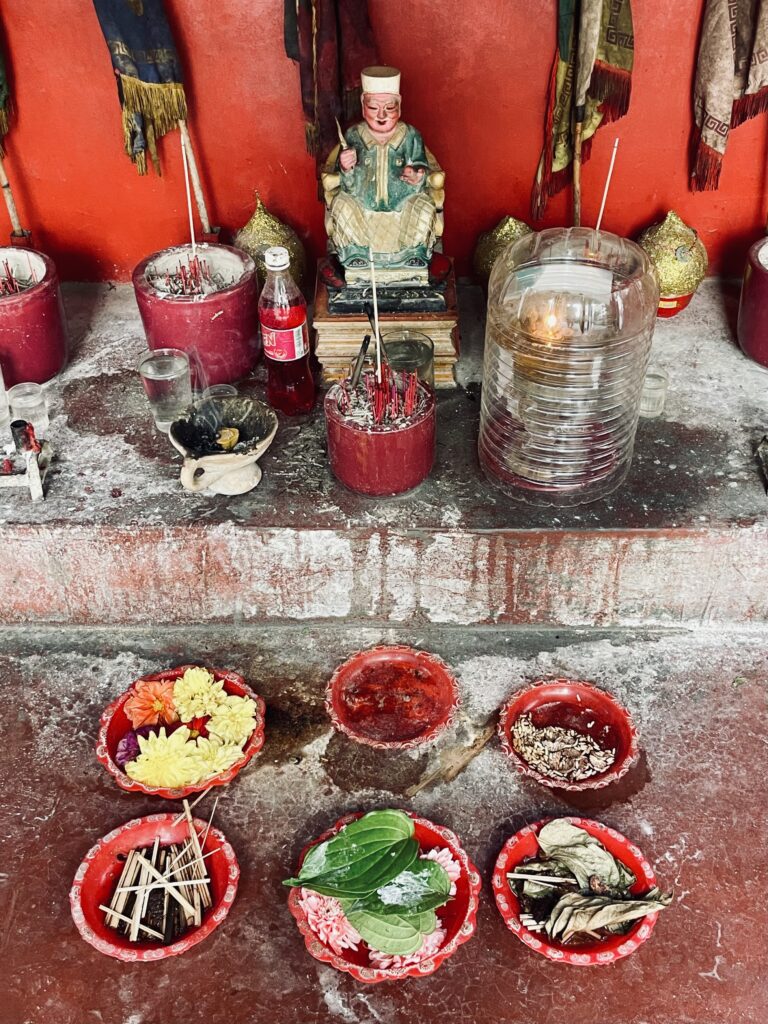
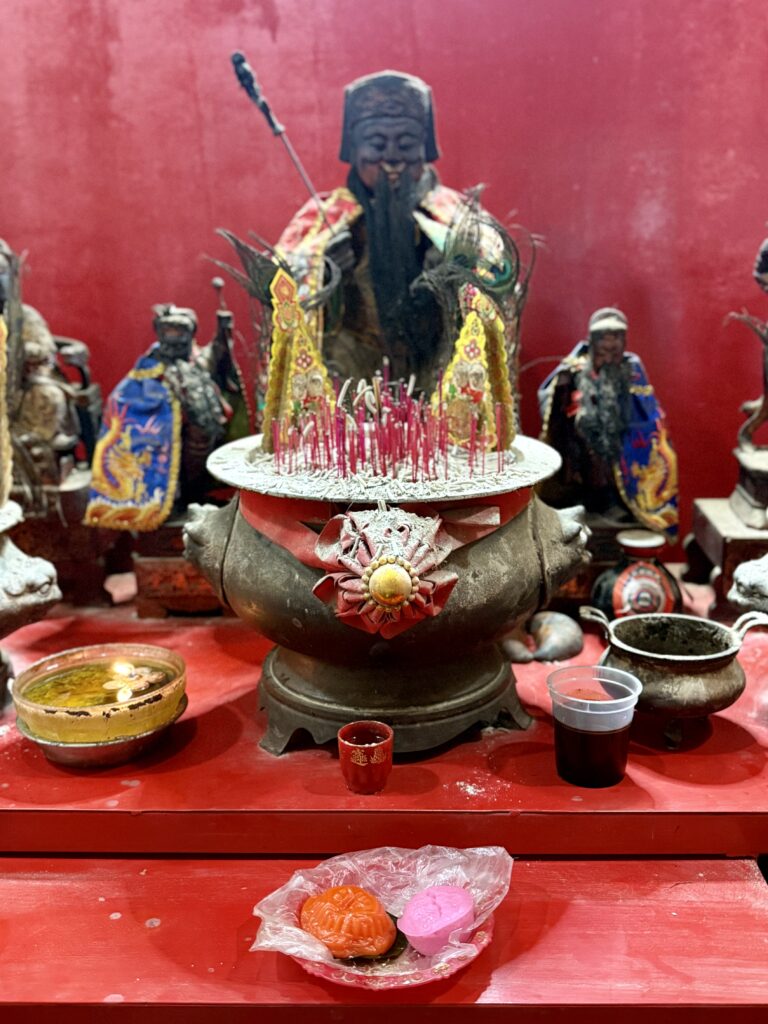
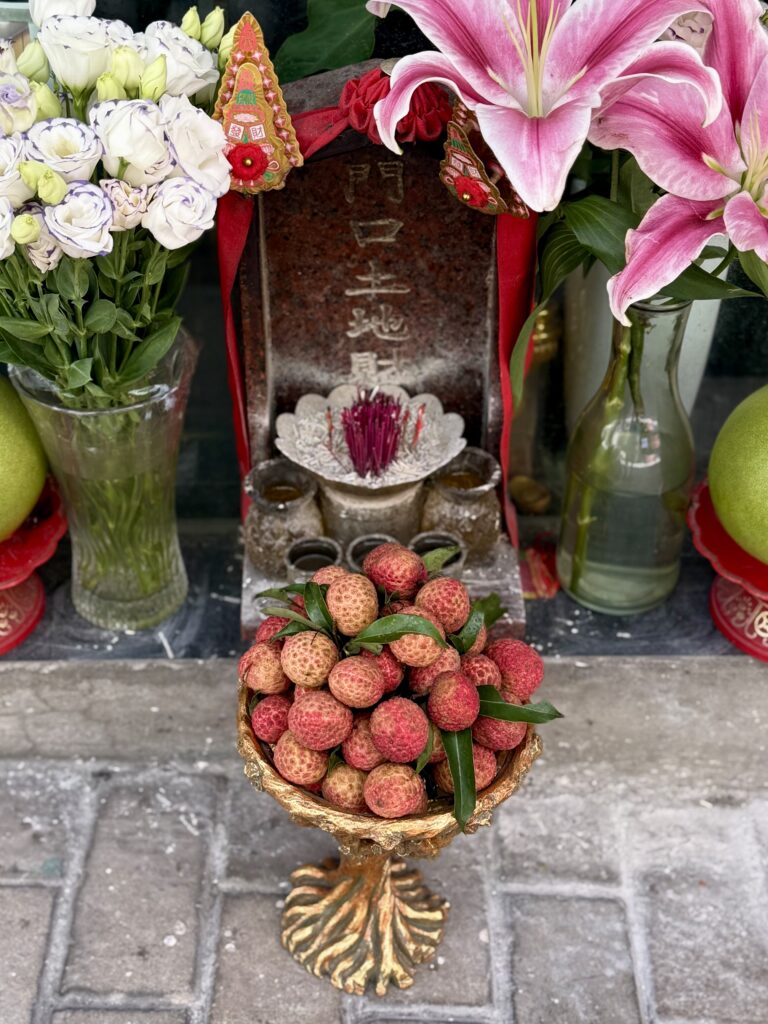
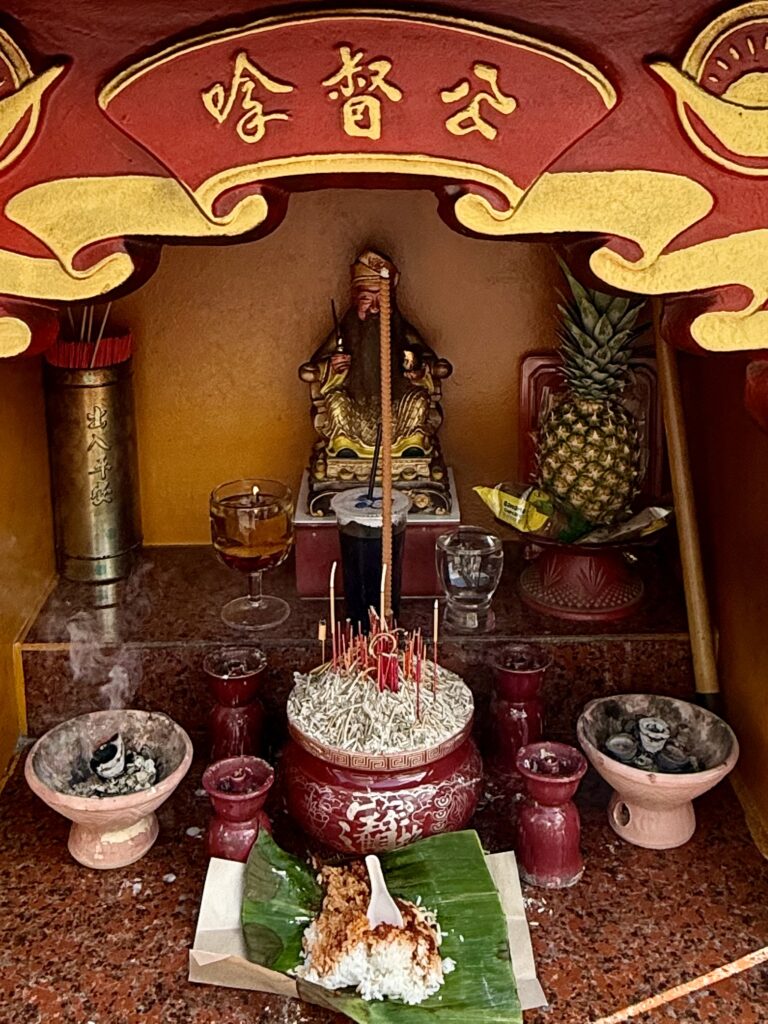
It’s impossible not to wander the streets of Hong Kong and George Town, island cities that double as my surrogate homes, and not be reminded of the presence of the divine in every nook, in every corner. Shrines abound, from simple, vermillion plaques resting next to shophouse entrances to relatively more elaborate concrete structures under trees, on roadsides, or next to parking lots. Many of the smaller shrines are dedicated to the local land gods: in Hong Kong, Di Zhu Shen (地主神), a Chinese folk deity, and in Malaysia, Datuk Gong (拿督公), the Malay-influenced equivalent. Regardless of the deity’s status in the vast pantheon of gods, incense or joss sticks are considered entry-level offerings. The sticks, made of natural, powdered aromatic woods such as sandalwood or wild cinnamon, are lit and stuck, smoking, into the ceramic urn placed at the foot of the deity’s statue or in front of the wooden plaque bearing the deity’s name.
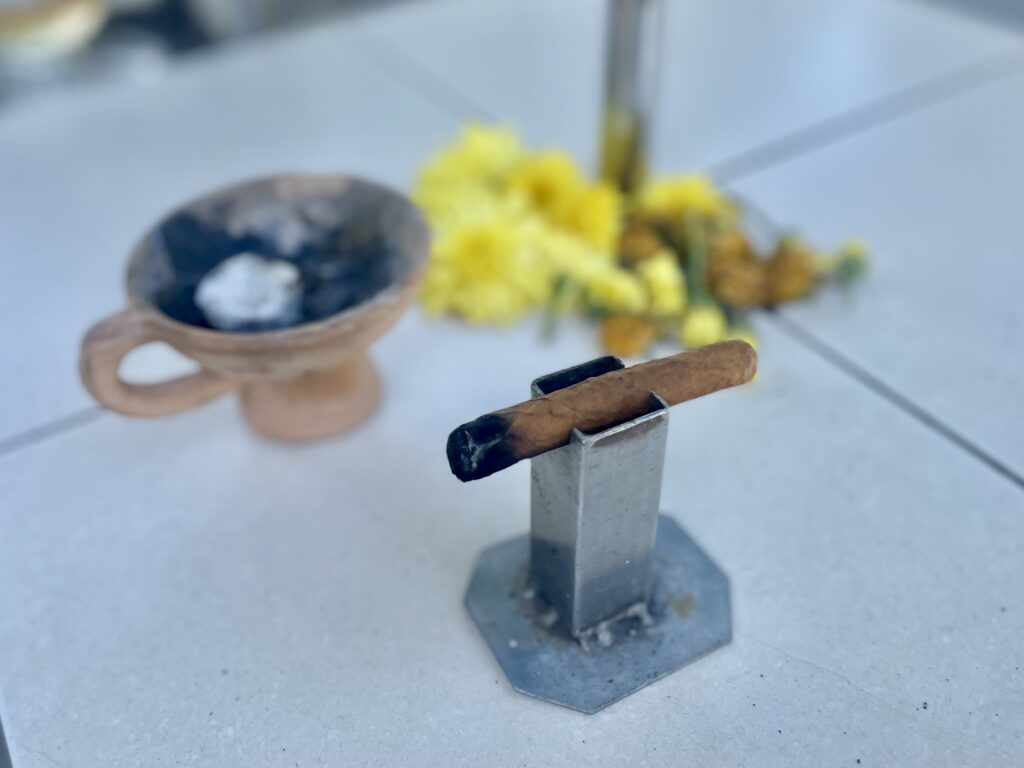
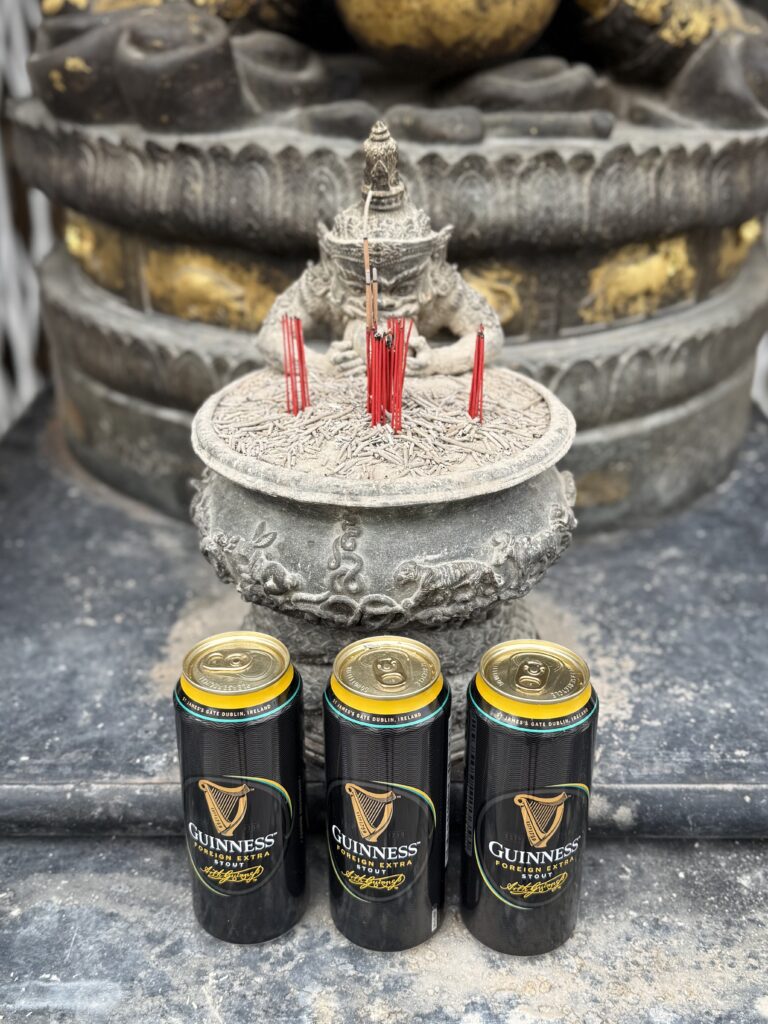
Beyond the baseline, offerings vary. Sometimes, it depends on the deity. For example, like me, Datuk Gong’s beverage of choice is kopi-o, an inky black coffee with industrial-strength eyelid-propping properties, and so he is often presented with a cup or a plastic bag of the beverage, paired with a plate of betel nut leaves. For one of his non-halal celestial colleagues, three unopened cans of Guinness Foreign Extra Stout stand in a line, silent sentries in front of an ash-filled urn. At the gamblers haven, the Penang Turf Club (sadly, now defunct), an unlit cigar, its tip blackened, rests on a small metal stand. I guess even gods have their peccadilloes.
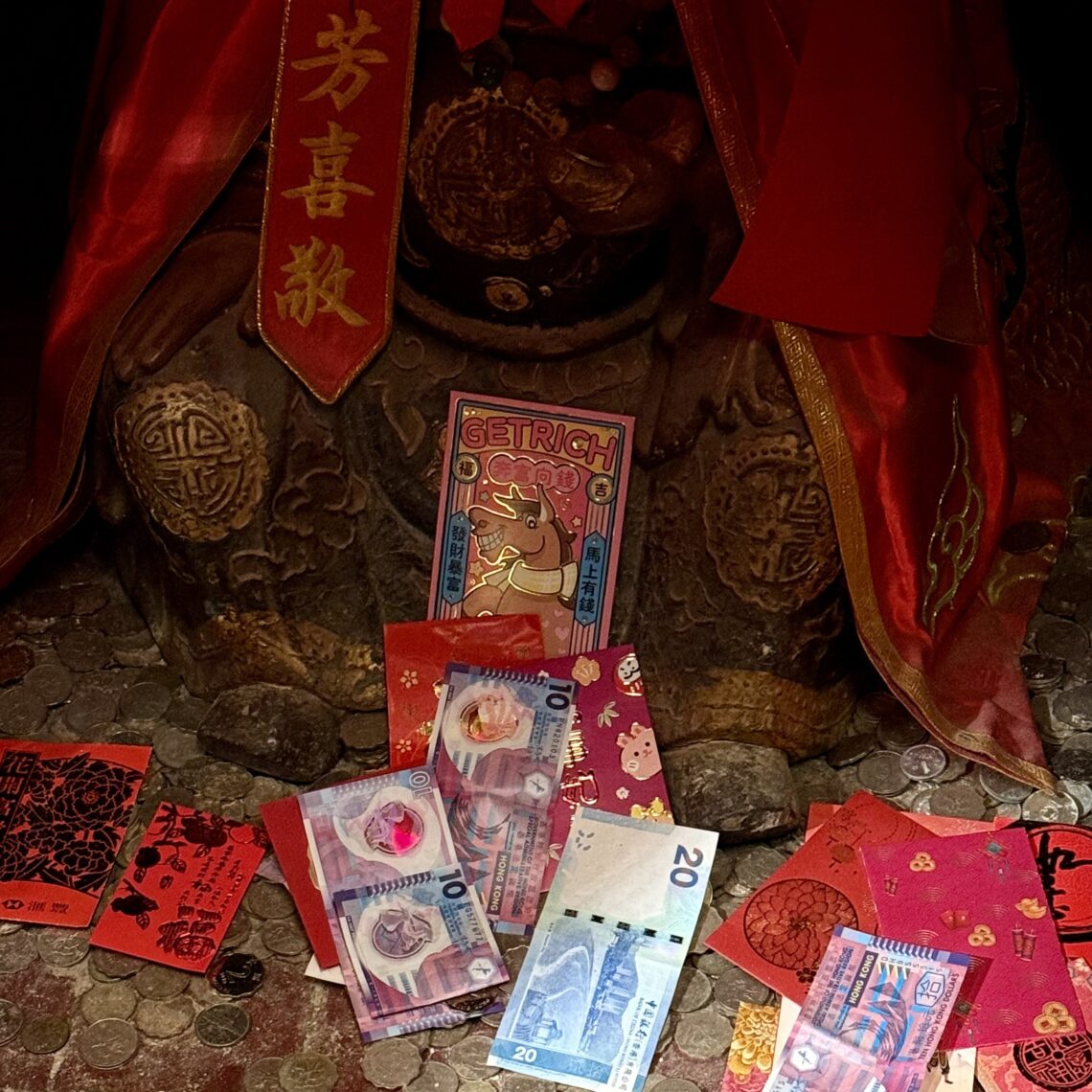
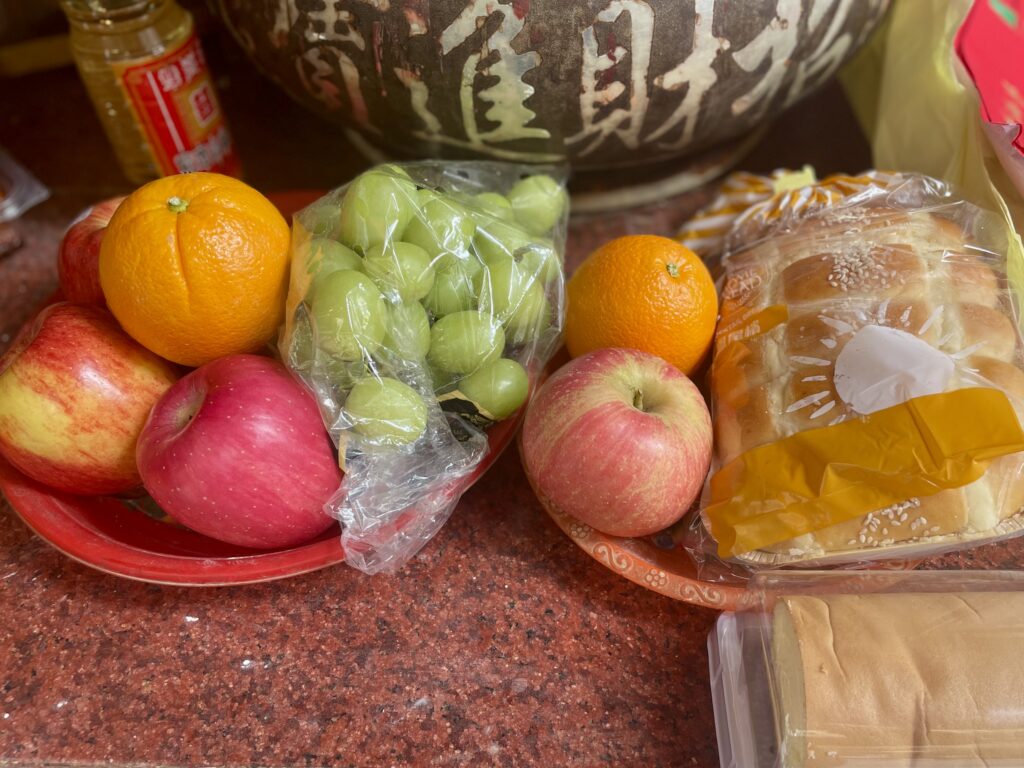
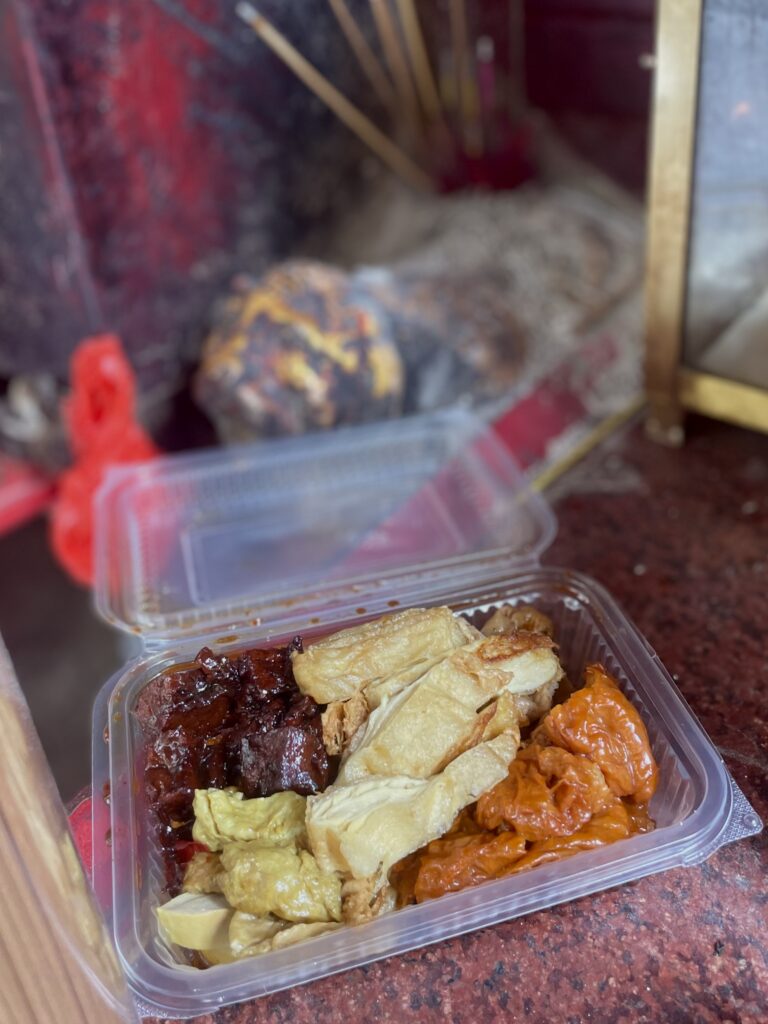
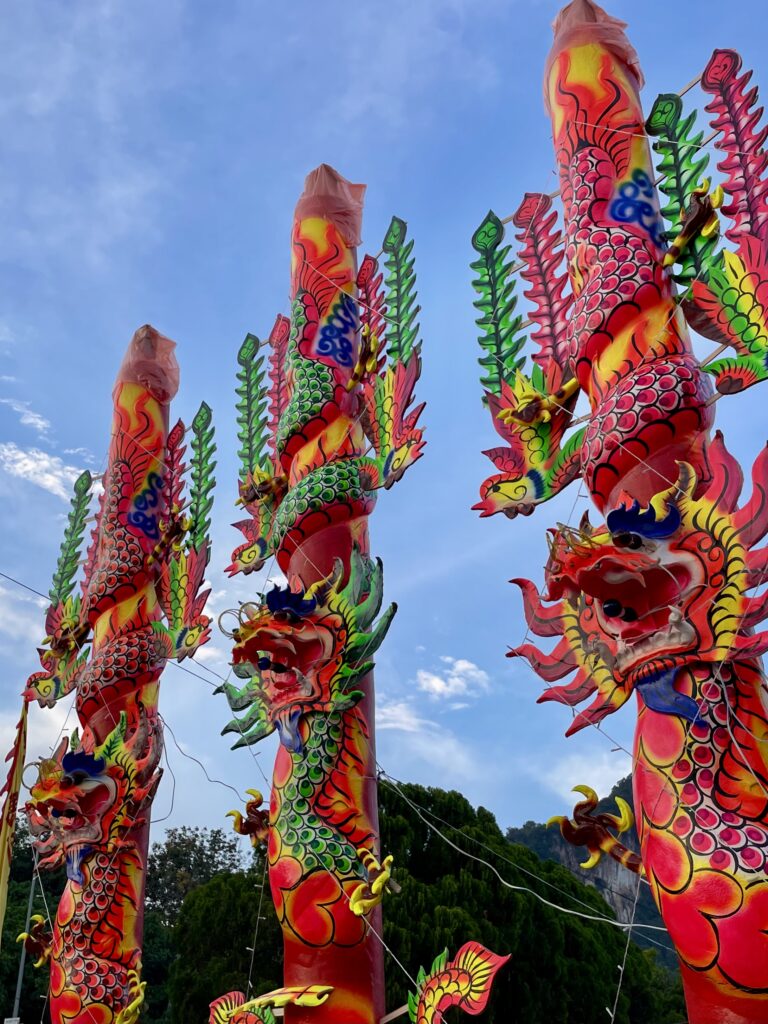
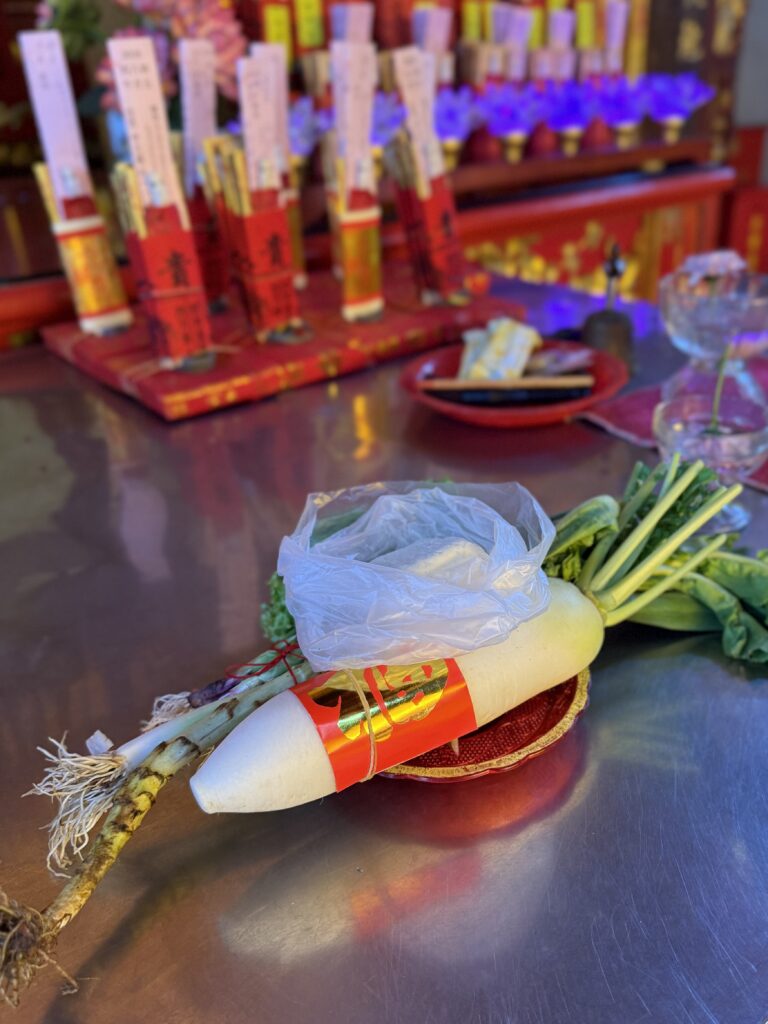
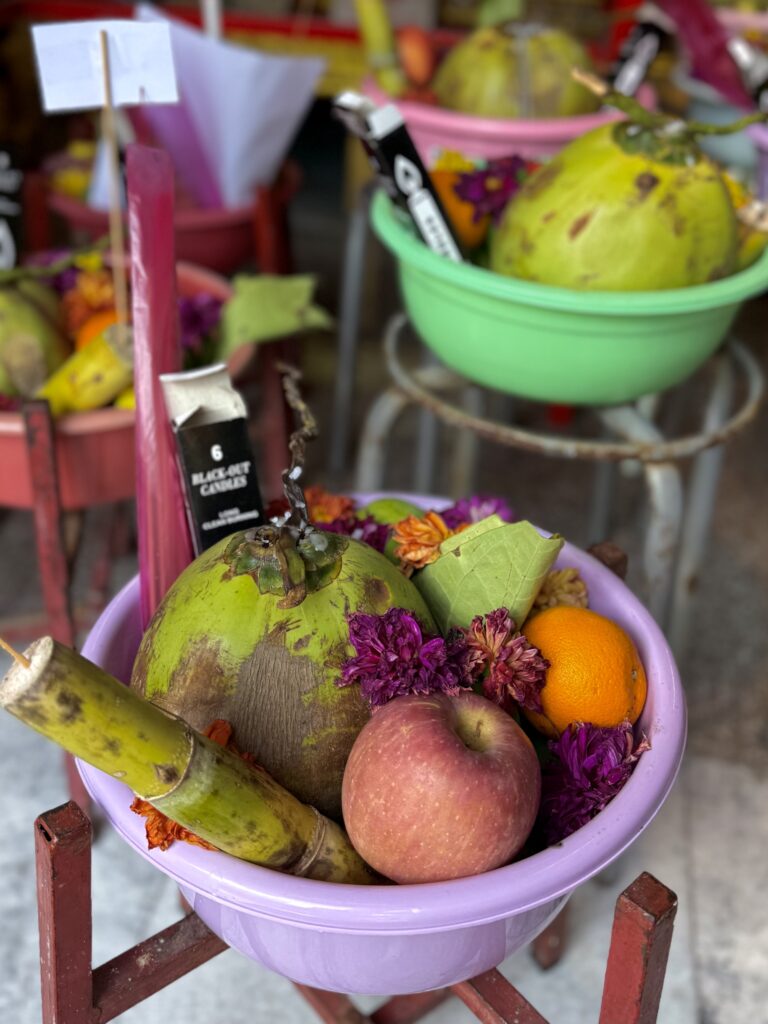
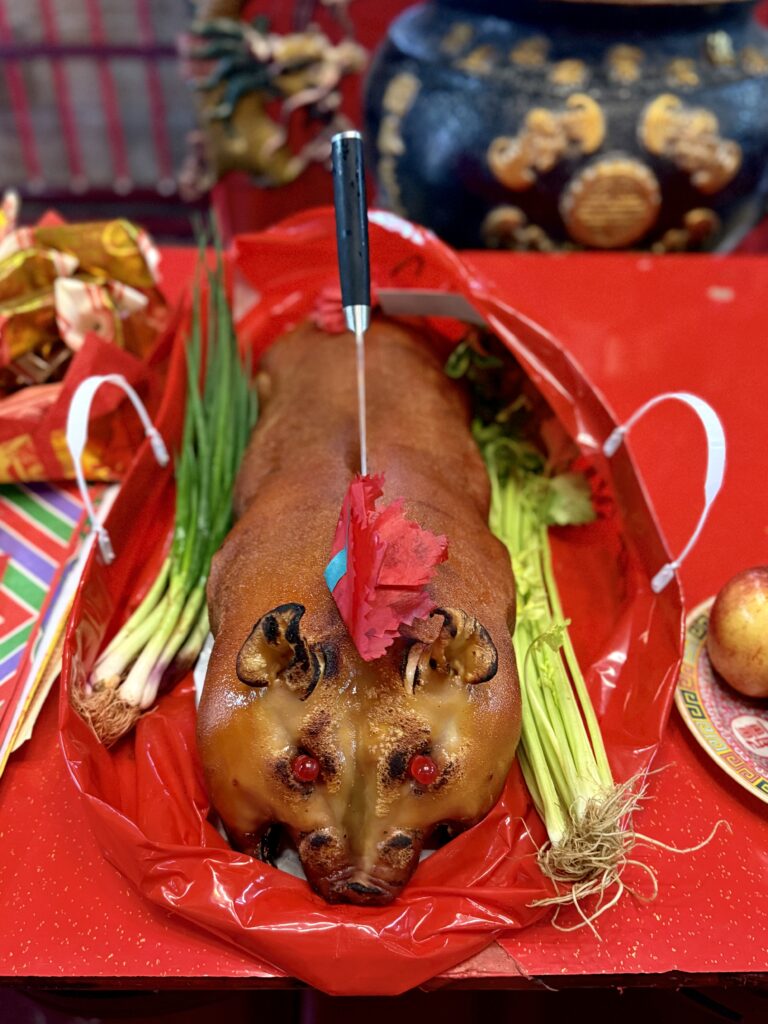
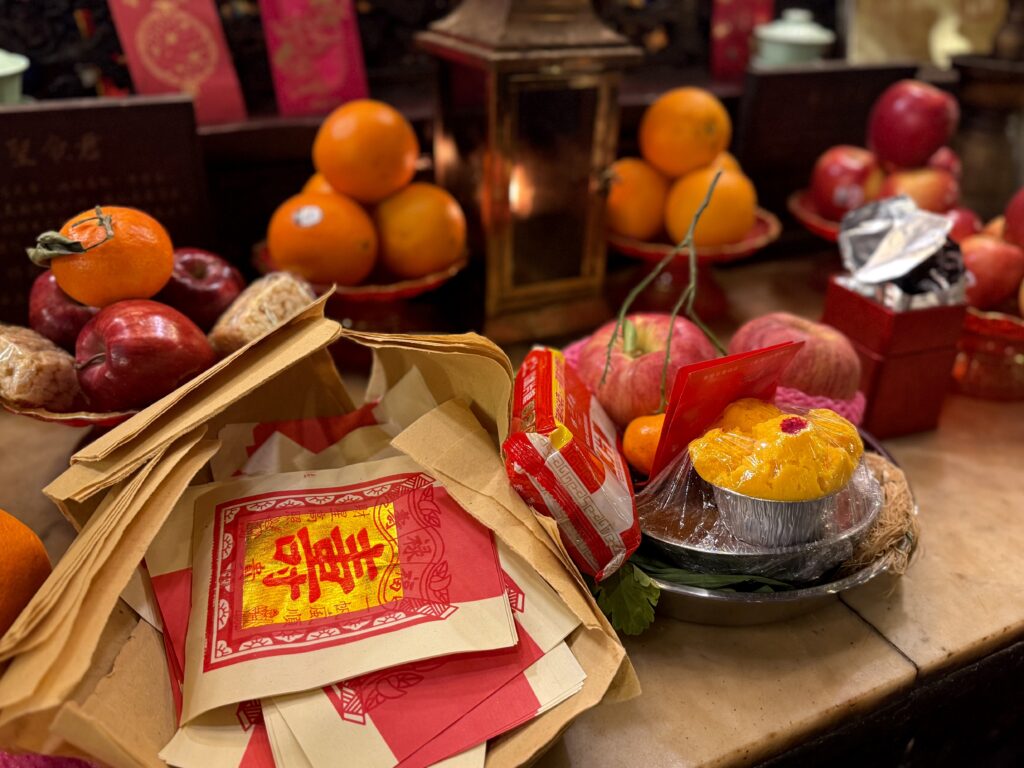
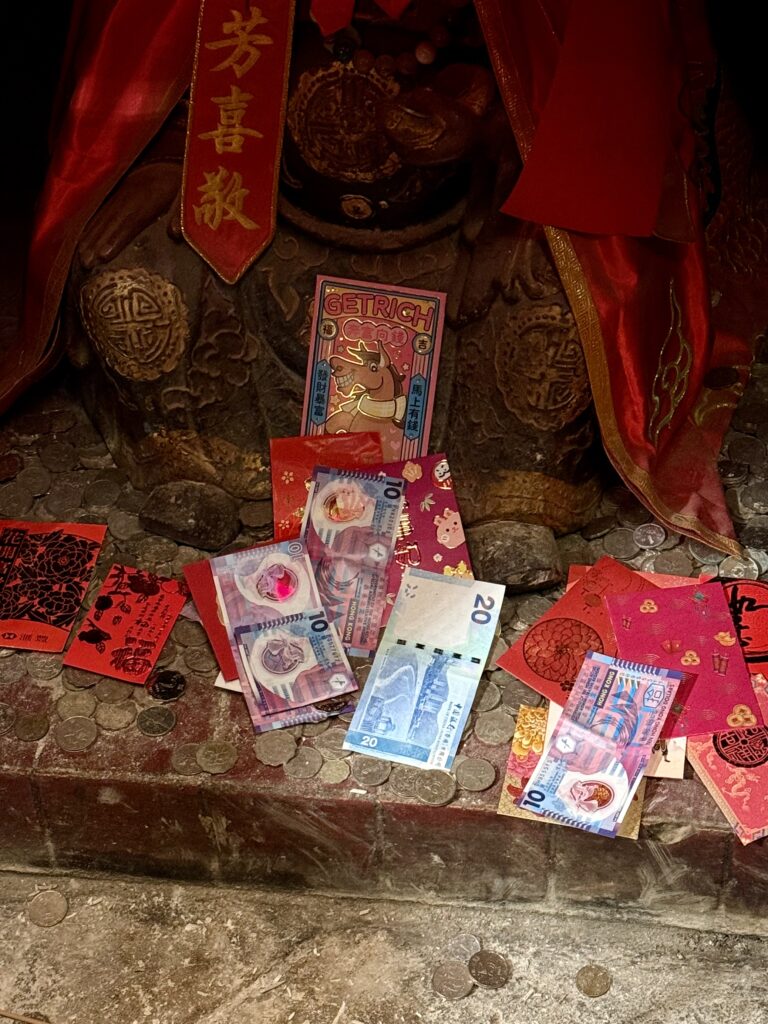
Other times, it depends on the time of year. During festivals or other auspicious dates, the sky’s the limit, especially at full-blown temples. A fresh whole coconut, stem still attached, nestled among a cut of sugarcane, fruits and flowers. A roasted suckling pig with light-up red bulbs in its tiny eye sockets and a massive cleaver buried in its spine. Elaborately carved, neon-coloured dragon joss sticks with the circumference of a hug, reaching up six, seven feet into the sky. Mostly however, or at least from what I’ve observed in my wanderings over the years, the offerings are modest, more a reflection of the personal tastes of the supplicants. After all, any edible offerings are retrieved and eaten after the gods have been given some time—usually as long as it takes for a joss stick to burn itself out—to partake of the food first. Give only what you yourself would want to receive. Fruit and vegetables. Breads and biscuits. Bank notes and coins. Whatever the gods desire, their people will provide, always with the desperate hope that the reverse will also come true.

Maureen Tai has a multi-faceted literary career as an award-winning published children’s author, adult fiction and non-fiction writer, accidental poet, book reviewer and literacy advocate. Her works have appeared in Cha, the Asian American Writers’ Workshop, the Baltimore Review, Kyoto Journal, Voice & Verse Poetry Magazine, Does It Have Pockets, Ricepaper Magazine, The Hooghly Review, Fieldfare Press and Porch Lit Magazine, among others. She is also a speaker, moderator and visual storyteller, having managed the Hong Kong International Literary Festival in 2023 and presented at the Singapore Writers Festival in 2025. Maureen’s work can be found at www.maureentai.com. X: @MaureenTai
Photos by Maureen Tai