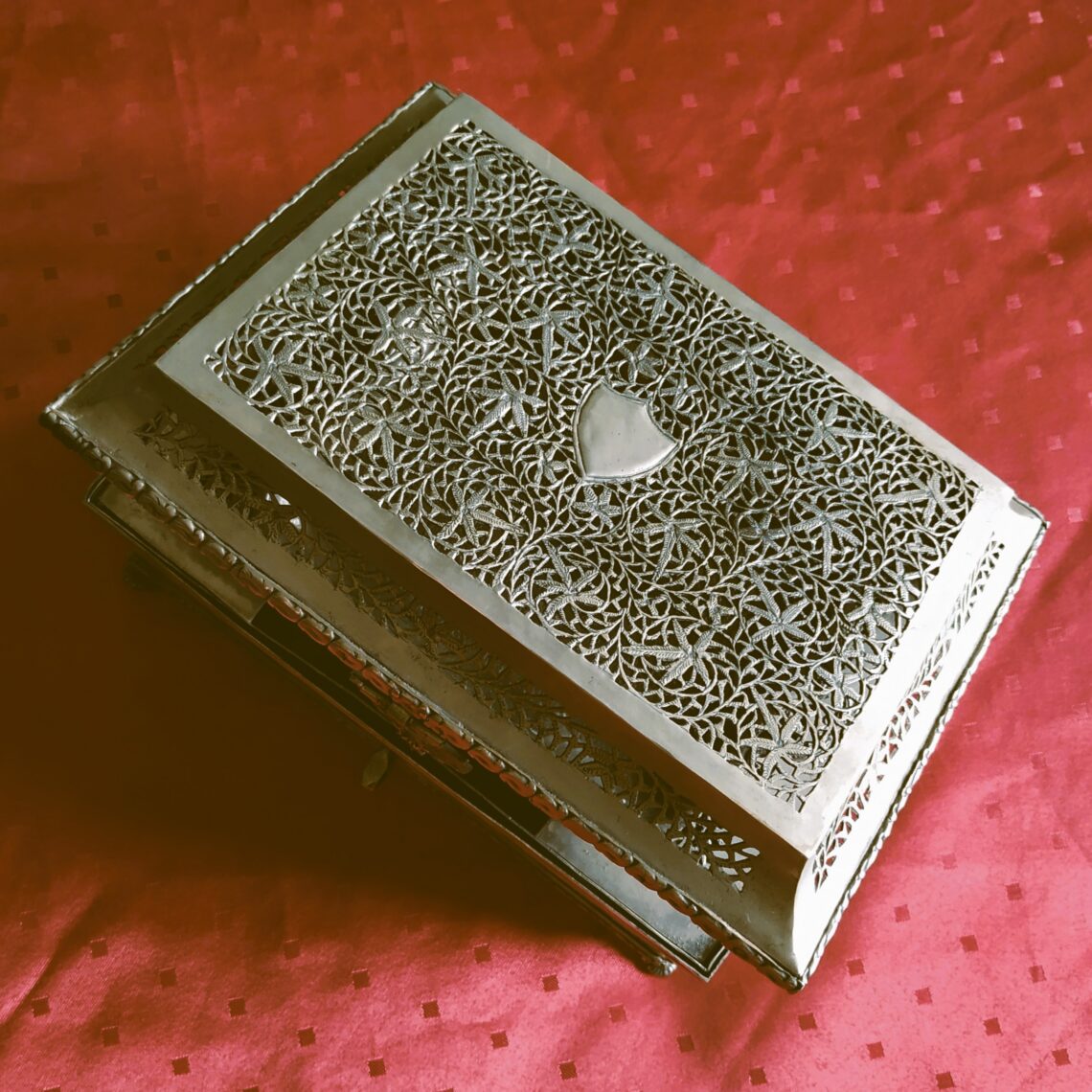
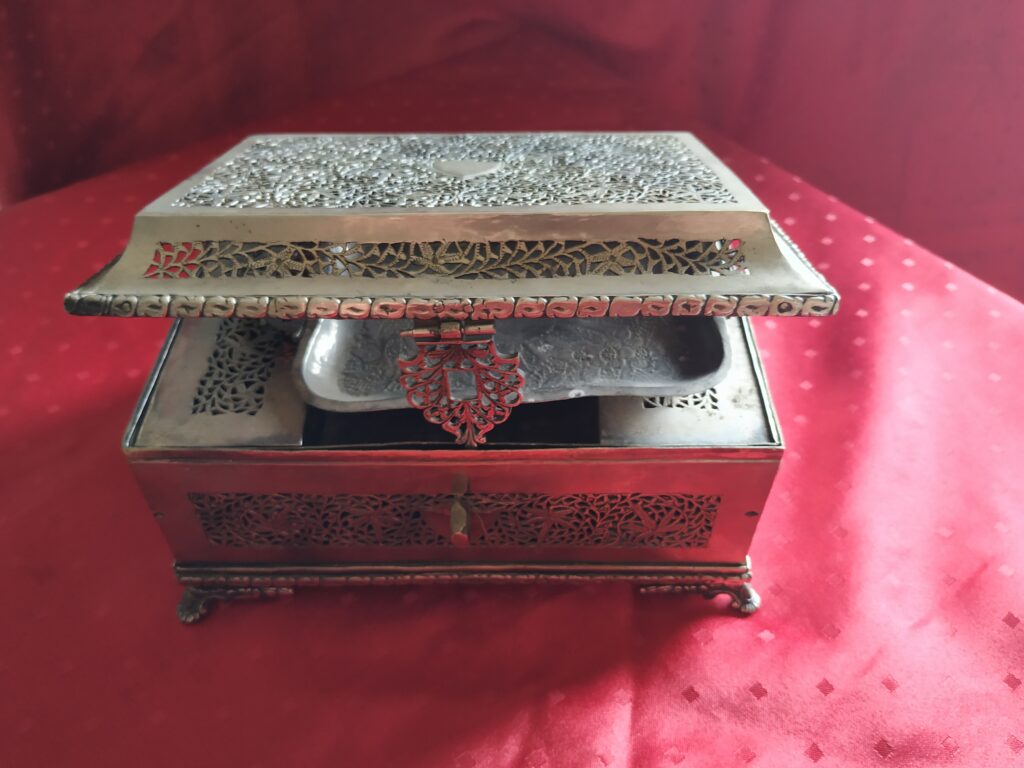
This antique silver Paan Daan, a family heirloom from the late 19th or early 20th century, bears testimony to the workmanship of a generation of highly skilled artisans whose use of traditional techniques and artistic designs have helped preserve cultural heritage.
It is a beautiful example of handcrafted silverware using filigree or jali work in the Deccan or Mughal traditions where pierced or perforated metal creates a delicate lace-like pattern.
The eating and serving of paan as a ceremonious offering dates back to an age when it was part of gracious hospitality and the leisurely pace of life allowed for social niceties. In South Asian cultures the paan was meant to be a delicacy offered to guests, often as an after-dinner palate cleanser, breath-freshener and digestive aid.
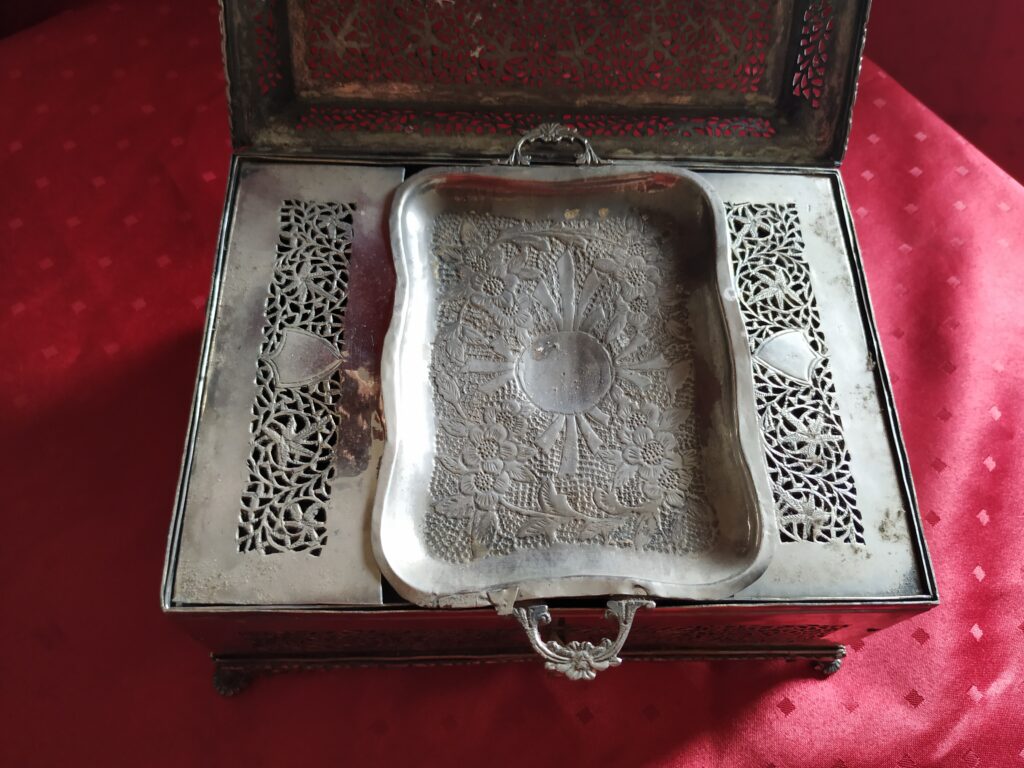
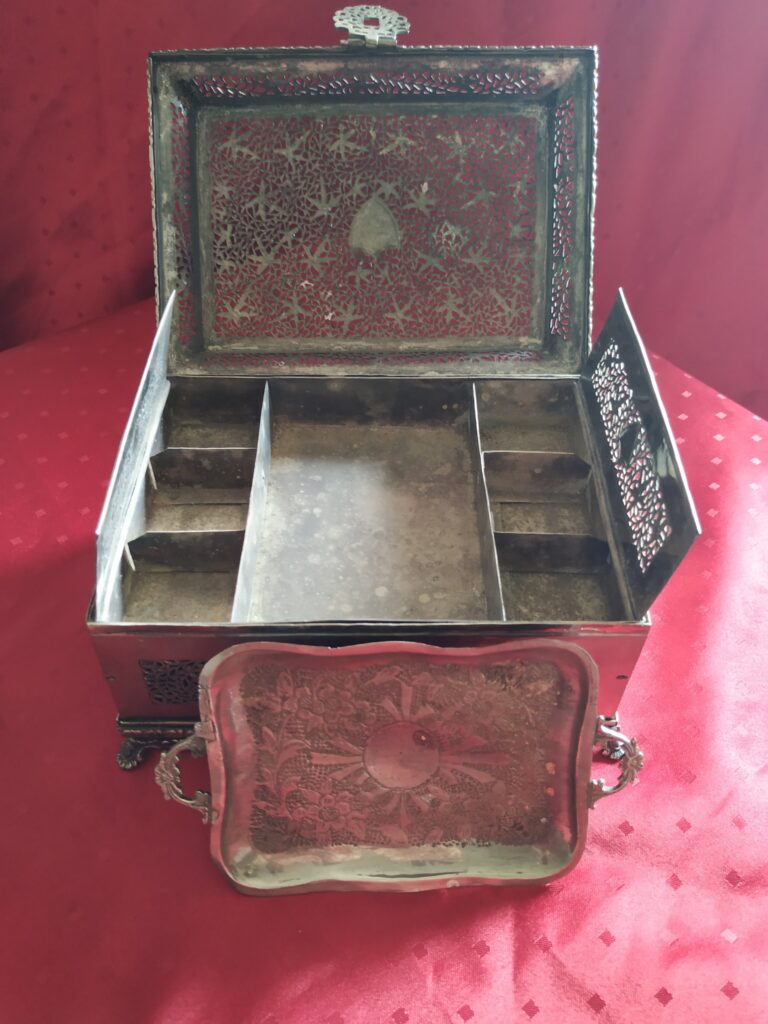
Typical of that era, this paan daan (an ornate box for storing and serving paan) has a finely engraved tray for presenting the prepared paans in neatly folded triangular or conical shapes held together by a pierced clove. The space at the bottom of the box is for keeping fresh betel leaves.
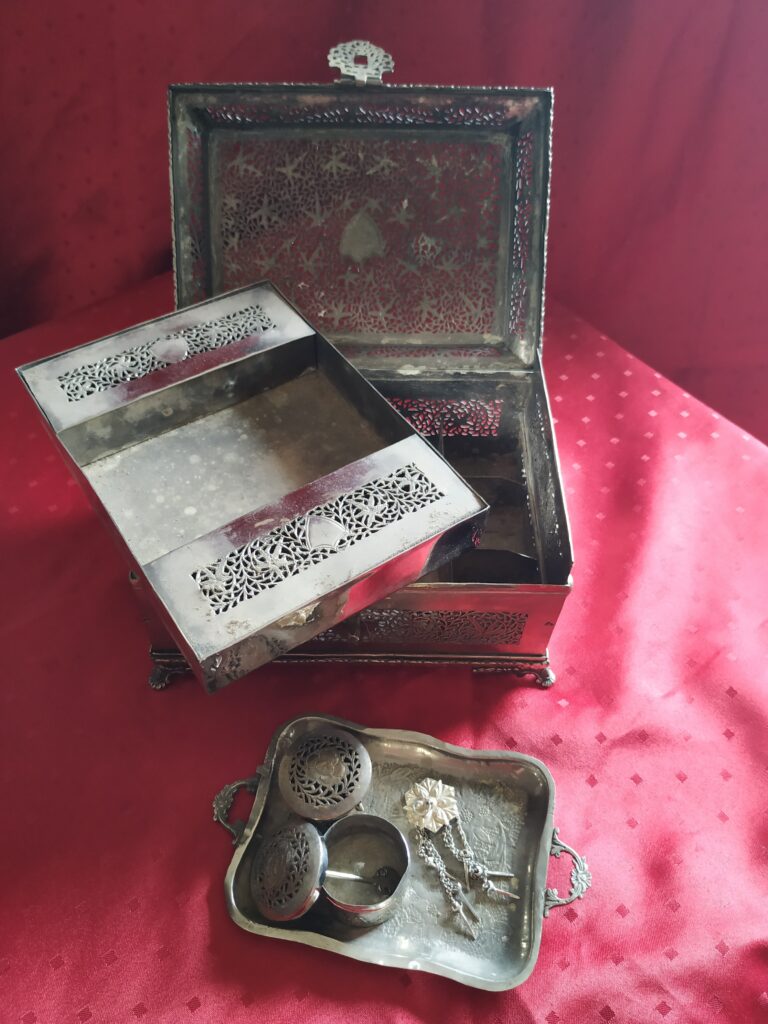
The smaller side compartments and dainty silver boxes are for storing the essential ingredients and fillings that go into making a paan, such as chopped areca nuts (supari), slaked lime (chuna), red katha paste, dried desiccated coconut, fennel seeds (saunf), and cardamom.
Apart from the domestic and household use of paan daans (it was not unknown for a silver or brass paan daan to be included in a bride-to-be’s wedding trousseau), in yesteryear’s mujra and tawaif culture, the paan daan played an important role. In the much talked about Netflix serial Heeramandi (The Diamond Bazaar), the paan daan is used as a significant cultural prop in the hands of the head courtesan as she instructs her underlings in the art of folding and offering paan; the size, weight and level of ornamentation of the paan daan being indicative of her relative power and status.
The preparation and serving of paan was an intimate ritual of hospitality and etiquette practiced by high-class courtesans (tawaifs) for their elite patrons at mujras and mehfils. Offering a freshly folded paan wrapped in silver foil (waraq), scented with aromatic ingredients such as gulkand(rose petal paste), saffron and cardamom, and served from an elaborate silver paan daan, was the epitome of grace and refinement. The paan was also used as a symbol of seduction. The way it was prepared and folded and the manner in which it was presented conveyed a subtle message of shared intimacy.
Today, the consumption of paan continues to be a popular, if less elegant activity, judging from the presence of the ubiquitous paan wallah at practically every street corner. Replacing the erstwhile mehfils, the neighbourhood paan kiosk has become a local social hub where men usually gather to chew a paan, smoke a cigarette, or exchange the latest neighbourhood news and sports updates.
With easy accessibility to a variety of paans to suit every possible taste (you can even have paans delivered to your doorstep), the handcrafted paan daan has, not surprisingly, become a relic of the past, kept as a keepsake or memento of a more relaxed and slow-paced era.
The demand for cheaper, machine-made goods has not only robbed traditional artisans of their livelihood but also been responsible for the rapid decline of centuries-old skills and techniques once handed down from generation to generation.
Photographs by the author
Saeed Ibrahim was educated at St. Mary’s High School and St. Xavier’s College in Mumbai, and later, at the University of the Sorbonne in Paris. He is the author of three books: Twin Tales from Kutcch, a family saga set in Colonial India; a short story collection entitled The Missing Tile and Other Stories; and Memory & Memorabilia, a family-based memoir. His short stories have appeared in The Blue Lotus Magazine, Borderless Journal, The Hooghly Review, Different Truths, Lothlorien Poetry Journal, Well Read Magazine, and elsewhere. His other writings include newspaper articles, travel writing, book reviews, and two essays for the Museum of Material Memory.
Website: https://saeedibrahim.com
Facebook: Saeed Ibrahim
LinkedIn: Saeed Ibrahim
X: @SAEEDIB59126157
IG: @saeedibr649