
Guinotte Wise
The first bull ride often occurs at a school. I should say, the first real bull ride, aside from, and after, the steers and the little britches and 4H competitions. The illusion of control exists at these places. You think you’re possibly going to be paired with animals of your own rank, perhaps easy bucking bulls who will be careful, allow you a standing dismount, a dignified walk to the fence as the considerate bull veers off to the bull pen gate to rejoin his compatriots.
Then you hear thunder. It’s a hot, sunny day in Mesquite, Texas, so what’s up with that noise? A student says they are driving the bulls up. Whistles, four-wheeler sounds, hollering. You are standing among a cluster of students in the main arena, and you can feel the bulls through the ground, through your worn boots. A pen behind the chutes fills with bulls. Then it’s pretty much chaos.
I’m placing myself in a much younger context here, many years ago. And, in a way, it is my first rodeo. One of the young cowboys says, “What about the bucking machines? I saw a bucking machine outside.”
The instructor, a legendary bull rider, hears the comment as he strides up. “I don’t like ‘em. They have no use other than bar entertainment. There’s no way one can even begin to approximate the moves of a bull.” He doesn’t explain why they have one, but one gathers that it’s not in frequent use, not here.
He continues, “We’re here to ride bulls.” He looks at a list, calls my name, startling me. Then he calls several others, tells us to follow him, and bring our gear. The school animal handlers have loaded five bulls into the chutes. My chute is number one.
Before I go on, how is this anything like writing? Well, as a workshop experience, the cowboys are a diverse bunch. Some nervous, some affecting consummate cool, others anxious to let you know their experience. “I’ve probably ridden fifty bulls, but never had any real step-by-step teaching to go with it,” a chunky young cowboy states to no one and everyone. (When he got situated in his chute, he said “Let’s dance!” with his head nod. This guy was in a movie all his own. He was remonstrated by the instructor afterward, “And none a that lame-ass ‘let’s dance’ shit either. Just nod your head, two, three times so the handler knows to open the gate.”
After my ride, and early buckoff he told me I looked like a “monkey fuckin’ a football” because I hunched up and tucked my balance hand in to my stomach instead of using it. When he explained to “wave it like a windshield wiper” it became clear to me why they call it the balance hand; it moved a lot, and was always helping the rider stay “down on his gripping hand.”
“Once you get air between you and the bull, game’s over,” he said. “You can’t outmuscle a bull.”
The instructor had arms like tree stumps, but he said that kind of muscle comes from hard work, “but it don’t impress a bull. Balance is where it’s at. Staying with and just ahead of the next move.” We paid attention. This man was a four time world champion. In writerese he was a bestseller many times over, been there done that, not his first _ _ _ _ _. This was someone you paid rapt attention to, took mental notes. In a writer’s world it was like having Barry Hannah or Bob Shacochis as a coach; and I was lucky enough to experience just that, both of them, in one workshop long after this rodeo school; it literally (and literarily) changed my life. And my housing. I so loved the facility I took pictures and drawings back home and proceeded to build on to the small hundred-year-old farmhouse my wife and I lived in (I was doing LOTS of freelance writing for the car companies which not only paid well, it taught me word-count discipline, editing skills and accuracy of description).
So. The parallels. Rodeo vis-à-vis writing. You’ll encounter BS in both, especially the writing, as the internet’s BS factor has risen considerably. Writer Beware is a good resource for checking many of those too good to be true offers. Becky Tuch’s Lit Mag News is a resource, so is Chill Sub’s Sub Club.
You’re going to get hurt in either pursuit. In rodeo, it’s not if, it’s when. Same with writing, but how much depends on your resilience and resignation to getting lots of rejections. In rodeo, there’s usually a trainer to look you over, and an ER somewhere. No ER in writing; perhaps a writers group can assuage your wounds. Sooner or later, and I’m sorry about this, you gotta cowboy up and get on with it.
Getting to the buzzer on a bull ride, and dismounting unhurt is exhilarating. But if it was an easy bull in the judge’s eye, another rider may get the buckle and the money. Writing contests are just as tough. “Close” may get you a short list runner-up mention, or even publication in the lit mag, but not the glory. Short-lived glory at that. Milk it when you get it. And start working on the next one. Rodeoers are piling their gear into vehicles and heading to the next venue, winners or not.
I witnessed an interview with a winning circuit bull rider years ago and it wasn’t uplifting; asked how much he made last year, he said “Twenty thousand.” Asked his expenses, he replied “Thirty thousand.” A lot like writing, right? For most of us. I won $1,000 and publication of a book of short stories a few years ago. I learned a thing or two about editors from that deal. Not all changes are beneficial, not all editors are your book’s friend.
I had seven more books published (traditionally) since. Don’t quit your day job. That award-winning book was on Amazon for about eleven bucks, I had to pay $7.50 per copy from the publisher, and by the time I got done, the whole transaction cost me about $5 each; a dumb business model, but I thought okay promotionally. For a while.
You draw your bull, you take your ride. An advertising colleague sold his book through the agent who handled Zen and the Art of Motorcycle Maintenance for a very large advance, $250,000, probably a million in today’s money, then the publisher pulled all promotion; the book (Gray Eagles) didn’t sell well, and he ended up owing the publisher most of the advance.
I did a screenplay of the book for that same agent, then the agent passed away. The author has also died. That book is in a sort of limbo. The author rode a badass bull, won the buckle, the money, but not the go-round. And they ended up taking back the money, or as much as they could recoup, book by book, as he sold them at tables at sporting events, air shows, anywhere he could think of. Talk about your ups and downs. Your hung-up dismounts. But we’re writers, so we write. Right?
I recall that cowboy interview years ago, when the reporter asked him why he did it, why he rode bulls, if the pay was so dismal; he replied, “Too nervous to steal, too lazy to work.” Then he jumped into a rusted TransAm and took off for the next rodeo. You don’t get anywhere asking a bull rider why they do it; they’ll avoid the question. Maybe we writers do too.
At any rate, the rodeoer and the writer are both in the arena, not the bleachers, just watching. We’re out there with our try. Our ability. And the luck of the draw.

Wise writes and welds steel sculpture on a farm in southeast Kansas. His short story collection, Night Train, Cold Beer, won publication by a university press and enough money to fix the soffits. Six more books since. A Best of the Net and 5-time Pushcart nominee, his fiction, essays and poetry have been published in numerous literary journals including Atticus, The MacGuffin, Southern Humanities Review, Rattle and The American Journal of Poetry. His wife has an honest job in the city and drives 100 miles a day to keep it (Covid changed some of the circumstances).
Some work is at http://www.wisesculpture.com
Featured photo by Sinan Özdemir (Pexels)


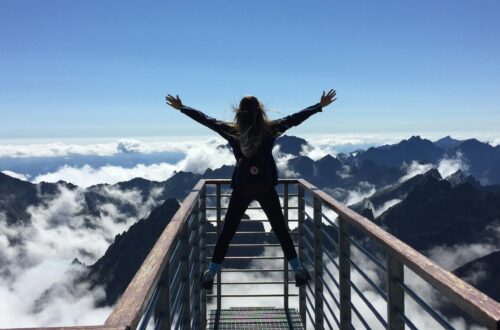
Thanks, Hooghly editors, for including my piece and for the waaaay cool photo by Sinan Özdemir (Pexels)–it’s perfect in its way. (The cowbell IS an integral part of bull riding.) BTW, take a look at Zadie Smith’s rules of the essay, in my blog http://www.wisesculpture.com/blog just up. I stole it from The New Yorker.
Glad you like the photograph 🙂