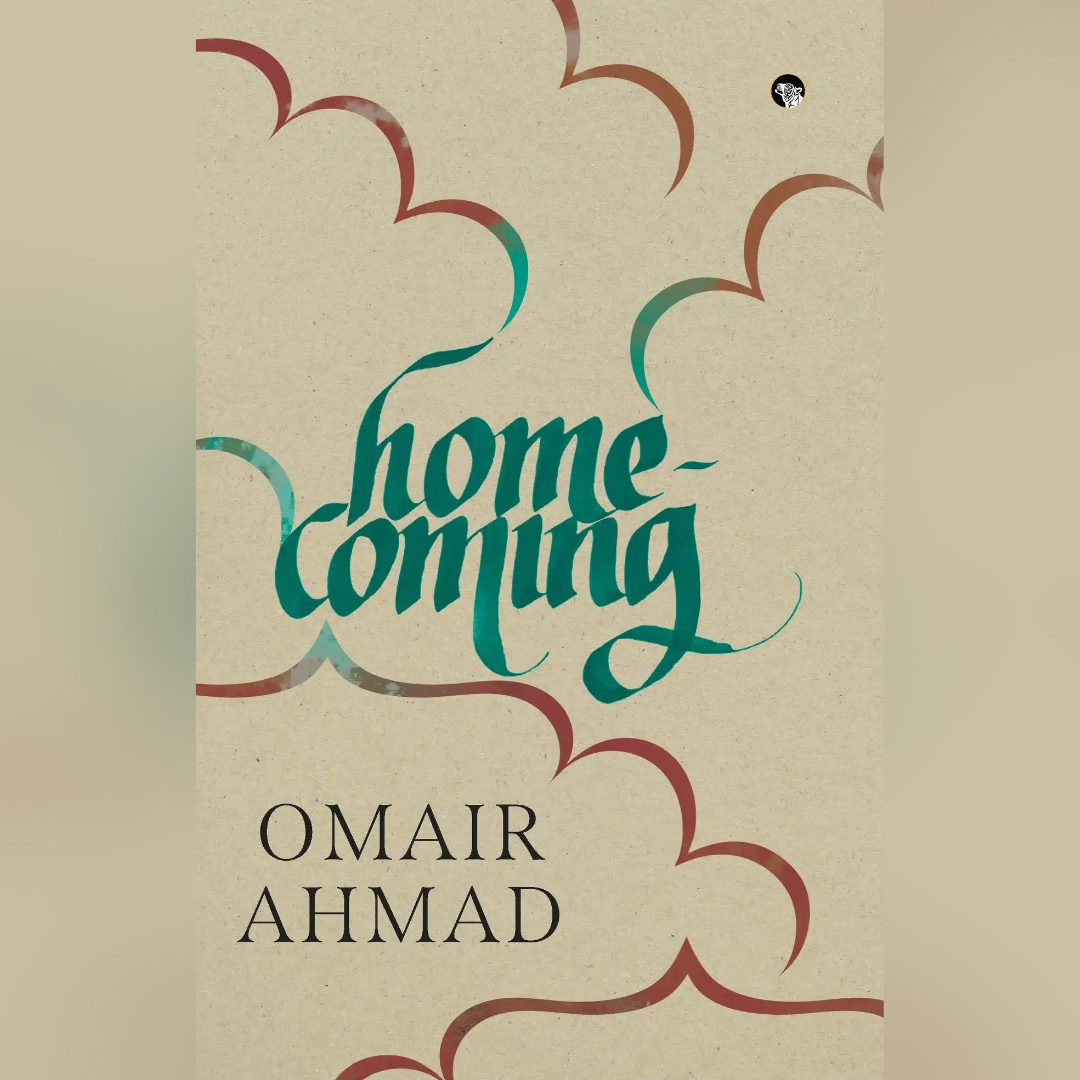
Omair Ahmad’s Homecoming is a thoughtful, slow-paced story that asks a deceptively simple question: What makes a place feel like home? Is it where we are born, the people we love, or the memories we choose to carry? Rather than offering easy answers, Ahmad lets these questions unfold gently through the life of Hassan, a man who has spent much of his life searching for a place where he truly belongs.
Hassan is in Lucknow hoping to find the city whose culture and poetry his father had once cherished. Instead, he finds himself an outsider, belonging fully neither to the city, since he is a South Indian, nor to the past he has inherited. His life changes when he meets the elderly and dignified Ahmed Sahib, who despite being impoverished introduces him to an older, more gracious Lucknow. Their friendship is built less on conversation than an understanding of how families break up, and it becomes the emotional heart of the novel. Through Ahmed Sahib he meets Samina, another soul looking for stability, and together they begin to imagine a life that might finally feel like home.
Through Hassan, Ahmed Sahib and Samina, Omair Ahmad presents three distinct relationships with the same city. Hassan is searching for a sense of belonging, Ahmed Sahib lives with memories of the Lucknow that once was, and Samina seeks to connect with a past she has inherited but never truly experienced. Together, their stories suggest that home is shaped as much by human relationships as by place itself.
Ahmad’s greatest strength lies in his restraint. He writes with remarkable economy, allowing silences to carry as much weight as dialogue. The novel is filled with understated moments—a shared walk, a remembered building, a quiet conversation—that gradually reveal its emotional depth. Lucknow itself emerges as one of the book’s most memorable characters, not as a city of monuments and nostalgia alone but as a living place struggling to retain its identity in the face of rapid change.
The demolition of a small historic monument becomes symbolic of a much larger loss. As the city’s old neighbourhoods disappear and familiar landmarks give way to development, Hassan’s search for belonging becomes even more uncertain. Ahmad avoids sentimentality, but there is an unmistakable sadness in his portrayal of a city whose cultural memory is slowly being erased. The novel becomes not only a story about individuals but also a meditation on what happens when places lose the histories that once gave them meaning.
Yet Homecoming may not appeal equally to every reader. Its pace is deliberately slow, with little conventional plot or dramatic conflict. The novel’s cast of characters occasionally works against its expert crafting. As characters enter and leave the narrative, it can be difficult to keep track of how each fits into the story. While they add depth to the intersecting journeys of Hassan, Samina and Ahmed Sahib, some are too briefly sketched to leave a lasting impression, making the narrative feel more crowded than it perhaps needs to be. Much of the narrative unfolds through reflection rather than action, and readers expecting a tightly structured story may find it understated. Some of the supporting characters remain lightly sketched and the story ends rather more abruptly than one would have expected.
Even so, these qualities are also part of the book’s charm. Ahmad trusts his readers to discover meaning in pauses, memories and small gestures. His prose is elegant without calling attention to itself, and his observations on migration, memory and identity linger long after the final page.
In an age when novels often rely on spectacle, Homecoming chooses intimacy instead. It is a thoughtful meditation on displacement, companionship and the fragile idea of belonging. While its measured pace and understated storytelling demand patience, the novel rewards readers with a deeply humane portrait of people searching not simply for a place to live, but for a place where they can finally feel at home.
Omair Ahmad’s Homecoming (Speaking Tiger, 2026) can be ordered here.

Born in Allahabad, schooled for a time in the UK, Anjana Basu has to date published ten novels and two books of poetry. Her novel Curses in Ivory was published by HarperCollins in 2003. In 2004, she was awarded a Hawthornden Fellowship in Scotland, where she worked on her second novel, Black Tongue, published by Roli in 2007. She began writing for children in 2010 when Roli brought out Chinku and the Wolfboy. Her Jim Corbett’s ghost series for TERI deals with big cat conservation for children—the fourth in the series, Hide and Seek Tiger, was published in June 2019. Conspiracy of Aunts, her first adult novel after years, was brought out by Readomania in the same month. Her byline has appeared in Outlook and Outlook Traveller. She has worked on the dialogues for the Amitabh Bachchan starrer The Last Lear, directed by Rituparno Ghosh. Anjana Basu lives and works as an advertising consultant in Calcutta.