How to be a Good Nigerian
Wake before the generator does.
Check the light.
Check your phone.
Check the light again,
as if electricity might have developed
a conscience overnight.
Say good morning
to the neighbour who borrowed your chair
three years ago
and has since promoted it
to family property.
At breakfast,
eat whatever is available
and call it gratitude.
When someone asks,
“How are you?”
Say, “I’m fine.”
This is important.
Never answer honestly.
Honesty is a luxury
like uninterrupted power
or a government office
that opens at the time
written on the door.
When the rain begins,
run outside
to rescue the clothes
you left drying
because yesterday the sun
promised to stay.
Believe every politician
for exactly six seconds.
It is healthy to have hope,
but not healthy enough
to leave your wallet
unattended.
When the fuel price rises,
raise your eyebrows.
When the price rises again,
raise your expectations
of disappointment.
When your friend says,
“Let’s meet at eight,”
understand that eight
is not a time.
It is a suggestion.
When your mother says,
“We need to talk,”
remember every sin
you have committed
since childhood.
When someone dies,
say, “God knows best.”
When someone gets married,
say, “God is good.”
When someone becomes rich overnight,
say nothing.
You may be standing
too close to the miracle.
And when the country asks
what you want from it,
say:
“Nothing.”
Then quietly check
if your passport is still valid.
The Man Who Was Always on His Way
My friend is never late.
He is always coming.
At nine in the morning,
he is “on his way.”
At ten,
he is “almost there.”
At eleven,
he has “entered the road.”
By noon,
he has “seen the traffic.”
By one,
he sends a voice note
recorded beside a moving generator:
“Bro, five minutes.”
His five minutes
has no relationship
with the five minutes
known to clocks.
Scientists should study it.
Perhaps it lives
somewhere between Lagos
and tomorrow.
Once,
I waited for him
outside a restaurant
until the waiter
began to pity me.
“Sir,” he said,
“are you expecting someone?”
I said yes.
He asked,
“Is the person alive?”
I said,
“Technically.”
At 3:47,
my friend called.
“Where are you?”
I looked at the empty chair
beside me.
“Still here.”
He laughed.
“Good. I’m close.”
This time
I believed him.
Not because I trusted him,
but because the restaurant
was closing.
At 4:02,
he arrived,
smiling,
breathing like a man
who had just outrun
the entire Nigerian road network.
“Sorry,” he said.
“Traffic.”
Of course.
Traffic is the most reliable person
in all our lives.
It always arrives.
My Mother Discovers the Internet
My mother joined WhatsApp
and immediately became
the most informed woman
in our family.
She now knows
when the world will end,
which fruit cures every disease,
which politician has secretly died,
and which celebrity
is secretly somebody’s cousin.
Every morning
she sends me a message:
“Good morning.
Forward this to 15 people
or something bad will happen.”
I ask her who wrote it.
She says,
“Someone reliable.”
I ask who.
She says,
“My friend sent it.”
I ask where her friend got it.
She says,
“From another friend.”
This is how information
travels in our family:
from one grandmother
to another,
through three aunties,
past a pastor,
and finally into my mother’s phone
where it becomes truth.
Yesterday she called me
very worried.
“Have you heard?”
“Heard what?”
“The government has banned rice.”
I stopped breathing.
“For real?”
“Yes.”
“Who told you?”
She sent me a screenshot.
The screenshot said:
“BREAKING!!!”
Nothing else.
I told her it was fake.
She became offended.
“Fake?”
“Yes.”
She went silent.
Then:
“So you think
the person who sent it
is a liar?”
I said no.
She said,
“Good.”
Then she forwarded it
to me again.
Later that evening,
she discovered emojis.
Now every argument
ends with a laughing face,
a prayer hand,
and a red heart.
Even when she is angry,
she sends:
“Come home early. ❤️”
Which means:
Come home early
or prepare your funeral. 🙏😂
I have learned
not to underestimate
a woman with Wi-Fi.
My mother used to say
the world was dangerous.
Now she sends me
the danger
before breakfast.
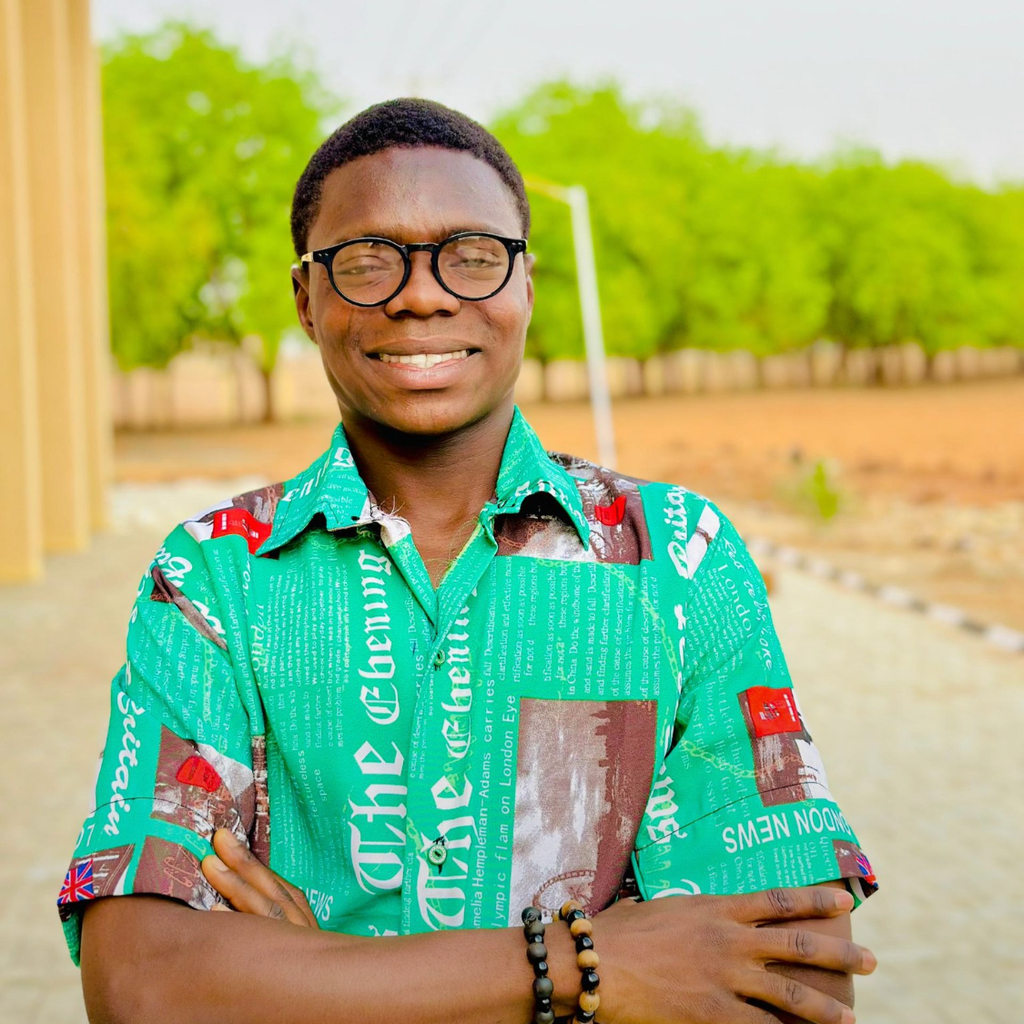
Hassan Ismail Adekunle is a Nigerian poet, reporter, and creative writer whose work listens closely to the human condition. A graduate of Political Science from Usmanu Danfodiyo University, Sokoto, he graduated with Second Class Upper Division and was named the Best Graduating Student Journalist of his set. His writings have appeared in Brittle Paper, Borderless Journal, Eunoia Review, The Nation, TheCable, The Galway Review, Kalahari Review, and several other literary and cultural platforms. His work moves through memory, love, loss, society, and the fragile architecture of hope, seeking poetry in the ordinary and meaning in the silences between lives.
X: @IsmailHass93183
Featured photo by Detty Images (Pexels)