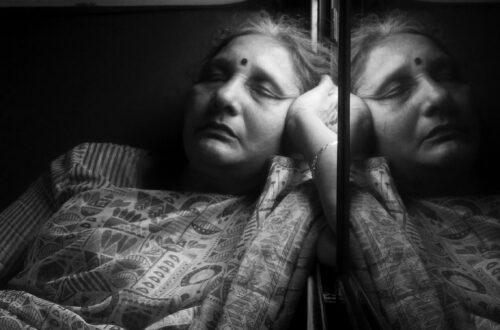
Personal histories, memories, unspoken fears, joys are all evoked by a fragrance, a dish from home.
Reading history at undergrad had been so much fun that I postponed the world of work and a lucrative job offer and enrolled for a Masters. But the Arts Faculty at Delhi University gave me a culture shock of sorts. Though only a short walk from the college where I had spent the past three years, the atmosphere at the postgraduate university department was quite different. It was less an academic space than an interstate bus terminus; groups of students moved aimlessly about, nobody seeming to know where they were going or what they were doing.
The Law Faculty next door, separated from us by only a short wall, seemed even worse. All the lumpen elements aiming to get into politics were said to take this rosy path. As for our own sophomores, they seemed utterly indifferent to their surroundings, viewing further history studies as a mere technicality that would allow them to use hostel facilities for a few more years while they tried, often repeatedly, for a placement in the UPSC – the first step towards the coveted rungs of the Indian Administrative Services. Nobody seemed interested in the actual curriculum.
This, for me, was a far cry from the energy and enthusiasm of my undergraduate studies at Miranda House. Worse was the attitude of most of the teachers, who turned up only to mark attendance and left us with bunches of cyclostyled notes with which to manage the entire semester. After the rigorous teaching and careful nurturing by our ardent teachers over the past three years, this was unexpected, not to say shocking. Nobody seemed to belong, the faculty itself was on loan from the fifty colleges of the university. In this structure, the onus of sincerity was entirely on the individual teacher. The very few brilliant and steadfast ones we did have – Professors D.N. Jha, Gyanendra Pandey, and Shahid Amin among them – were the proverbial exceptions, and of course we made sure never to miss their classes.
A few weeks passed in this desultory phase of disillusionment.
Then one morning came a summons from a teacher whose name I’m quite unable to recall now. Let’s call him Dr Sinha. He was a professor at St Stephen’s College, an institution that has always, not necessarily with reason, prided itself on being a cut above the university it belonged to, at least technically. Sinha Sir went a step beyond the itinerant teachers who had at least turned up in the past month to mark attendance; he wanted to hold the class in his official quarters. Mind you, those were certainly not the days of working from home, but why not. Those of us in class that morning trooped off in a bunch to Stephens, and made our way through the grounds to the staff residences. In a neat bungalow, a diminutive individual with a grey toothbrush moustache awaited us.
In the beginning, the class proceeded on conventional lines. But after a while, it was hard not to notice the change in our teacher. A certain restlessness enveloped him. He fidgeted in between telling us the broad features of the course, then got on to the actual lesson in a somewhat absentminded way. Meanwhile, we couldn’t help hearing the sounds of the household. The time was a little past noon, and in the back quarters of the house, a certain clang-clang went on, mixed with the sounds of our note taking and Dr Sinha’s languid remarks. Some students began to giggle, others quietly took their chance and slipped away. As the clock moved towards a quarter to one, Dr Sinha’s expression towards his class became positively impatient.
Finally, came the denouément. A loud hissing sound came from the kitchen, followed by the most divine fragrance that filled the house. Bas phir kya tha. Our teacher disappeared hotfoot murmuring some mantra under his breath and we understood that class was over for the week.
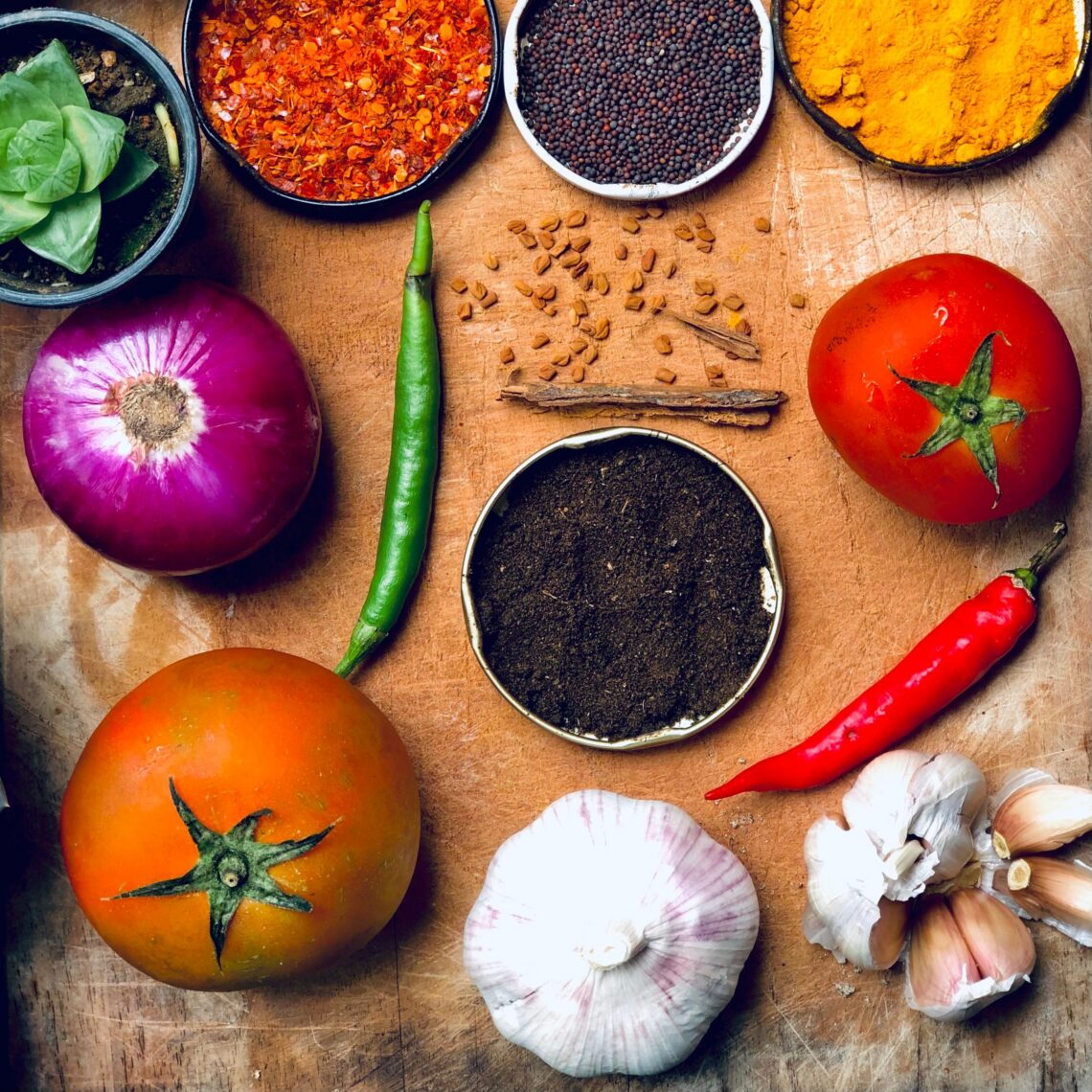
Garlic, red chillies and cumin had effectively dismissed us!
Sab kuch khaini, dugo bhunja na chabaini. As they say in Bihar, even after you’ve eaten your fill, you do feel like eating something else. And one of the mainstays of that big meal is likely to be the dal or curry. Take a big scoop or half katori of arhar dal. Swirl it clean in a couple of waters and pressure cook. It should be well cooked but not mashed as in sambar, so watch that whistle. Now for the chhaunka! This is the heart of the dish. In a saucepan, add a dollop of ghee and when it simmers, add your half teaspoon of jeera, one sookha red chilli, and a pinch of hing. When it’s done, pour the hot dal into this potent mixture and serve immediately. Enjoy with hot rice and chokha.
Yeh Moong aur Masoor!
Take a full katori of masoor dal. The reflected pink dal in the water may remind you of a lake in Ladakh. Wash it several times. Let this cook in a patila at low to medium flame. Add more water if you need to. When you see the grains separating and becoming puffy, you know it’s done. Take it off the stove. Cut some slivers of garlic and onions sliced long. How much depends on tastes in the household. Now in a kadhai, heat the ghee and add the jeera, a dry red chilli, and roast them lightly. Some people prefer green chillies to red, but red has a distinctive aroma that I personally enjoy. Now add the slivers of garlic and onion. If you want to add a bit of tomato, now’s the time. [My friend from Bihar suggests dipping in raw mango in the summer months instead of tomato. Now that, I must try]. When it’s all done, add the dal and simmer with some ghee. Ready to go! Hansle ghar basela. Do well, be well.
[Recipes courtesy the kindness of Pushpita Roy, my friend from university days.]
Lina Krishnan is a poet, artist and writer in India. Her work can be seen in the magazines Husk, Setu Bilingual, Narrow Road Literary Journal, Shot Glass Journal, Impermanent Earth, The Sunflower Collective, as well as in collections such as Witness, The Red River Press Book of Poetry of Dissent, Khushk Zubaan, Bebaak Jigar, a collection of stirring work by women artists, Soul Spaces: Poems on Cities, Towns, and Villages, and in three editions of the Yearbook of Indian Poetry in English.
Instagram: @inkifix; X: @Khanabahdosh
Featured photo by Artz Room (Pexels)