Selina Sheth
‘Fast Wheels! Great Meals! Best Deals!’ So promises The Walrus. He rests fatly on a sky-blue banner strung high between two steel electric poles, and puffs out bold black text to make things clear: ‘Welcome to Vicky Walrus Tours and Travels. Satisfaction Guaranteed!’
Here, in Central Delhi’s Pahar Ganj, a bustling inner-city district crammed between the New Railway Station and the once iconic, now decrepit Delite cinema, nothing ever appears to go according to plan, not even crossing the street, but this is exactly why The Walrus triumphs. Combining the calm of Mahatma Gandhi and the chutzpah of Saul Goodman, The Walrus presents as a toothy-grinned messiah – delivering hope amid fever-pitch frustration, flexing control over unbridled chaos.
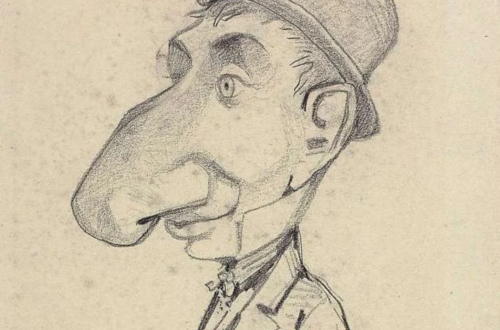
Vicky ‘The Walrus’ Sharma’s clients are mostly frazzled European hippies for whom low-budget summer travel in India has swung from novelty experience to nightmare. After backpacking through serene Angkor Vat and laid-back Bali, they are ill-prepared for Pahar Ganj’s mad maze of cycle rickshaws and seedy hotels, congested streets and open drains, neon-lit souvenir stalls and harried street-food vendors, menacing pimps and world-weary streetwalkers, sharp-eyed pickpockets and glib-tongued hustlers. But this is where Vicky – fixer with mythical powers, soother of the outsider’s anxiety – feels right at home. Triple-chinned and double-jowled, his flab squelched into a T-shirt as orange as the sun, his Elvis-style sideburns resembling a pair of swarthy tusks, The Walrus adroitly manages flight bookings and re-bookings, cancellations and attestations, misprinted train tickets, stolen wallets, lapsed visas, lost I-pads, and quick-fix herbal remedies for all that plagues the hapless-in-transit.
For all his cheery swagger, Vicky worries. In this current age of online bookings and e-tickets, The Walrus faces stiff competition from digital travel businesses. It’s becoming more and more difficult for him to manage the costs of maintaining a physical office – even if all this consists of is a small attic, a few pieces of clunky furniture, a desk-top computer, two landline phones, and three cell phones. What takes pride of place is a softboard of faded snapshots, ticket stubs, and sweet notes that grateful clients (Vicky’s ‘Forever Friends’) send him once they are safely back home. Perhaps this is why despite insurmountable challenges – the Internet revolution, the advent of Smartphones, the consequent independence of modern global nomads – he cannot bring himself to shut shop.
Vicky tells me all this soon after I arrive in his office on a hot afternoon in May. I’m writing a feature on Walrus Travels and Tours for an online start-up, and Vicky, eager to impress, makes sure that he is in active work mode while we talk. I watch him make a slew of calls, threaten an airline company for misplacing a precious piece of baggage, cajole an irate passenger into accepting compensation. Close to five, he orders us milky cardamom chai and a greasy (but tasty) Chili Manchurian from the Chinese resto-van parked across the street. We eat our ramen in ravenous silence, after which Vicky stretches, yawns, and lumbers across to a plump pink sofa for what he calls his ‘ten-minute siesta’.
Vicky doesn’t close his eyes. He is in a soft, reflective mood; brought on, perhaps, by the mellowing evening light, or by the sentimental lyrics of an old Bollywood hit that plays on the radio in the hole-in-the-wall incense shop downstairs, or by a particular photograph, tacked in the centre of his softboard, in which a lean, blue-jeaned Vicky stands shyly next to a flaxen-haired young woman. Her embroidered Indian scarf caresses her slim shoulders, and her friendly smile reveals deep dimples. ‘Karoline,’ says Vicky gently. ‘We met in the spring of ’95. Back then, she was a college student in Sweden, taking what she called a ‘gap year’ to travel through Asia. I was just another rookie tour guide, hanging around the by-lanes of Main Bazaar, looking to make some extra cash.’ Vicky chuckles at the memory, but his large brown eyes are moist at the corners. ‘Karo would tease me about how I resembled a young Omar Sharif. Movie-star handsome, just like Yuri Zhivago, she said.’ (Does Vicky notice my bewilderment? I doubt it, because he presses on.) ‘Karo’s passport got flicked the first week we met, on the day I was showing her the Red Fort. Luckily, I had a contact down at the local station who knew the gang that operated in those parts. When I got Karo her passport back, she was so overwhelmed that she invited me to join her that evening, to watch the Niazi Nizami Brothers perform at the dargah of Nizamuddin Auliya. Can you believe, I’d never been before? I always thought these Sufi concerts were a showy tourist trap. But that night with Karo was mesmerizing. We swayed under the full yellow moon and felt the flames of Khusrau’s verse warm our blood. I even translated Karo’s favourite Rumi couplet for her. Do you know it? Lovers don’t finally meet somewhere. They are in each other all along.’
Vicky’s sausage-shaped fingers quiver to the music in his head. ‘Karo was supposed to write from Sweden, but it’s okay, I don’t blame her for not keeping in touch. It’s not like we had any of this email-Instagram stuff in those days, only state-run post offices and slow Air Mail.’ I search Vicky’s face for a sign of bitterness, a hint of resentment, but there is none. ‘Perhaps it’s my fault,’ he says. ‘I didn’t write either. At the time, I wanted to enrol in the Columbus Tourism course in Mumbai, partly because I’d never seen the ocean, but mostly because a CT diploma was a ticket to the world. Niagara Falls. Machu Picchu. The Northern Lights in Scandinavia. And maybe a stopover in Malmo, Karo’s hometown.’ Vicky shrugs. ‘But nothing came of my plans. A few weeks after Karo went home, my father had a fatal stroke. I had to take care of my mother, who was ill, and my brother, who was in his final year at school. There was no time to waste. I borrowed ten thousand rupees from my cousin and set up Walrus. All work meant no travel, but the business took off. The years passed. I had an arranged marriage with the daughter of a family friend. Seema and I settled down, had a daughter, then another.’ Vicky blushes. ‘My girls are the lights of my life,’ he says.
He pauses, as if unsure of what to say next, and then says it anyway. ‘Last month, my older one left her Facebook account open on my laptop. I did some scrolling and came across a woman who resembled Karo. Her profile picture wasn’t very clear, but then again, it’s been thirty years. Karo would have changed just like I have, no? Anyway. Could-Be-Karo has dimples and lives in Malmo. She’s also a mother – of two sons – so I assume she’s married. Or divorced, widowed, single, who knows? Her profile didn’t say.’ Vicky reaches for a pair of Ray-Ban knockoffs on the table. ‘My goggles,’ he says shyly, putting them on briefly to pose, and then, just as quickly, taking them off. I feel a surge of irrational affection for Vicky and blurt out: ‘Why not send Could-Be-Karo a message?’ Vicky responds with exaggerated horror. ‘Huh? And say what?’
I look away. The setting sun throws patterns on the walls, and through the open window, I can hear the faint sound of temple bells. When I turn back to Vicky, he is motionless, almost as if in a trance. His mouth moves as if he might be in prayer, or seeking answers from an invisible spirit locked within him. His eyes are squeezed shut; his voice is a whisper. ‘What if you made plans to meet, and came face-to-face, and confessed that you still loved her after all these years? What if she felt the same? What would you do then? You could never hurt Seema. Or your girls. Everything that you do is for their future. What kind of man breaks his home?’
Before I can react to this monologue, Vicky snaps open his eyes and hauls himself off his pink-cushioned perch. ‘It’s getting late,’ he says, his voice brusque. ‘We can continue tomorrow.’ I gather my things while Vicky calls home to ask what vegetables he should pick up from the market. We lock up, shuffle down an uneven iron staircase, weave through the crowded narrow lanes of Main Bazaar, and arrive at Vicky’s double-parked Tata Tiago. ‘I bought this beauty six months ago,’ Vicky says proudly. ‘It’s a proper family car.’
I watch as Vicky squeezes himself into the driver’s seat. A small clay figurine dangles from the rearview mirror: Lord Ganesha, the Remover of All Obstacles. Taped to the dashboard and stencilled in a neat block font, I notice a quote by Jiddu Krishnamurti: IT IS NOT THE UNKNOWN WE FEAR, BUT THE KNOWN COMING TO AN END. Vicky admits that he’s gotten into the habit of reading spiritual philosophy: on some days, a passage or two from the Bhagavad Gita; on others, the inspiring wisdom of ancient Greek Heraclitus, or the eternal Noble Truths of Gautama Buddha. Words that create order out of disorder, purpose out of confusion, the path of dharmic responsibility out of the wasteland of earthly distraction. And so, these are the teachings that Vicky meditates on, every morning and every evening, for a full twenty minutes.
I lean through the open car window and say goodbye. Vicky shakes my hand with his warm, sweaty paw; with the other, he extracts a Wills Navy Cut and a nifty silver Zippo from under the seat flap. I learn that the lighter is a gift from a Ukrainian client, who Vicky personally drove up to the weed-filled Himalayan paradise of Manali last winter.
“Listen, don’t mention to anyone that I smoke,” he says, with a conspiratorial smile. “I promised the biwi that I’ve quit, but you know how it is. That’s why I keep a toothbrush, right here, in the glove compartment. And a bottle of mouthwash.”
With that, The Walrus winks, revs the engine, glides out of his spot, honks for good effect, finds his rhythm and smoothly rolls away.

Selina Sheth is an independent journalist, screenwriter, and the author of an autofictional novel, Half Moon Rising: A Midlife Coming-of-Age, which is currently under consideration for publication in 2026. Her work portfolio includes drama and documentary scripts (written for BBC World, Asia Business News, Sony Entertainment Television, Walt Disney India and Amazon Prime), as well as stories and essays that have featured in The New York Times, Out of Print, The Bangalore Review, Nether Quarterly, The Woman Inc., Open Democracy, Cosmopolitan India, Yoga Journal International and Scroll.in. She has been profiled in the series ‘South Asian Women Writing’ (published by Kitaab magazine in Singapore), and is currently pursuing an MFA in Creative Writing through Lindenwood University’s online literary arts program.
To know more about her, please visit the website: www.selinasheth.com – or follow her on Facebook at selina.sheth and Instagram @selinasheth.
Featured photo by Adam Jones (Wikimedia Commons)