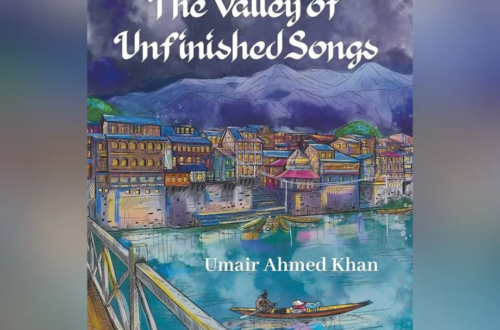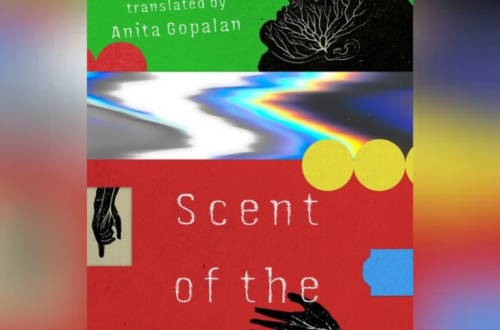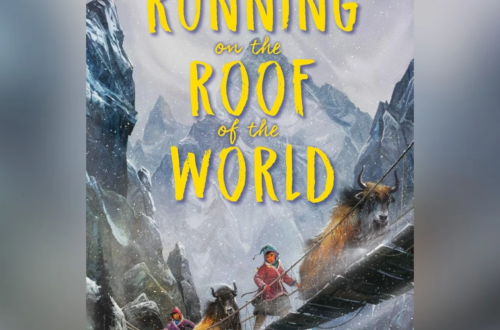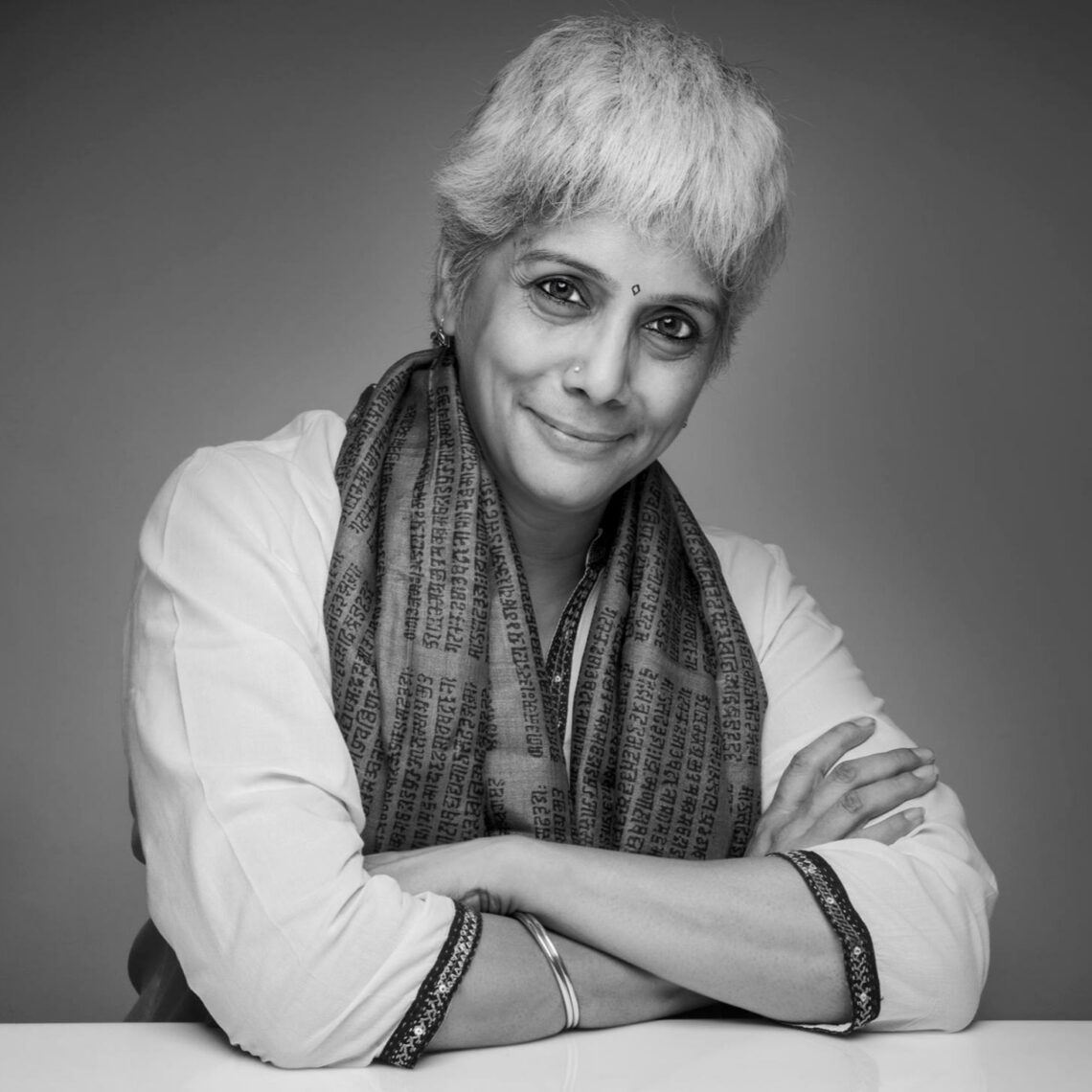
As a parent and a young, first-time entrepreneur, Shobha Viswanath, Founder and Publisher of Karadi Tales, was keen to bring stories that the children related to, and also stories could be told orally – not just read. So, Karadi Tales’ earliest projects were audiobooks with music, soundscapes and voices, brought to market at a time when audiobooks weren’t yet common in India. They have remained an integral part until today.
Since the last thirty years, Shobha has steadfastly been at the publication’s helm, solving the cash-flow anxieties, distribution struggles, and publication pipelines led by a singular quest to get the worthwhile story out in the world.
In this short Q and A Viswanath shares the defining moments, and how her ideologies translate into the vision for Karadi Tales.
What do you think is/ has been Karadi Tales’ differentiator?
If I had to reduce it to one idea, it would be this: authentic Indian storytelling with global craft, and very particularly, our audio storytelling.
But authenticity alone isn’t enough.
We bring the highest standards of storytelling, illustration, music and design that these stories deserved. We collaborate with contemporary illustrators, drawing from diverse Indian visual traditions.
Another differentiator is our multi-sensory approach to storytelling. Long before audiobooks became fashionable, we were producing richly layered audio productions with professional actors, musicians and sound design, with the aim of recreating the experience of a live storyteller.
Finally, there is a conscious attempt to represent many Indias, different regions, languages and communities. A child in Ladakh, Sikkim or Tamil Nadu should feel that their stories too belong in children’s literature.
How did Karadi Path come into being? Where did it lead you to?
One of the most defining moments for Karadi Tales came when we began to notice how schools were playing our audiobooks and building lessons around them but largely in a passive, “listen and answer” format. Instead of allowing stories to be reduced to supplementary teaching material, we began to develop a structured pedagogy that placed stories at the heart of language acquisition, mirroring the natural, intuitive way in which children learn to speak and understand their first language. This became the foundation of Karadi Path, a methodology built on listening, internalising patterns, and responding meaningfully, rather than memorising or analysing language in isolation.
This effort evolved into a full-fledged educational framework, and today, Karadi Path stands as a reflection of that shift, from passive consumption to active, immersive language learning.
What do you think are the challenges you face balancing the roles of the founder, author, and a decision-maker for Karadi Tales?
I see myself first and foremost as a publisher. And in that sense, being a founder and a publisher doesn’t create much conflict. The real tension lies elsewhere: between being an entrepreneur and being a publisher. It’s the constant negotiation between the business and editorial instinct. Every day, I find myself weighing what will sustain the organisation against what feels creatively or culturally important to be put out into the world. I do try to hold that balance consciously and, in many ways, that balance defines us. Most of our books emerge from that intersection: they are creatively satisfying, thoughtfully produced, and have also gone on to receive recognition and awards.
But there are moments when something is so original, so beautifully imagined, or so necessary that we choose to back it despite the risks. Our tactile books are one such example. Another is The Fox and the Crow by Manasi Subramaniam, illustrated by Culpeo S. Fox. I loved it deeply, and while it didn’t find success in India, it went on to do remarkably well internationally, eventually being recognised by the New York Public Library in their Children’s Books: 100 Titles for Reading and Sharing list.
Such moments are reassuring. They remind you that while the business may guide you, editorial conviction is what gives a publishing house its soul.
Your latest book, From Bhavani, With Love, a picture book on the weaving tradition of Jamakkalam, is based on the hard side of life- money, survival, etc. You have written it collaborating with Amar Ramesh, a photographer, and Ramraj Cotton, a brand rooted in textiles. Tell us what the journey of making it made you feel. Any do-away with old reckonings or any new reckonings?
From Bhavani, With Love was a very different kind of picture-book journey.
Jamakkalam weaving from Bhavani is a centuries-old craft, but like many traditional crafts, it lives in the tension between beauty and survival.
The story required a lot of listening: to artisans, to designers, to the rhythms of the loom itself.
For me, the biggest reckoning was this: how do you tell a truthful story for children without romanticising hardship, but also without reducing a craft to economics alone?
Children’s books often simplify the world. But crafts like Jamakkalam weaving carry generations of knowledge, pride and resilience. The challenge was to hold all of that gently within the pages of a picture book.
What stayed with me most was the dignity of the weavers. Their work is repetitive, exacting, and often undervalued, but when you watch them weave, there is also a quiet artistry in every movement.
In many ways, the book reminded me that storytelling, whether in books or on a loom, is also an act of weaving. You bring together threads of history, labour, imagination and love, and hope that the final fabric will carry those stories forward.
Use of AI in children’s publishing — what’s your view? Especially when the acceptance hasn’t set in yet? Will using AI present any challenge in content dissemination?
AI is already embedded in almost every aspect of our lives because it is fast, efficient, and precise. In publishing too, we’ve moved past asking whether AI is being used, we know it is. The more important questions now are about how it is being used, and what that means for credibility, authorship, and originality. Where do we draw the line? Is brainstorming with AI acceptable? What about editing? At what point does it stop being an assistive tool and begin to take over the creative act itself? These are not settled questions; we are very much in uncharted territory.
I’m reminded of a visit to Bhutan, where I sat in a monastery watching young monks paint mandalas. Some of these works take months to complete. AI could generate something visually similar in seconds, but that isn’t really the point.
The value lies in the act of making, time, attention, and presence that the artist brings to the work and what changes within him or her or them as a result of this.
Publishing, to me, is also an act of making. It is in the writing, illustrating, and designing of a book that its true character emerges. AI, of course, involves its own processes: prompting, curation, iteration, but it is still fundamentally machine-generated.
So the question becomes: what is a reader engaging with? Just the story, or also the storyteller? While the world may increasingly lean towards efficiency and scale, as a publisher I continue to value the human imprint, the distinct, imperfect, deeply felt mark of the creator. That, ultimately, is what gives a book its lasting meaning.
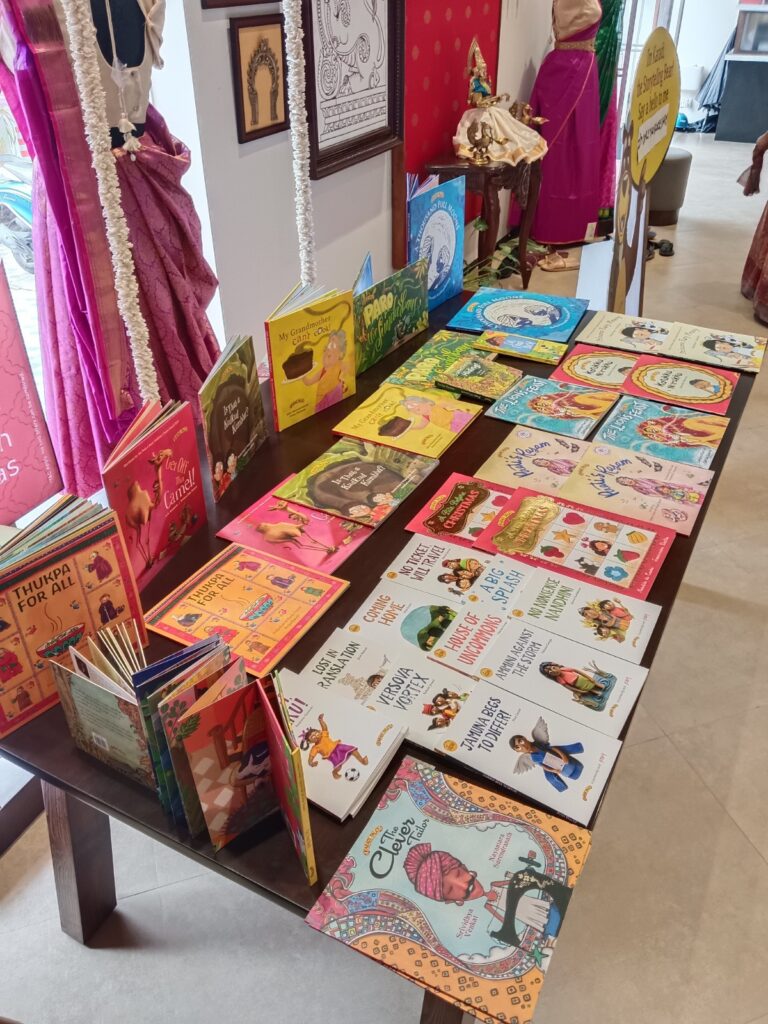
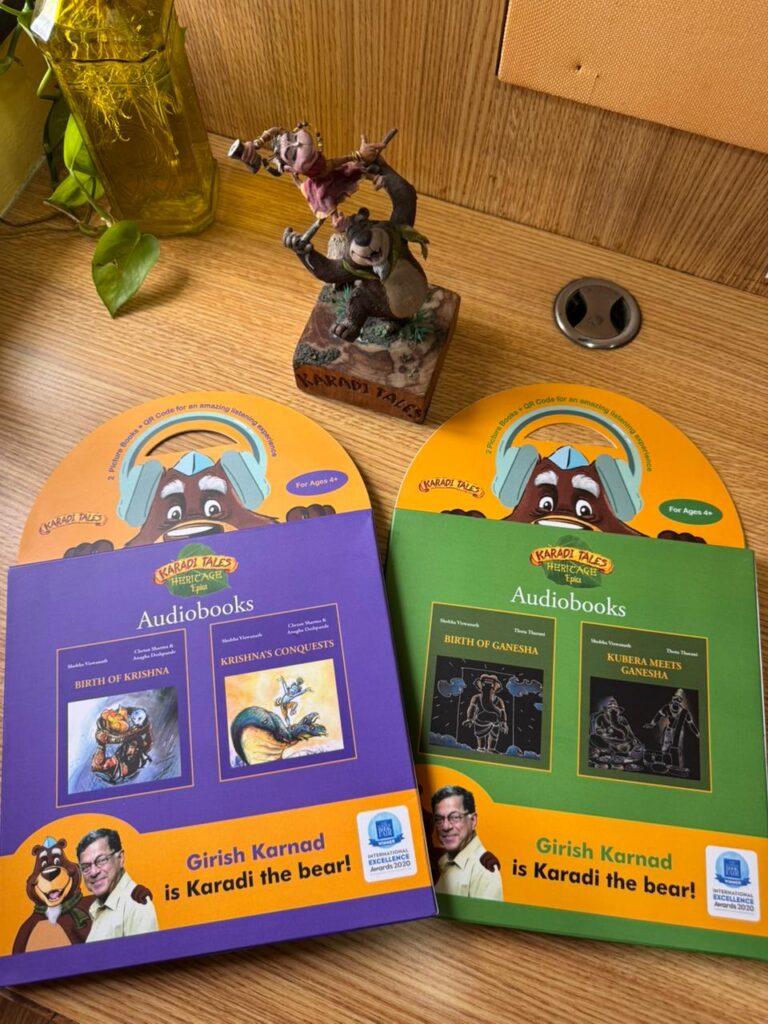
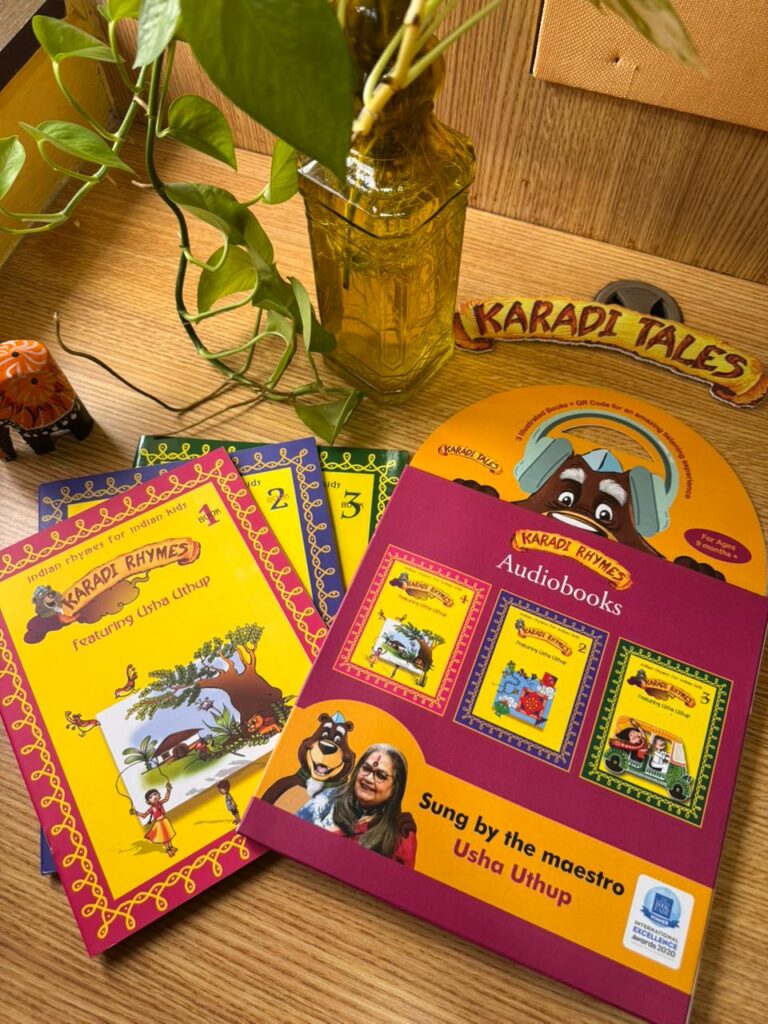
As co-founder and Publishing Director of Karadi Tales Company, Shobha Viswanath has been responsible for steering the direction of her company from brilliantly produced audio books for children to creating new imprints for her publishing house such as Dreaming Fingers – illustrated books for the visually disabled, Charkha – inspiring biographies for young adults, and Chitra – beautifully illustrated picture books for young children. She has also authored several picture books and audiobooks for the publishing house as well as Scholastic India and Puffin India.
Instagram: @shobhavish / @karaditales; Linkedin: Shobha Viswanath / Karadi Tales Company; YouTube: Karadi Tales; Facebook: Karadi Tales; Website: www.karaditales.com
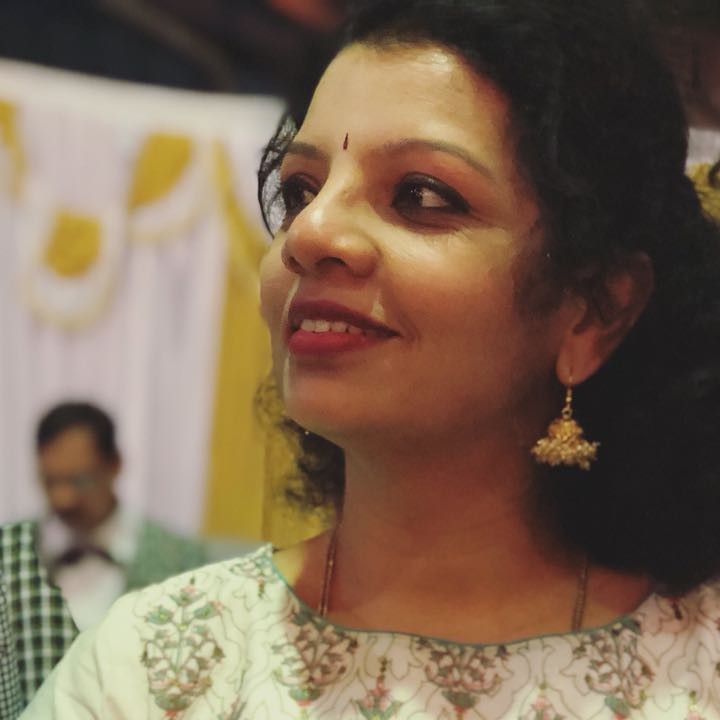
Vijayalakshmi Sridhar writes from Chennai, a coastal city in South India.
X: @sridharviji
BSKY: @Sridharviji.bsky.social