And no amount of Prada can save it.
Do you believe in curses? Sequels are cursed. And this curse is the hardest on legacyquels—those revived for audiences old and new.
There are some sequels that deserve the love (objectively, The Princess Diaries 2; unobjectively, The Mummy Returns—and I will die on this hill). And then there are some sequels that win you over with nostalgia (nothing wrong with Happy Gilmore 2). However, The Devil Wears Prada 2 had extremely big shoes to fill but ended up having two left feet and falling flat on its face.
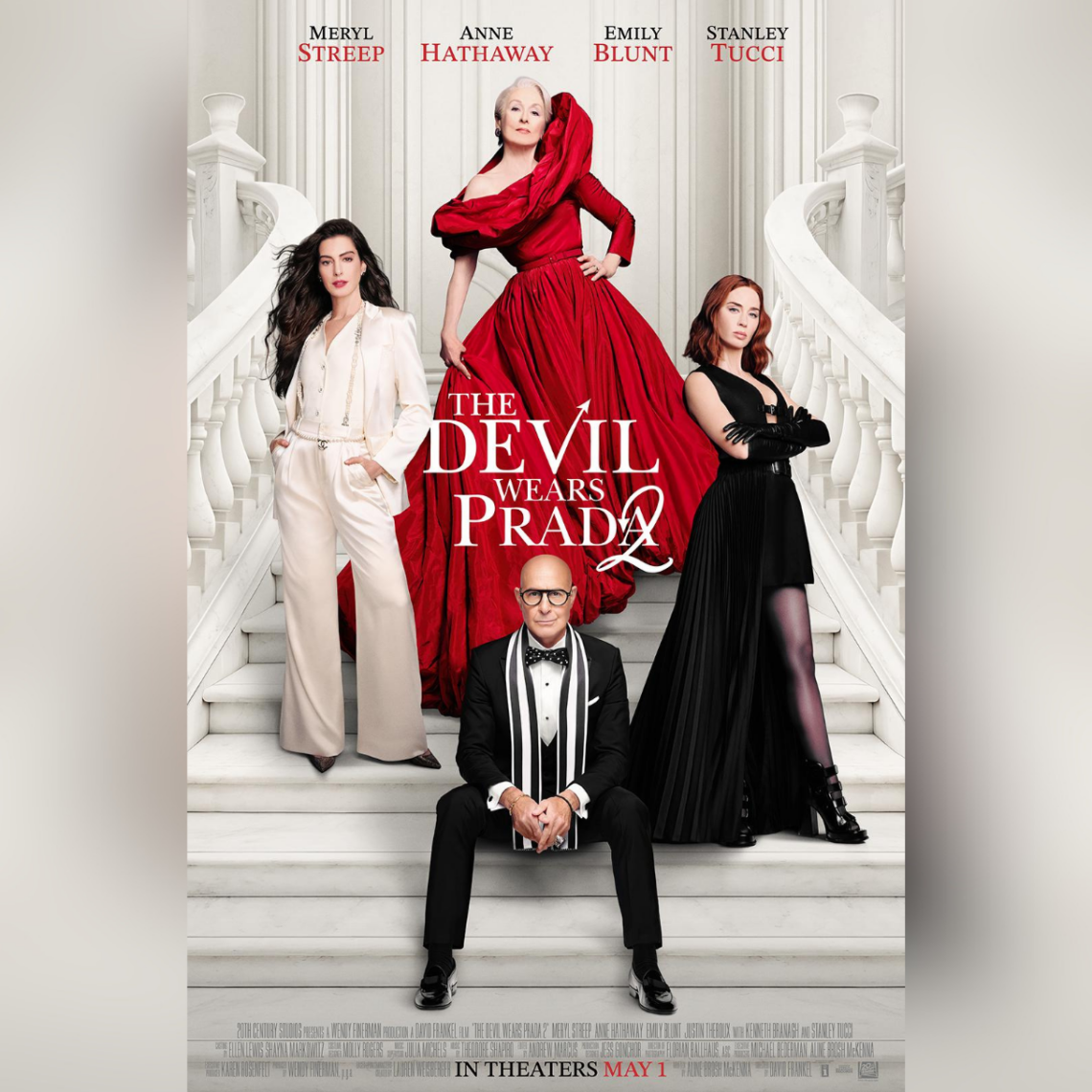
Twenty years later, the long-awaited sequel begins with Andy Sachs (the lovely Anne Hathaway), now a serious investigative journalist, on her way to win an award, but gets fired seconds before she’s called on stage (by text, no less). What follows is her return to Runway as a features editor to revive the esteemed fashion magazine’s tarnished credibility, with a depressing side of journalism’s rebranding as content and tech bros buying legacy media assets to seem culturally relevant.
Andy’s rise at Runway, or more realistically, her rise in significance for Miranda Priestly (the legendary Meryl Streep), comes when she hints (without concrete plans) at having secured an interview with the most enigmatic billionaire, Sasha Barnes, a ‘good billionaire’ (is that an antithesis?). This turns out to be DWP2’s version of getting the unpublished manuscript of the new Harry Potter book, but it lacks the urgency and literal dread Andy felt the first time.
Having brought Runway back from the hallowed halls of disrepute and almost crowned Miranda with the title of ‘Global Content Officer’, apparently, Andy’s pluck once again saved the day, or so she thought. The untimely (or maybe timely, he was 75) death of the owner of Runway’s parent company and the takeover by his wannabe tech-bro son threw the future of the powerhouse magazine and Miranda’s reigning queendom into disarray.
DWP2 undoubtedly holds a mirror to the current state of the media. Bite-sized social media content is king. The art of real art direction is lost, as Nigel laments, “Runway is now something people scroll through on their phones while sitting on the toilet.” Even Miranda’s promotion was to ‘Global Content Officer.’ With print circulation falling, budgets cut, and new issues “so thin you can practically floss with it”, there is very little left to fight for.
This decades-older Miranda lost some of her influence and relevance. And you can see it in Meryl Streep’s marginally softer, less edgy and almost defeated Miranda. But the X factor that made her a pop culture icon was MIA. Miranda Priestly was mesmerising in the original film. She was a villain that you couldn’t help but revere. You hated her, but you still wanted to be her. And you practised her cutting remarks in the mirror so that you could deliver “details of your incompetence do not interest me” with the same biting ruthlessness that reduced someone’s self-esteem to a puddle.
However, the Miranda we see in the sequel seems lost between the two eras. She still manages to eke out a few offensive remarks, but they don’t all land well. Even when she plays her un-PC self, it’s non-committal. Her Miranda-ness is inconsistent. And I liked her more when she talked less. She was brought down to earth and humanised, making her lose all the elusiveness that made her the legendary Miranda Priestly.
And it wasn’t only Miranda’s character that disappointed. The Devil Wears Prada gave rise to era-defining personalities that are quoted generously even today. Miranda, Nigel, and Emily were masterclasses in character development, but in the sequel, they are two-dimensional. Emily (the talented Emily Blunt) becomes a caricature of herself from the first movie, and then a villain? (What exactly happened there?) Stanley Tucci is a delight, but Nigel is still just Miranda’s right-hand man. Even Andy’s flustered naivete, as she waits outside Miranda’s office for validation, as if no time had passed, was annoying (girl, you’re an award-winning journalist, act like it).
And the biggest crime was committed against fashion. The Devil failed the very clothes it wears, because the movie’s relationship with fashion was strained at best. The original gave us a surreal look at 2000s fashion. Andy strutting across New York City in the outfits one can only dream of owning (or even putting together) taught us a thing or two about what was chic. But a token fashion show in Milan, a montage of the cast walking in fabulous fits, and an over-the-top number of celebrity sightings, does not a Devil Wears Prada movie make. The return of the Runway closet (a living, breathing character, imo) was underwhelming. Andy’s style guide was stale, and Miranda’s silhouettes weren’t nearly sharp enough.
In 2006, when The Devil Wears Prada first hit the silver screen, it reached an entire generation with a relatable comeuppance of a recent graduate interning at a place that she doesn’t understand. Labelled a chick-flick at the time, few anticipated the cult status it retained in the years that followed, turning it into a culture-defining piece of cinema. Then why, oh why, did they have to force down, not one, but two unbelievably boring, majestically unimpressive, and instantly forgettable male romantic leads?
The wisdom of my late 20s taught me that my beloved Devil Wears Prada low-key shamed ambition, but DWP2 was beginning to redeem it when Miranda said, “But, boy, I love working,” and owned it. And then, you have Andy Sachs, who stayed single because she didn’t want to settle, go back to the man who made the first emotional moment she had whilst with him, about himself. Make. It. Make. Sense.
The Devil Wears Prada that we know and love (especially after a long, hard day at work) was a directorial treat. The exposition scene drove home the premise. The montages are homages to fashion and makeover scenes in movies. And the final scene background score by Theodore Shapiro is the ultimate freedom anthem for every millennial girl dreaming of quitting her corporate job.
And while the sequel had a real cause—the decline of journalism, the culture of clickbait, and the loss of real artistry—it went nowhere with it. There was a moment when I thought there would be a passionate argument against AI taking over the basest forms of human creativity. But it resulted only in Miranda’s resignation, which she bounced back from almost immediately, prompting Andy to shop for a new buyer for Runway with no thought to preserving the institution or fashion’s future. All we get is a cop-out resolution. (Is one billionaire really any better than another?)
Writer Aline Brosh McKenna and director David Frankel gave us a few nibbles to chew on, almost summoning the same Devil energy, but lost us soon. The result? A subpar imitation of the original, straddling the line between fresh and nostalgic, yet delivering neither.
However, aside from the unenthused writing, missed opportunities (Andy and Emily’s female friendship would have gone down in history), and yet another legacyquel missing its mark, it was a treat to watch the fierce foursome from the original cast reunite on screen with their effortless chemistry. But will I watch it again? Unlikely.
I’m still getting over the fact that I didn’t get to see Nigel scream “gird your loins” one last time.
Rajvi is a Bombay-born, Dubai-based jeweller and writer. By day, she runs her fine jewellery brand Nyrah, and by night, she sits in the dark and writes on cinema as culture, books that make her head spin, and short fiction. She is especially drawn to subjects that spark heated debates at family dinners.