To you who slipped the poison of love in my blood, I die a little daily loving you.
2023. December 10. Evening dropped quite quickly. The drizzling hadn’t stopped yet. The Baltic billowed darkly. There, on the distant horizon, the Ferris wheel made a pinkish halo in the sky. Our boots were covered with sludge and sand. Seashells split open by seagulls kept cracking under the pressure of our begrudging feet. We hurried our way into the town.
We crossed Goethepark. The few dim streetlamps that were glowing were not sufficient for us to locate the entrance to the Bahnhof. We had to reach Berlin by 10 or 11 p.m. Berlin was about 200 kilometers away from where we were. And there weren’t many trains left. The border train would take us to Züssow.
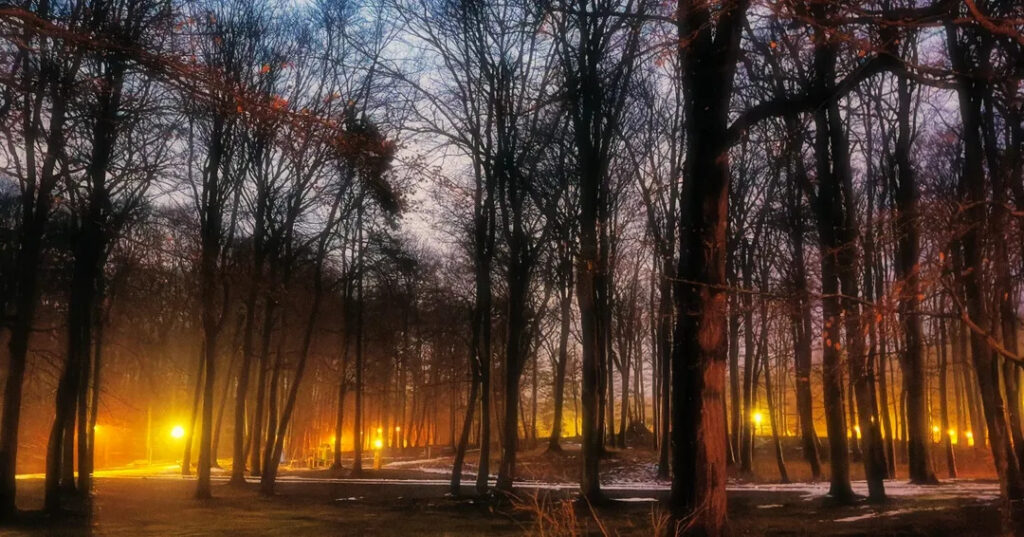
Befuddled, I saw two shades standing far away from us. Polizei. We did not know Deutsch. I approached the officers gingerly. Two unnecessarily heavy bags dangling from my shoulders and my chest.
Did I look suspicious? I was conscious of being an immigrant.
“Hallo, officers!”
“Hallo!”
“May I speak in English please?”
“Ja! We can speak. A little.”
“We have to return to Berlin. We are unable to find the entrance to the station.”
“Where are you coming from?”
“Berlin.”
Before showing us the direction to the Bahnhof, one of them said, “We need to see your documents. We are the border police, you understand? Please show us your passports.”
My partner’s unwavering voice came from behind, “Sure!”
I started panicking.
The drizzling continued and, like all middle-class Bengalis incapacitated by fear and distress and perpetually worn out by the endless loop of taking endless precautions, I asked the Polizei if I could place my bag down on the bench nearby. They pointed and took their flashlights out and turned them on. The fluorescent light, reflected from the wet bench, stung my eyes. I reached inside the bag and took out the file in which we had our documents. I handed our Anmeldungs and our passports to the police.
There wasn’t anyone around except for us.
The officers checked our passports and one of them said, “Come inside.”
Shivering inside my hollofil, I followed them as they led the way into the station hall. My partner, who is far more confident than I can ever be, steadily came behind us and followed us in. The yellow light had an inviting warmth to it. I was visibly disturbed. I kept staring at the Polizei as they checked our passports. One of them took out their phone and started taking photos. A shudder crept up the small of my back. I felt nauseated.
The officers said that everything was in order and were kind enough to show us the railway timetable. We thanked them as they handed back our passports and disappeared into the dark outside the Bahnhof. We were to wait for 40 more minutes before the train came in. There was no one else in the station.
My partner took out our lunch box which we had filled with berries. Her caring hands reached my exhausted lips. Chapped from the cold, I tried to open my mouth and the skin pulled. Gently, she placed a blackberry in. This was probably the only memory of me having the sweetest blackberry.
She kept on comforting me. I kept on panicking. Six hours left till we reach Berlin and from there another hour or so till we reach our house. Horrible possibilities flooded my mind.
I complained, “Look at me! I am brown and you are not. Here, no one is.”
It was her birthday.
That day, we woke up at three. We forced our reluctant bodies to move as quickly as possible. We packed our bags. We double checked our documents and triple checked the oven. This was our first December in Europe. I had planned a trip to Seebad Heringsdorf. It’s a coastal town right next to the Polish border. It was my partner’s birthday. And this was our first time in Europe.
As students, we did not expect the luxury of travelling via intercity trains or other faster transportation. We had to rely on the €49 ticket. We could only use the regional express. Second Class. Two hours’ journey could take more than six hours. Yet complaints we had none. We were together. That was what mattered.
We clambered silently as we could down the wooden steps of our apartment at 3:30 in the morning. We were afraid, Newton, our Russian neighbour’s rescued pup, would wake up and make a fuss at that hour. Later, on a Christmas trip to Potsdam with our neighbour, we learnt that the wooden floor had betrayed us.
The Bahnhof was empty. We waited for the train that would take us to Berlin Hauptbahnhof. From there, we had to take a different train to another station. The DB app showed us multiple transfers. The last one at a place called Züssow.
Berlin Hauptbahnhof did not seem to have slept. A massive Christmas tree glowed. People moved. We had to find our way to the platform. I remember feeling a little excited and happy. The cold had not bothered us yet.
The train to Züssow showed us a different Deutschland. A fairytale land. Doll houses scattered across fields and forests covered with snow. I stood near the door to record the landscape. I complained about people who lived in cities. I wished for solitude. My partner, always practical, talked about how these people had gotten accustomed to the place; how there were no hospitals nearby. But I was adamant.
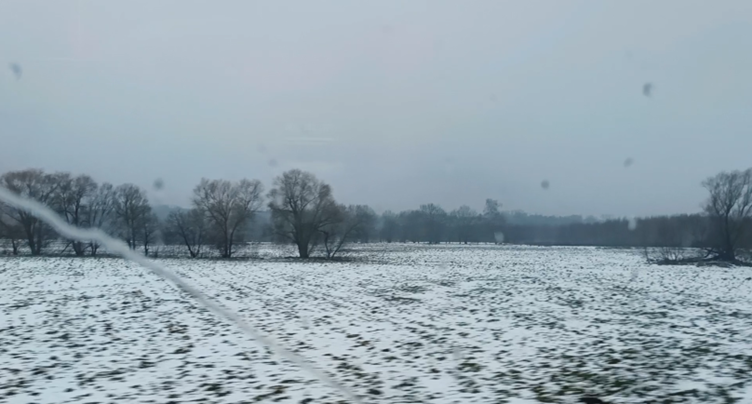
We got down at Züssow. The snow blanketed everything.
The border-train to Heringsdorf came quickly. We took our seats. I glanced furtively at the other passengers. All white. Had I been the only brown man there, that day?
I put my phone against the glass of the compartment to record what I was seeing. I hummed a bit of Vashti Bunyan; my heart longing to see the Baltic.
More than six hours had passed before we finally got off at Heringsdorf Bahnhof. We made our way through Goethepark and came upon a sports field close to the Ferris wheel. We stood near the railing and watched people play ice hockey. We walked our way past the ride and found the beach. The waves of the Baltic gently touched the shore. Gulls on the shore pecked at seashells. The Baltic did not seem to be bothered.
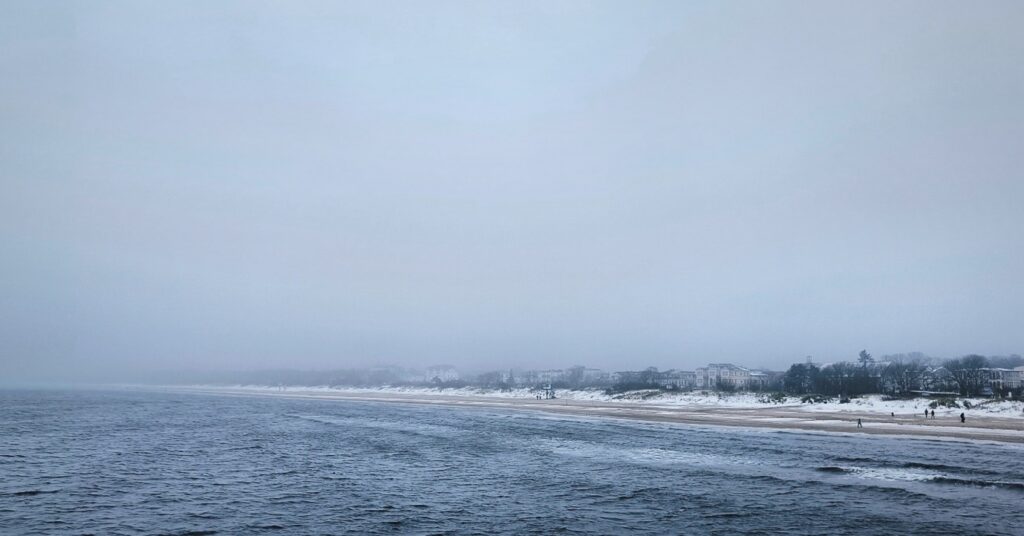
The Baltic was neither blue nor turquoise. The waves were murky and brown. The December sky had taken a misty grey and, from anywhere we stood, the distance seemed to be fading.
A light drizzle started.
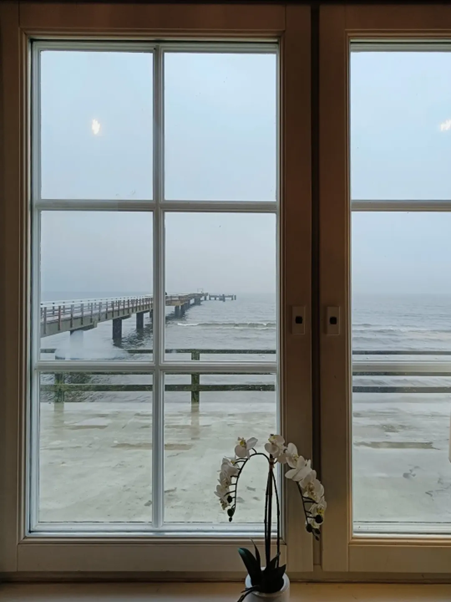
Through snow, sand, and sludge, we made our way to Seebrücke Ahlbeck and entered the small eatery near the pier. The waitress nicely took us to a seat beside a window overlooking the wharf and the sea and the grey that stretched beyond. We hung our jackets, cosied up, and ordered coffee, strudel, and glühwein. I looked out the window at the monumental grey, adamantine and impervious.
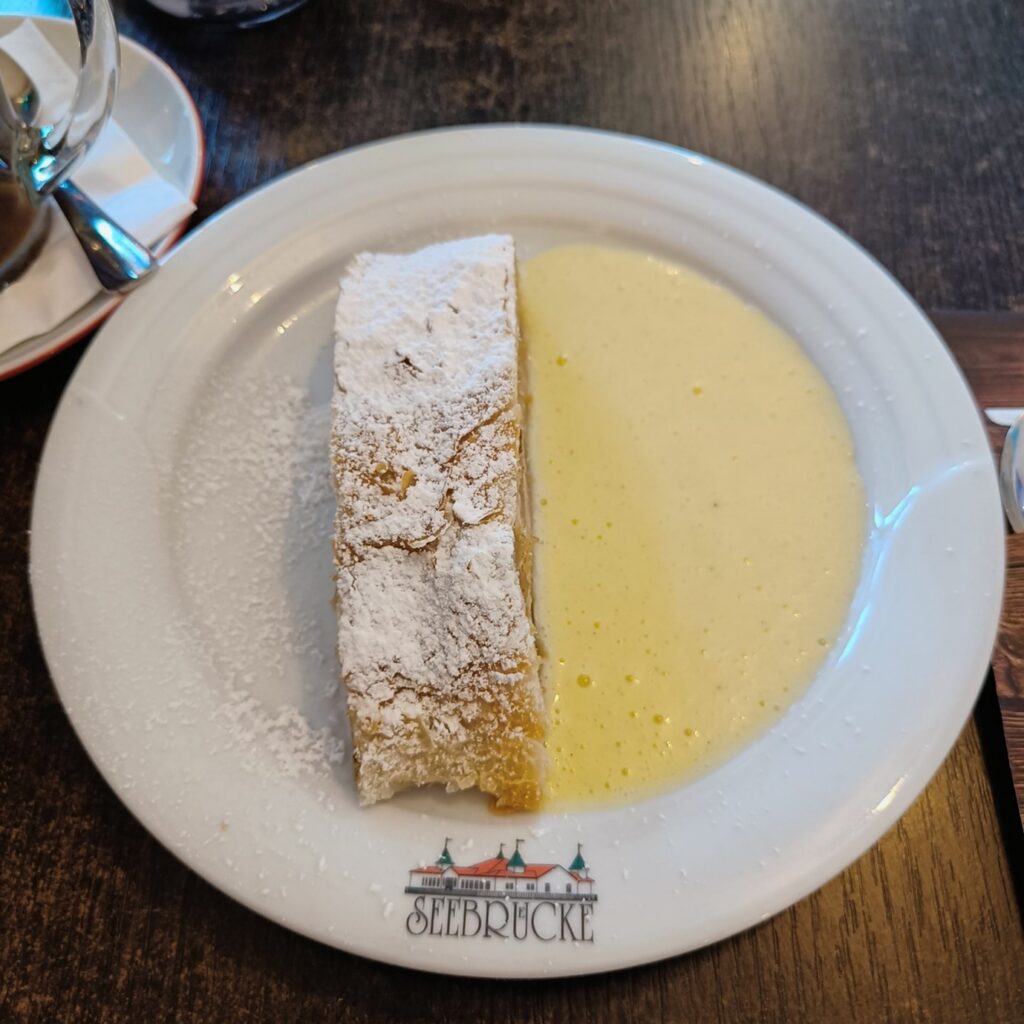
The sand, the sludge, the cold, the rain, and the sea we believed to be blue but wasn’t. And the grey, collapsing upon everything, a grey that refused to fall into the spectrum of colours we had thought of. Somewhere in the distance a shade of a steamer drifted by. I thought of the alien sailors aboard, all, like cosmonauts, journeying into the vapour.
We roamed our way across the town. Mansions and houses and hotels lined up wet streets. Some designed in the likeness of a castle. Pavements snaked into alleys. Alleys led to dead ends.
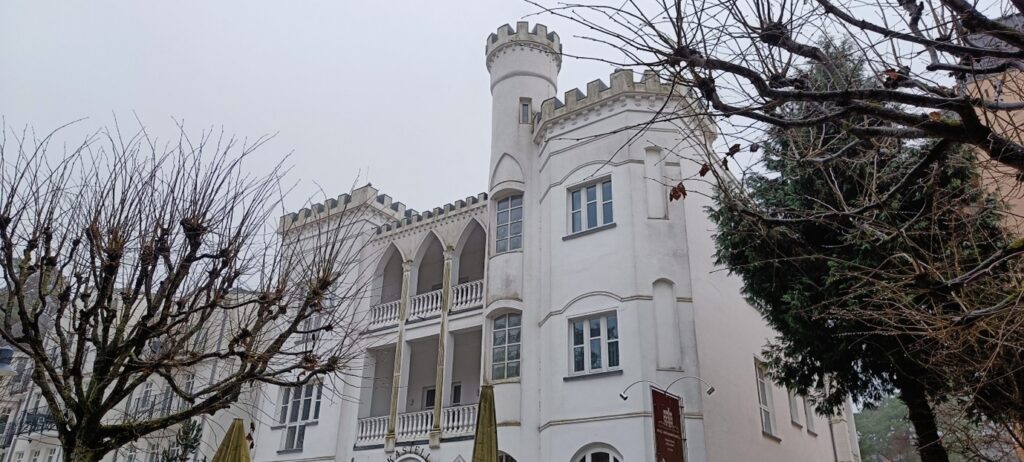
We walked. The promenade along the coastline was lined with trees. Bare trees fixed with lights and stars for the holiday season.
We walked.
The Deutschland-Polska border is a 40 minutes’ walk from Seebrücke Ahlbeck. We reached the border before evening. Huge trees line up the way that led to Poland. No one was around. Straight ahead of us lay the Polish land. There were no Polizei. No checkpoint. To us, it felt weird. A blue sign indicated that this path was only meant for pedestrians and cyclists. I imagined how it would be to walk our way across the border.
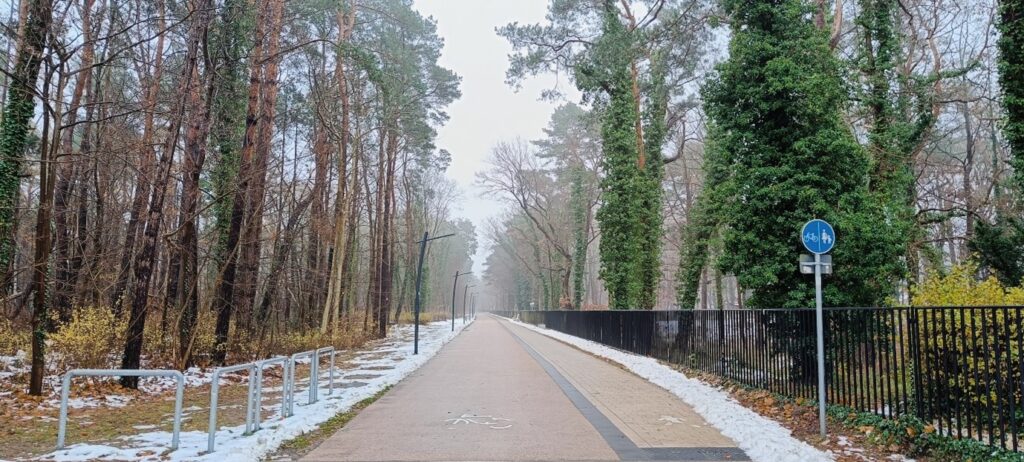
Although we knew that Schengen visa allowed cross-country travel, we did not dare to step beyond the line. While our hearts longed, our heads could not do away with the banality of rules, particularly those we did not understand.
Border! There was nothing different on the other side.
We turned back.
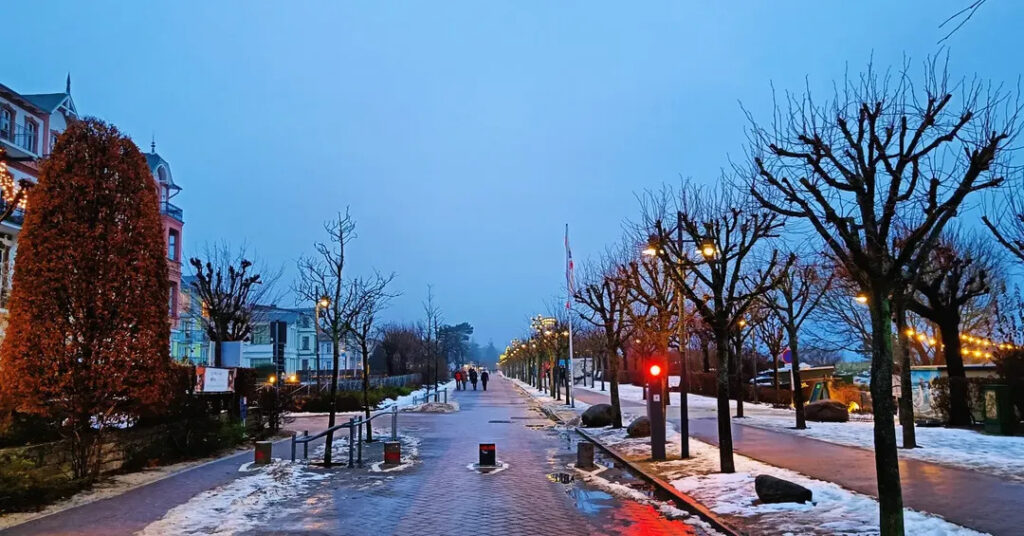
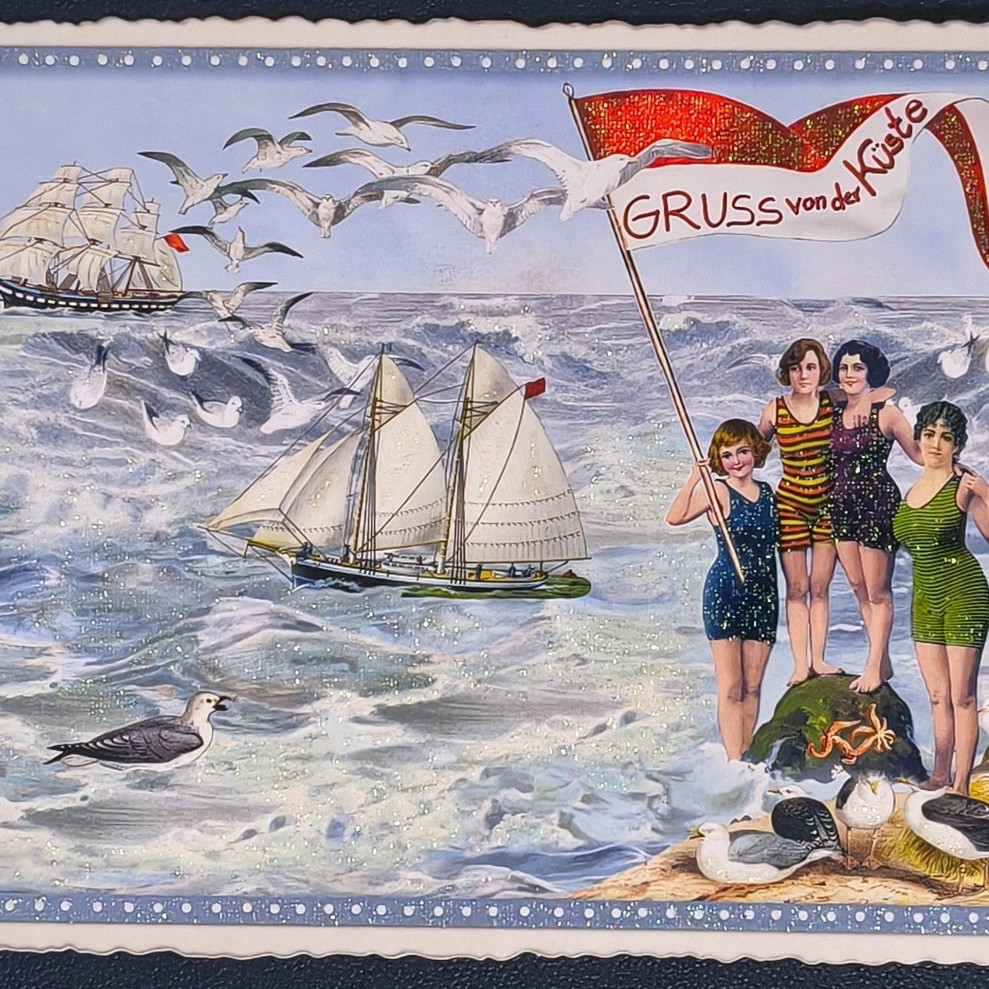
Dünenstraße, lit by the evening blue and faint Christmassy lights strung atop the trees, assumed a different character. The snow reflected the warm light from the streetlamps. We stopped at a shop somewhere along the way. Postcards, windchimes, fridge magnets, wooden models, and so many other souvenirs. This was the shop that got me into collecting postcards. The storekeeper, a nice old lady, gifted us two postcards for free.
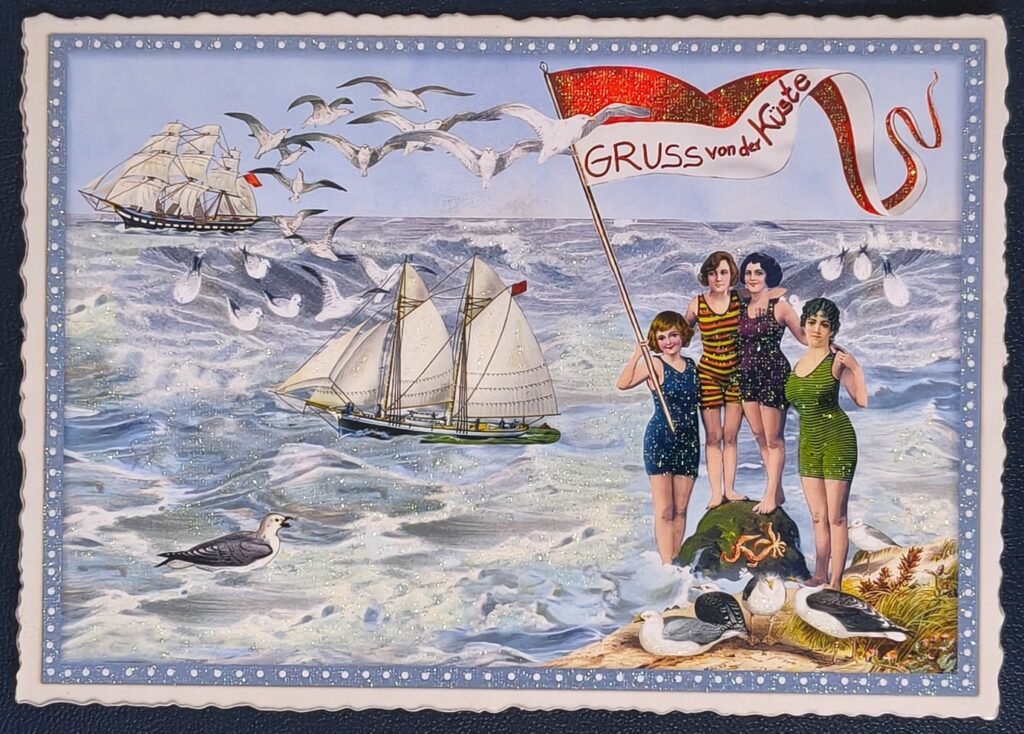
My heart was unwilling to leave. Yet the fear of being stranded was a greater motivation for us to start for the Bahnhof. We decided to walk our way back along the beach till we reached the Ferris wheel. A bit exhausted from the journey and all the walking, the sand seemed to hold on to our boots. I took the bag from my partner and hung it on my front. Darkness dropped quickly.
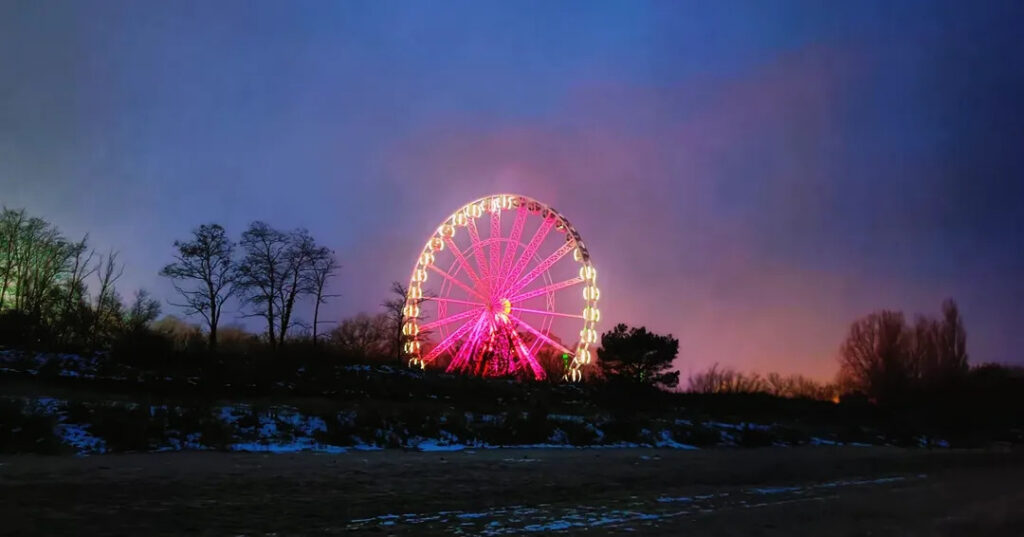
In the distance, the Ferris wheel glowed. The Heringsdorf wharf, like a dotted line, jutted out against the blue of the sky and the blue of the sea. The Baltic rolled on. I looked at the blue waves. They had taken on a new rhythm. A little unruly. A little seizure somewhere in the dark. Were the waves trying to reach out to us? With an appeal of staying a little more? Were the waves pulling the earth as a protest against our leaving? Were they trying to tilt the world?
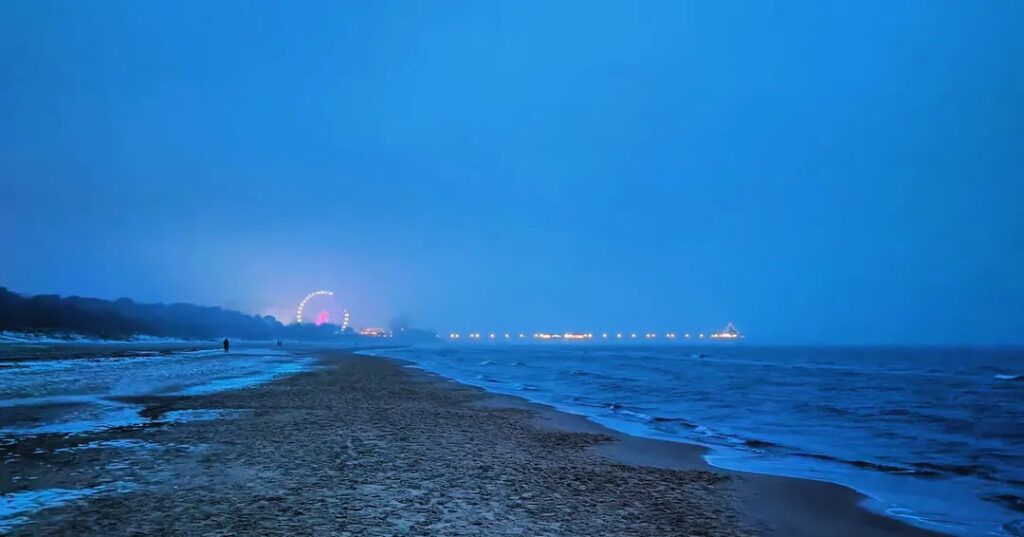
As each wave receded, the sea left the sand a little blacker. I wanted to touch the lips of the shore where the waves had left their foam. But the fear of missing the train was greater than the desire to become a destitute like the sea.
Yes, the Baltic I saw was a destitute. Brown and grey and black. With froth and snow and sludge.
Destitution was its grand virtue.
The alien sailors aboard the alien shades of steamers were somewhere out there in the blue void. We couldn’t see them.
I looked back for one last time, and the sea had turned obsidian.
That which loomed larger than life ahead of us was the Ferris wheel with its pinkish hue bleeding out of its edges onto the evening sky.
“Would you want us to take a photo of both of you?” A nice lady gestured.
I hesitated but bowed and gave her my phone. She took a picture of us and smiled and bid us goodbye.
We whispered, “Dankeschön!”
Two hundred kilometers away from Berlin. More than 6,000 kilometers away from home. So far away, yet how a small gesture from a stranger spirited us with gratitude.
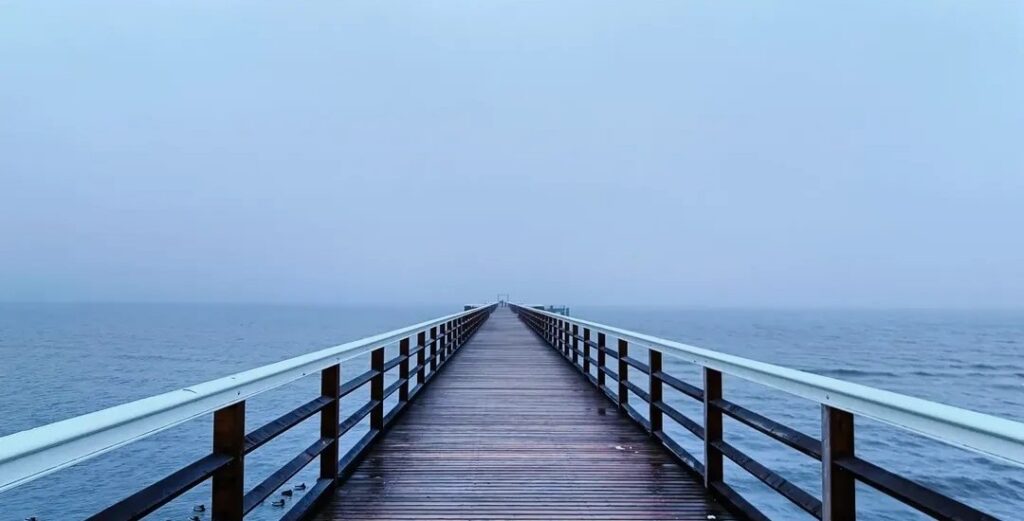
The Ahlbeck pier stuck out into the December blue. Holding hands, we walked down to the far end of the jetty. A low, piercing call of a gull wafted in from somewhere. The wooden boardwalk creaked.
And there, before our eyes, the maw of a phantom laid bare. I stared into the ghost of an abyss.
The Ostsee heaved with a sublime sense of an end unending. We stood silently watching the spasms of the sea as my Baltic refused to yield.
I looked at the face of my love.
Yes, my Baltic, outworn and unkempt, speaks haltingly as she pacifies the sky in the dew of her heart. Yes, my Baltic, compassionate enough to conceal her pleasures, keeps on dissolving her dreams into the dream of the blue. Yes, my Baltic, despite all weariness, swears to endure without remorse.
December 10, 2023. We stayed for a while, wondering if one of us might offer the other the illusion of an end.
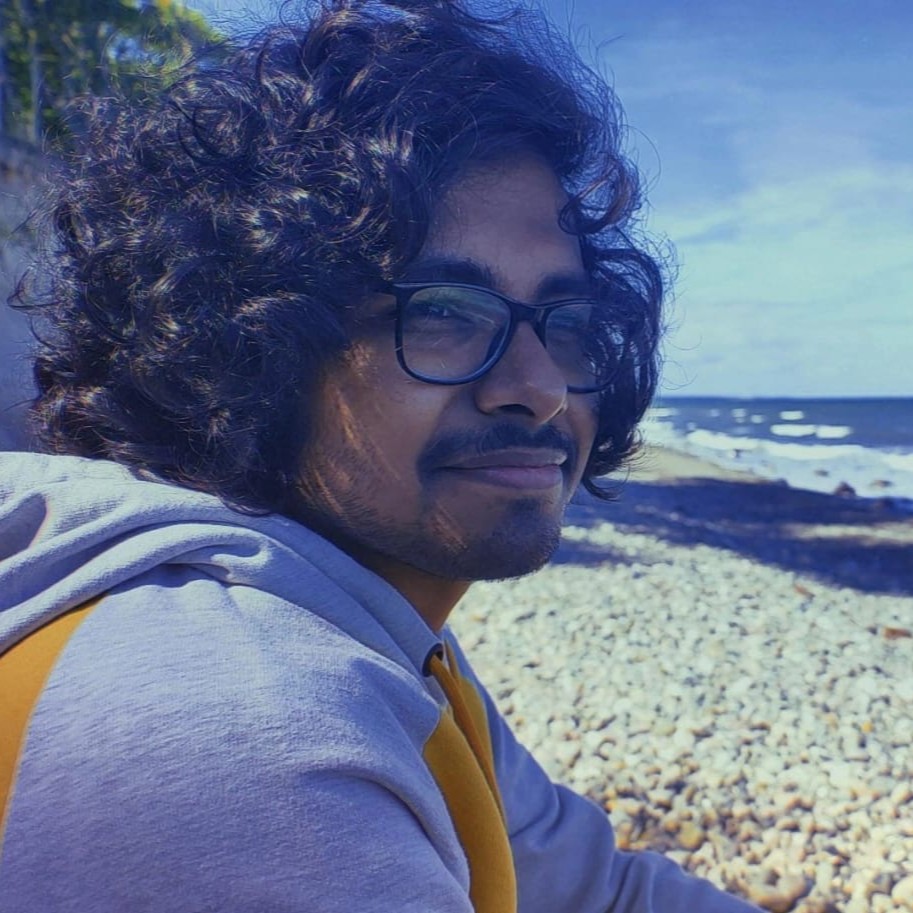
Subham is from West Bengal. He daydreams to be a traveller and a writer he knows he shall never be. Trees and music stir a tender sense of empathy in his heart. He wants to apologise to the trees.
Instagram: @rhythm_and_chaos