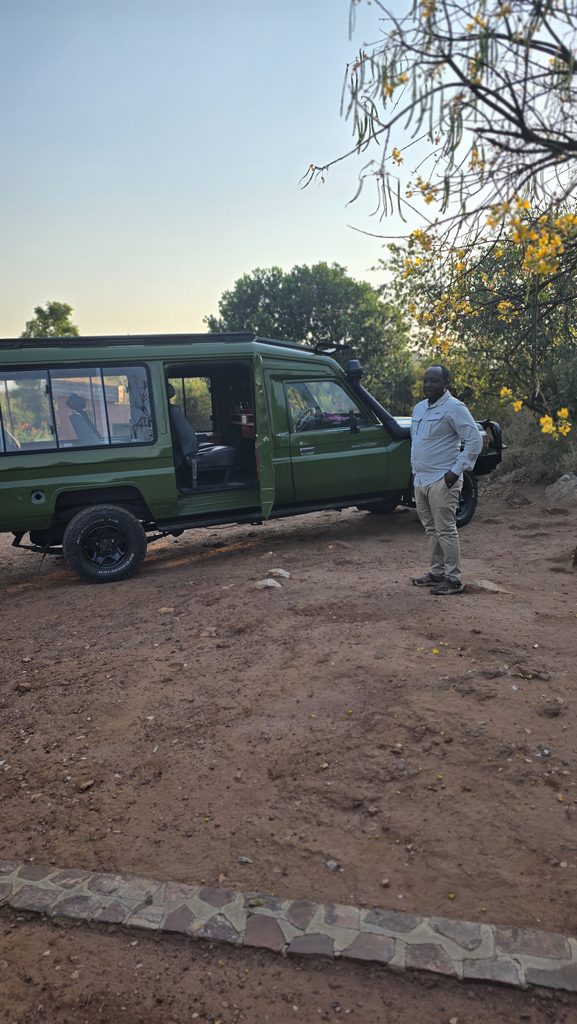
As we enter the low-lying Akagera National Park, a protected area in eastern Rwanda, Africa, that covers 1,122 square kilometres along the international border with Tanzania, and one that features the African savanna, woodlands, low mountains, wetlands, swamps, and lakes, we are greeted by the cool, gentle breezes of the pre-dawn hour in our Land Rover, the preferred vehicle for safaris in this region. It makes us seek the comfort of our jackets. We had travelled three hours the previous day from Kigali to the Inema Lodge, an hour away from the National Park, and set out at 6 a.m. from there for the National Park.
We know little about the National Park except that it was founded in 1934 by the Belgian government, which occupied Rwanda at that time, and that it was named after the Kagera River, which feeds into Lake Inema and several other lakes.
As the saying goes, “As the vision, so the world.” Our Land Rover trundles ahead, and as far as the eye can see, we spot acacia trees with their shrubby forms, irregularly flattened crowns, and bright yellow flowers. We also notice rough-leaved Shepherd trees with grey-green, leathery leaves that have sharp tips and produce berries, as well as candelabra trees and wild date palms. Various shrubs, including ambach, golden bell bean, carissa, tree aloe, and thistles, add to the landscape—all identified with the help of a guidebook purchased at the park’s shop.
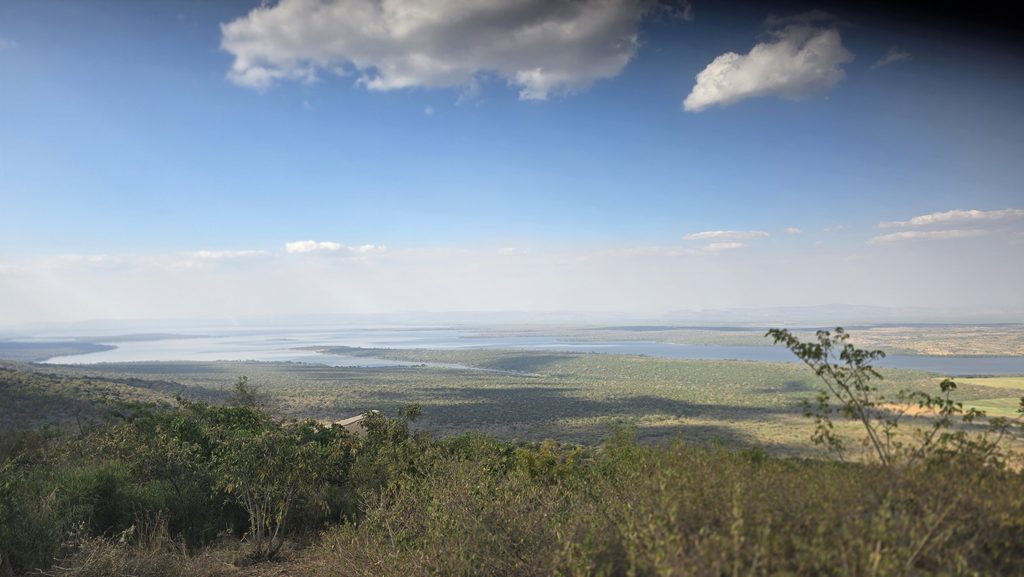
Although we have passed through the green season, which runs from November to May, the brown grasslands still show traces of lushness at the end of June. Green spreads far and wide, especially during the early hours of dawn when the sun rises like an orange fireball. Flowers are abundant as well—fireball lilies, vlei ink flowers, false violets, lion’s ear, bidens, rattle rod, and many others that are hard for us to identify. A variety of butterflies flit about; we see black-and-white, orange, yellow, and black-and-blue butterflies, though we can’t recall their Latin names. Meanwhile, birdsong fills the air.
As the sunlight filters through, our first encounter with wildlife is a group of crested francolins scurrying across the dirt tracks unafraid, leaving impressions in the iconic red soil, seemingly unbothered by the vehicle and the dust and noise it kicks up. Our amazement amuses our guide Magnifique, and his laughter is infectious. “These are crested francolins, which belong to the partridge family of birds, are known for their distinctive round bodies, short tails, and strong legs, and I love their audacious darting just as much as you do.”
As we continue our journey on the rust-coloured roads, we notice enormous anthills defiantly positioned in the middle of the tracks, challenging the Land Rover to flatten their earthen structures. Magnifique expertly navigates around these hills, being mindful not to destroy the industrious efforts of the ants and their homes, which consist of a complex network of tunnels, chambers, nurseries for larvae, food storage units, and safe spaces for the queen ant.
“What are these holes in the ground? Do they all belong to ants?” I ask out of curiosity.
“Not all of them,” Magnifique replies. “The smaller holes belong to scorpions, snakes, and termites, while the larger ones are made by aardvarks, which are medium-sized burrowing animals. Some birds also nest in holes in the ground and in trees.” After a moment, he points to another hole and adds, “If you see spiderwebs like this, it means those holes are not inhabited.”
“These initial sights convey resilience, as if the creatures here are saying, ‘You may change us, but you cannot diminish us,’” I remark.
“You are absolutely right,” Magnifique agrees. “The park has faced serious challenges, including intense poaching, agricultural encroachment, refugee resettlement after the genocide in 1994, conflicts between humans and animals, disruptions to species, vegetation and water systems, along with the extinction of numerous herbivores and carnivores. Despite these difficulties, Akagera National Park has successfully rebuilt East Africa’s most diverse and productive wildlife habitats, creating a balanced ecosystem. It has transformed into a premier Big Five safari destination, featuring lions, leopards, rhinoceroses, elephants, and Cape buffalo.”
Magnifique chooses one of the many red-soiled pathways and forges ahead. His driving is a refined craftsman’s: gentle and in control of everything.
“The story of Akagera National Park is one of remarkable recovery, achieved through strong leadership, effective law enforcement, community involvement, long-term commitment to the environment, and sustainable tourism,” he explains. I sense pride in his voice. “I have seen progress in the last six years I have been here. You know, this place was filled with African wild dogs, but a disease eliminated all of them. Yet there are so many species we have brought back to life.”
How has this been possible? I want to know. “In 2009, the Rwanda Development Board and the African Parks Network entered into a twenty-year renewable agreement for the joint management of the National Park and for its active restoration through anti-poaching operations, habitat restoration programmes, wildlife monitoring systems and strategic ecological management. These efforts have stabilised wildlife populations, halted poaching, revived dying species and restored the Park’s ecological vibrancy,” he says. “We have invested in fencing, air surveillance and training intensively,” he adds as an afterthought, “and most importantly, involved the local communities in its development where they contribute and stand to gain financially.”
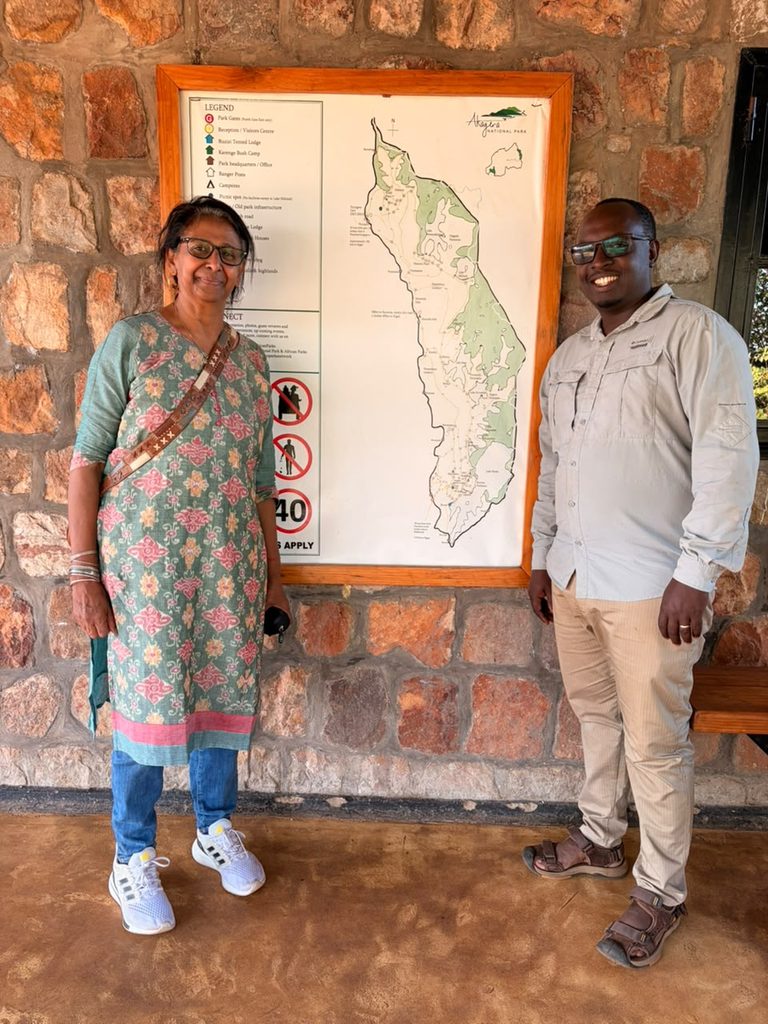
We choose to drive from the south of the park and exit at the north. “We will follow the Lake Shore, go through Lake Mihindi and Rwanyakazinga, and then explore the waters where crocodiles and hippos are,” Magnifique explains, running his fingers along the map he carries.
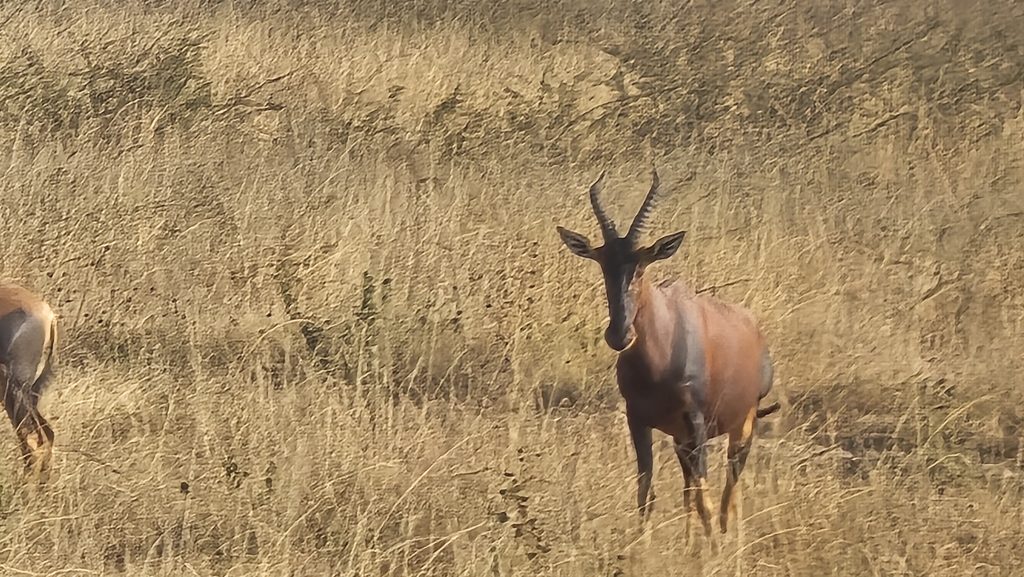
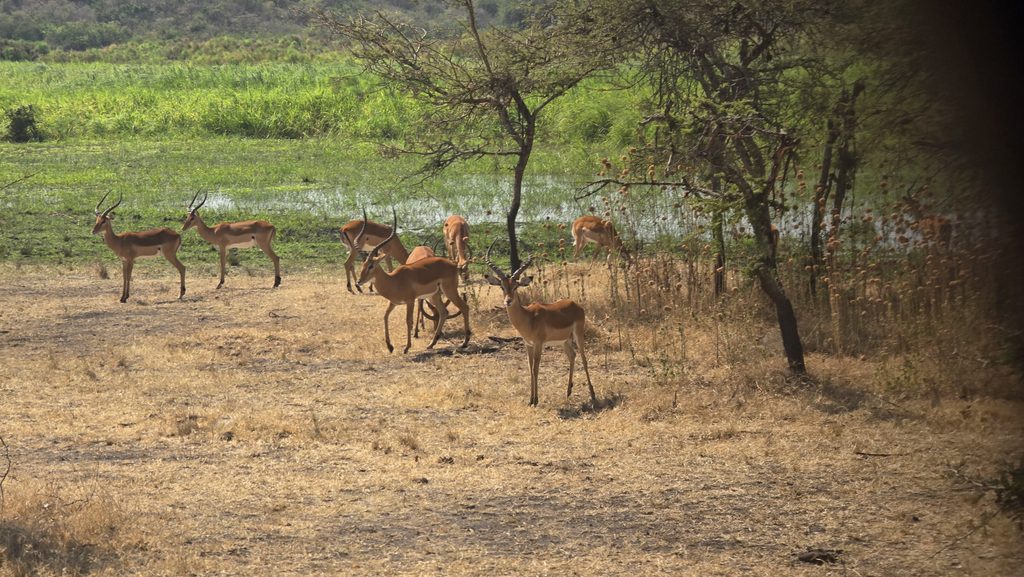
Antelopes of various manner: roan, oribi, klipspringer, eland and topi are our first visual treats. The roans can run up to 57 km per hour; the oribis secrete to mark territory; the klipspringer literally means “rock jumper”; the eland are the largest African antelopes; and topis are gregarious creatures, we learn. Many of them just forage; others butt their horns.
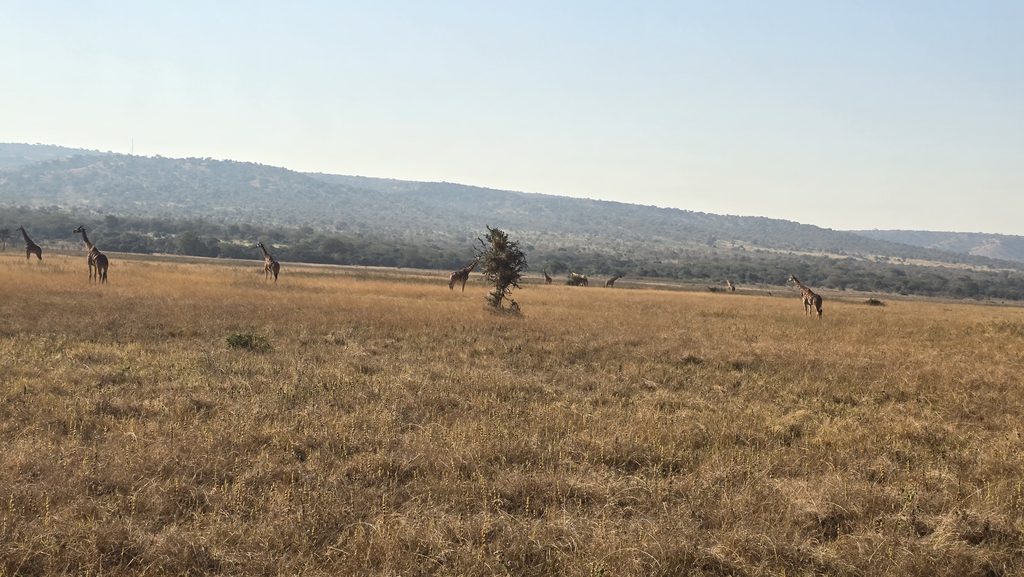
As we spot a Rhinoceros Blanc, Magnifique crosses over to get the vehicle as close to it as possible. As we near it, we sight many more. “In 1957, six black rhinos were introduced to the Park, but they died, and the last one was sighted in 2007,” he says. “The rhinos you are seeing are the ones introduced in 2021. Currently, there are 30 of them.” We are keen to know what the rhinos are doing congregating together. “They are using the community bathroom,” he tells us. “What do you mean?” we ask. “They poo together, and the dung piles act as a rhino social network where animals leave behind a scent network of their age, gender and reproductive status. Some impalas do that as well.” We are astounded by this. Similarly, when we come upon giraffes grazing, he tells us, “In 1986, the Kenyan government introduced the Masai giraffe, and today there are about 110 giraffes,” he says. We watch them playfully fight for a long time, their necks entwining with one another.
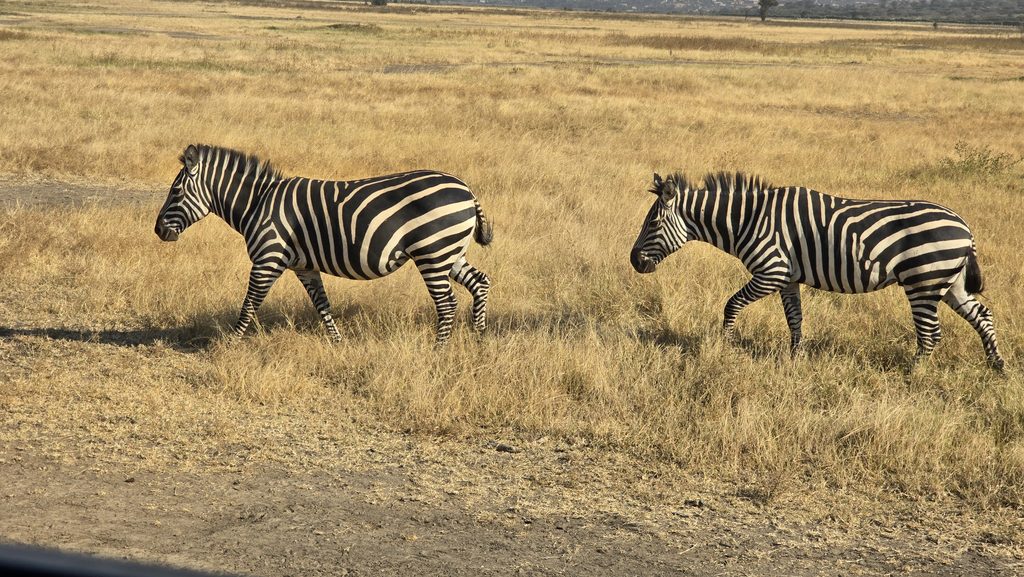
Even as we celebrate this achievement, we stumble on a wounded zebra, its hindquarters punctured by teeth marks, flesh hanging out and blood oozing. The zebra hobbles, flicking its tail to drive away pesky tsetse flies that hover over its wounded black-and-white flesh. It is a hard and poignant sight to watch, not knowing if he will survive or find his herd. “He has definitely been a victim of a lion attack, which means they are near, and these flies induce sleeping sickness. We should move away, and I hope you have covered yourselves with insect repellent,” Magnifique cautions.
En route, Magnifique points to the tented lodges, the bush camps and camping sites that visitors can avail of. He points to the Akagera Game Lodge perched on a hill overlooking Lake Iheme and the private lodge Magashi. While we have chosen the guided game drive followed by a boat safari, there are also night drives, fishing, and a behind-the-scenes tour (to understand the management of the park), as well as a walk-the-line tour (a seven-kilometre walk along the fence line to understand how the fence works and its importance for the park and the community).
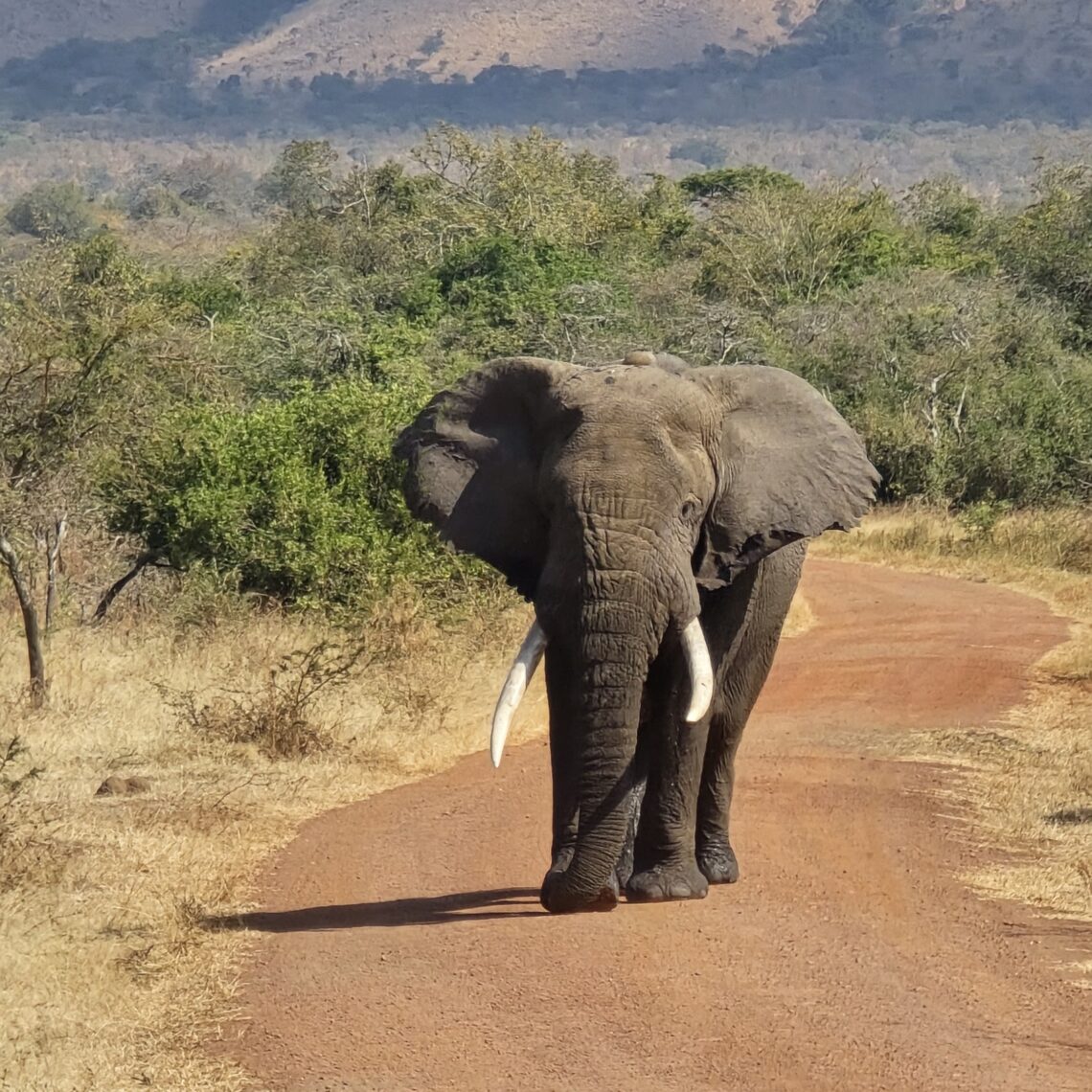
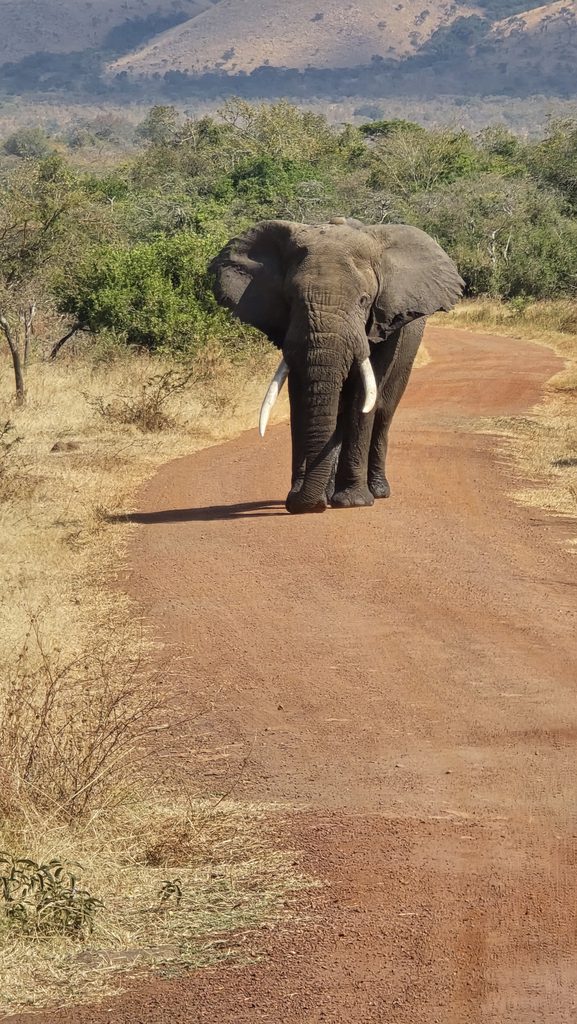
As we move ahead, without warning, a lone male elephant lumbers towards us. The vehicle in front reverses and moves away. We wait. Magnifique gestures for silence. The elephant is almost upon us but changes his mind and begins to break branches of trees on the side of the dirt track. He then proceeds to strip the bark off the trees, breaking branches and leaving leaves strewn on the ground. He pays no attention to us and lets the vehicle move on. We silently gape at him. “Elephants use their ears, trunks and movements of the head to indicate aggression. They will also throw dust to show aggression; while most charges are mock ones, they may actually charge if they feel uncertain or threatened,” says Magnifique.
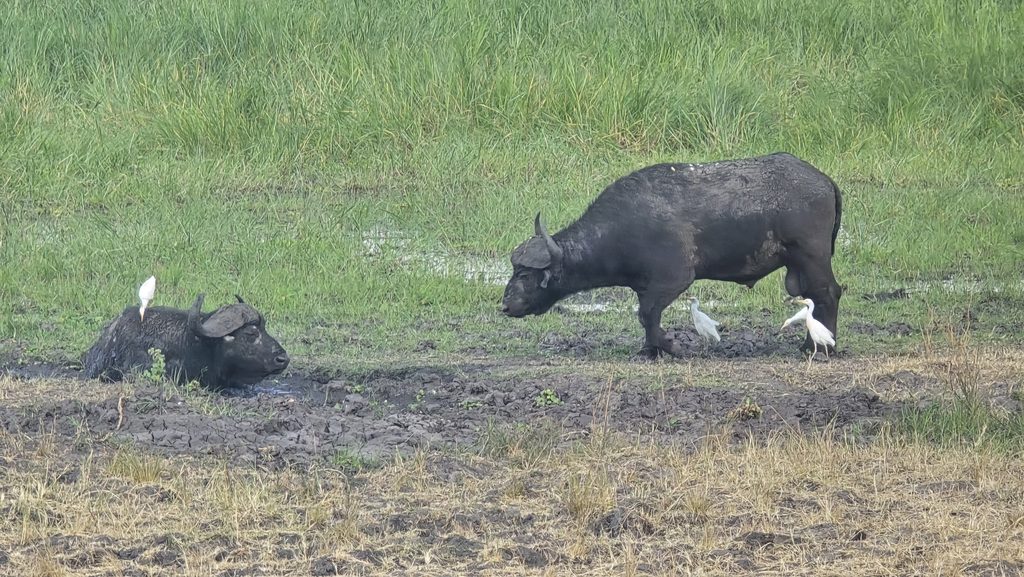
Ahead, we see herds of cape buffaloes and warthogs wallow in the mud and rub themselves against trees. They look harmless in the distance, but we are warned that they can cause extensive damage if they decide to charge. They can turn out to be dangerous events due to the animals’ unpredictable behaviour, especially if they are wounded, cornered or protecting their young.
Magifique gets busy on his WhatsApp group and tells us there is no use proceeding north, as there have been no sightings of lions or leopards. “Let’s get to the water bodies and see the hippos and the crocodiles, instead,” he says. “I hope you are not too disappointed. You won’t get to see two of the Big Five; while lions you can still see sometimes, the leopards are loners and defend their territories by themselves. In that sense, they are elusive and a bit of tricksters.” We reassure him that we are fine. “I can still take you to the north,” he says. But we assure him and chorus, “We trust your judgement, and we all vote for the water bodies.”
As we near the water bodies, we see crocodiles in the water and resting on the shores, scores of them. “Nile crocodiles do not eat often. So don’t be surprised if you see them idling,” Magnifique informs us. “They are the second largest crocodilian, and can eat more than half of their body weight,” he adds. “Some of them have their jaws open, their menacing teeth glinting in the sunshine.”
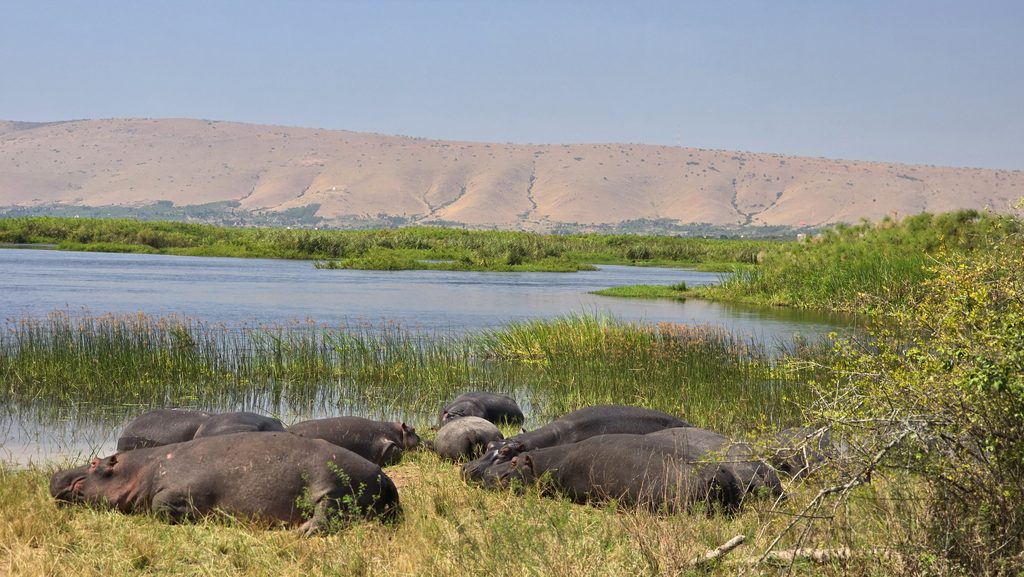
Our gaze turns to the 3,000-pound hippos that Magnifique says can eat up to 130 kgs of grass every day. “How long do they swim for food?” my granddaughter Avni wants to know. “Oh, little one, hippos don’t actually swim. They walk along the bottom of the lake and use the energy generated to float on air, and they can stay underwater for six minutes,” he says. My granddaughter, who is learning to swim, I suspect, has filed the information for future use. We also learn something new. As hippos eat a lot daily, they fill the ponds they live in with a lot of poo to turn them into extensions of hippos’ guts, meaning endless stretches of hippo shit. Not a pretty visual image!
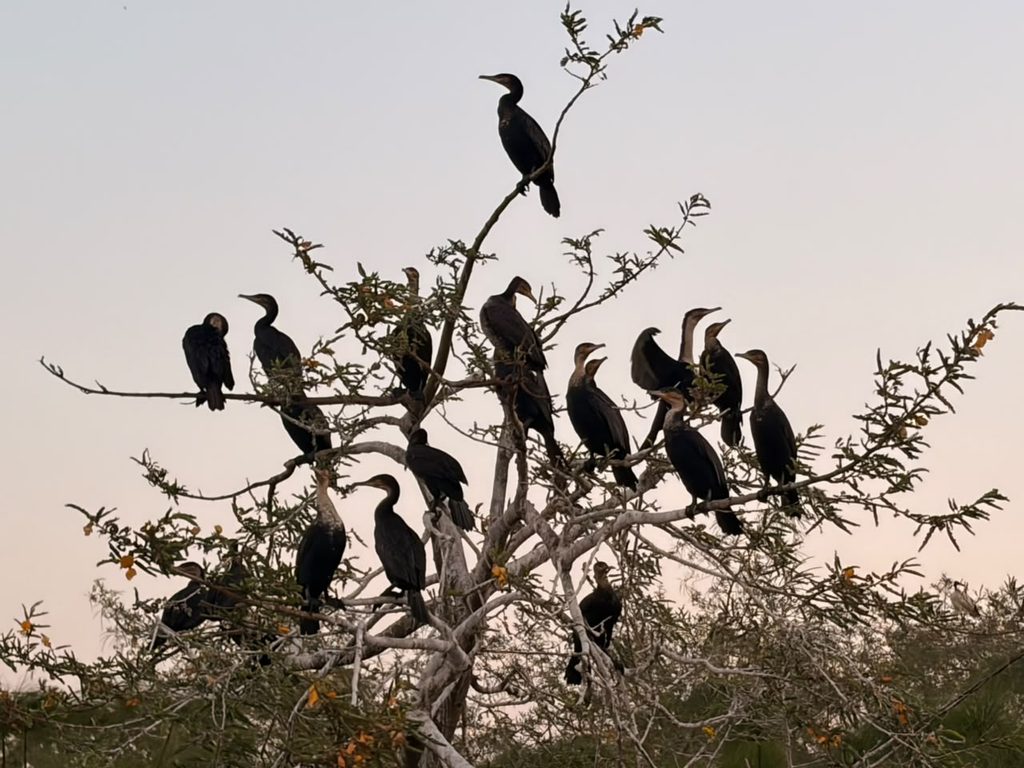
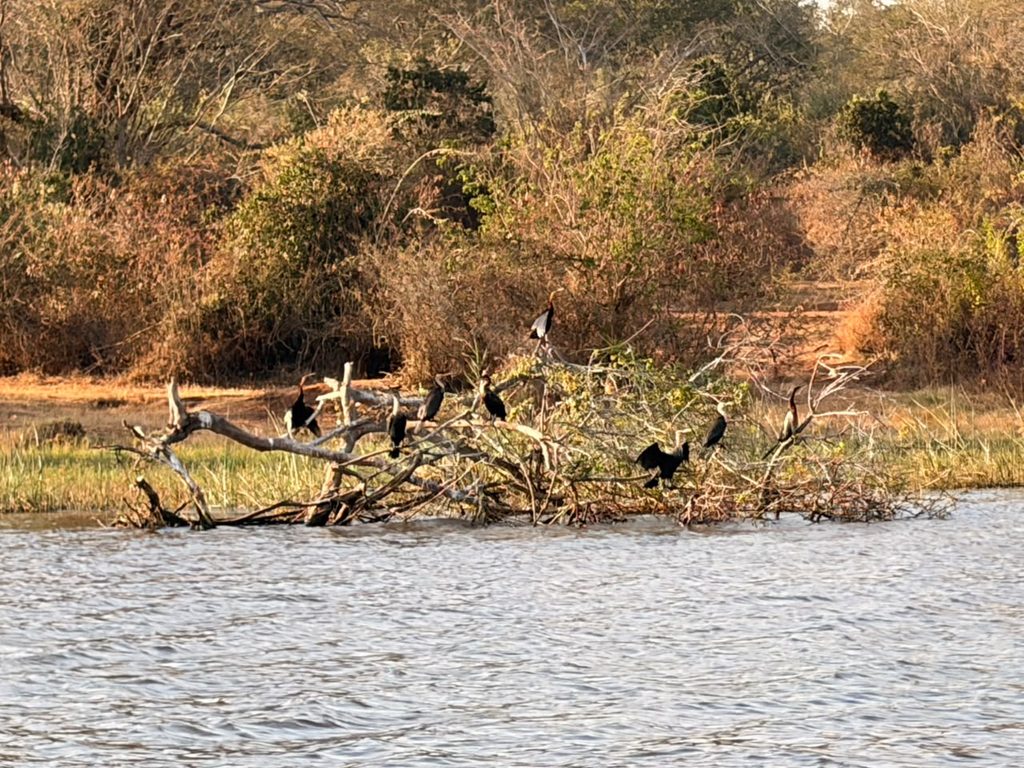
Papyrus defines the park’s vast wetland ecosystem, which covers one-third of the area. Our evening boat safari on Lake Ihema introduces us to the 570 bird species that inhabit this beautiful waterscape. Our guide affectionately refers to it as the “sunset cruise.” These birds thrive and breed within the dense papyrus swamps and water hyacinth, with their lives remaining largely a mystery.
The cool serenity of the waters is a front-row seat to nature’s untamed theatre, an experience like none other. As our boat cuts through the wetlands’ many channels, we are adrift in another side of the Park’s magic. Hippos surfacing, crocodiles emerging from the depths, and water buffaloes lounging on the water’s edge are jaw-dropping sights. We see numerous fish species—the tilapia, catfish, lungfish, tigerfish and various cichlids. But the show clearly belongs to the birds, a bewildering multitude of them. Our guide keeps up with each species while we struggle to remember one from another.
While it would be impossible to list all 570 bird species, here is a brief checklist of some notable ones: helmeted guineafowl, red-necked spurfowl, white-faced whistling duck, yellow-billed duck, Hottentot teal, African open-billed stork, African sacred ibis, grey heron, western great egret, purple heron, pink-backed pelican, long-crested eagle, tawny eagle, common kestrel, African finfoot, black crake, spotted eagle-owl, fan-tailed widowbird, and African thrush.
The entire experience at the National Park has demonstrated how conservation enhances a safari, making this particular journey stand out from a typical safari. It highlights the importance of this place, where wildlife, tourism, and local communities coexist harmoniously. This is a location that benefits not only wildlife but also the people who set up camps, provide food and crafts, and guides like ours, who taught us to see the world with fresh eyes.

Chitra Gopalakrishnan pursues fiction, creative nonfiction, poetry, essays, book reviews, and opinion pieces. Based in New Delhi, she uses her writing to break firewalls between nonfiction and fiction, narratology and psychoanalysis, marginalia and manuscript, and tree-ism and capitalism.
Website: www.chitragopalakrishnan.com