Author’s Note: As the African nation-state Rwanda rebuilds itself after the 1996 genocide against Tutsis, the survivors and their children must reconcile with their inherited trauma and grapple with identity, loss, and belonging. Is it possible to return the land to its oneness and its safety? Can people still choose unity over vengeance? This story, set in Kigali, explores these issues.
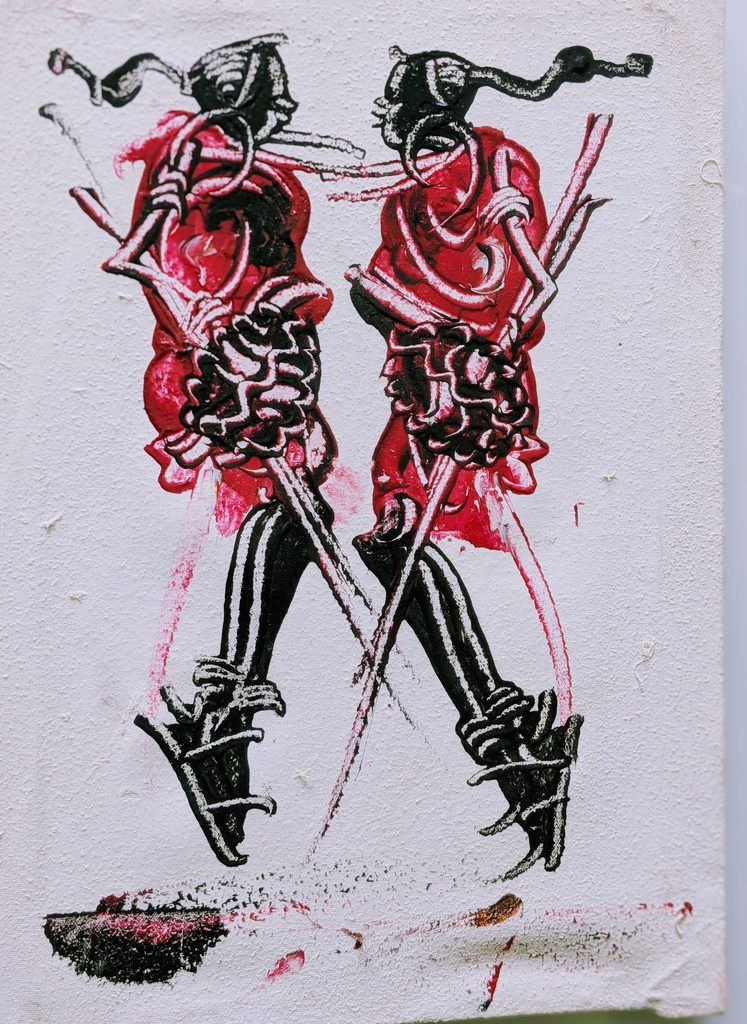
Kimihurura, Gasabo district, Kigali, Rwanda, June 2026.
Peals of laughter. Resonant bursts of noise like continuous waves. These sounds escape from the throats of women and through evergreen shrubs paired with seasonal perennials—lantana, Ashanti blood, plumbago—past the fresh scent of grass in the spacious front lawn, the gaudy brilliance of the bougainvillea on the boundary wall, and the grit and pebbles of the sidewalk.
Joyous and free, and contagious.
Two African paradise flycatchers, grey-headed and chestnut-winged, decide to join in the revelry and warble as they flit in and out of the guava tree that spreads over most of the lawn. The tree’s leaves leak sunny light, sway in the breeze, and cast patchy shadows on the grass in the soft golden light.
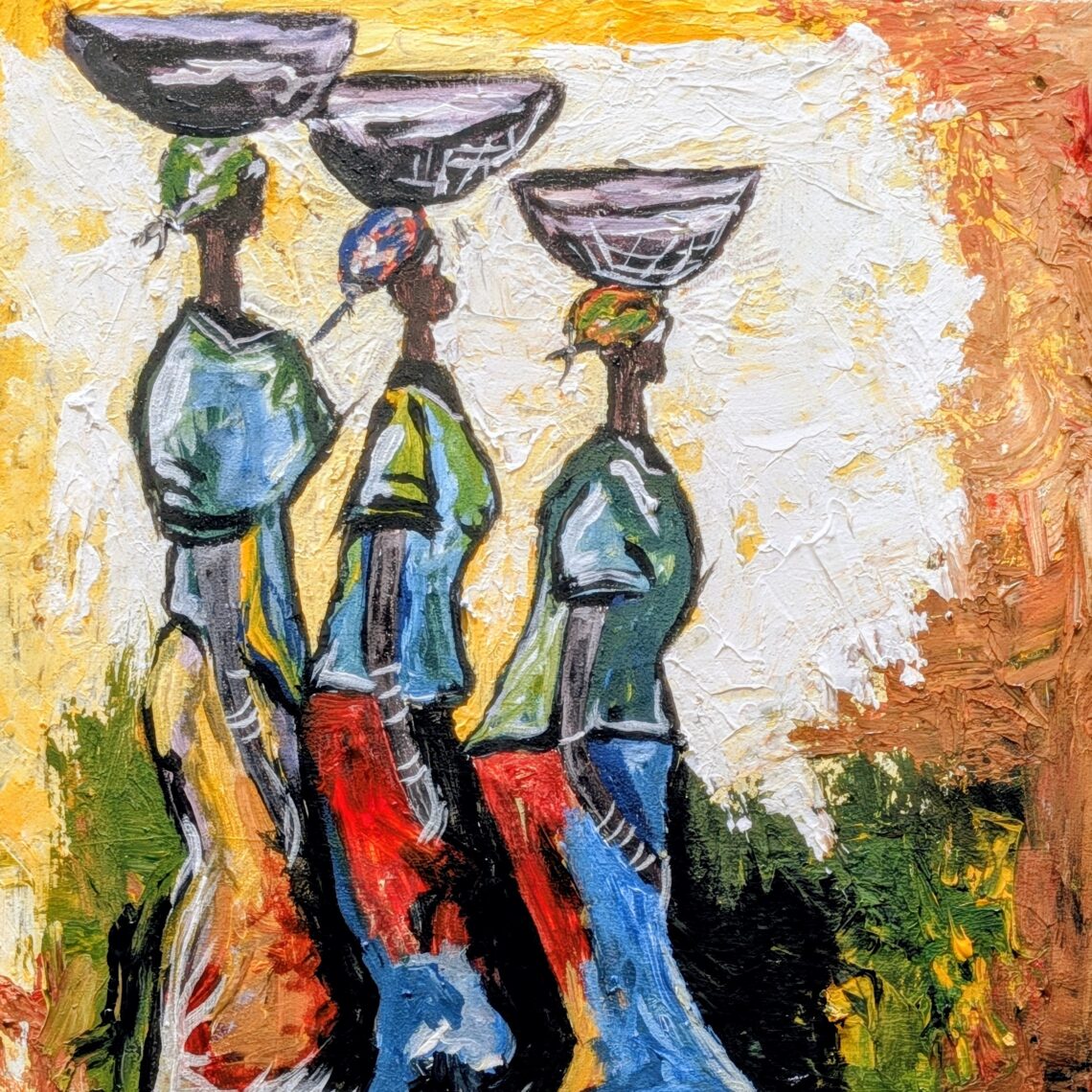
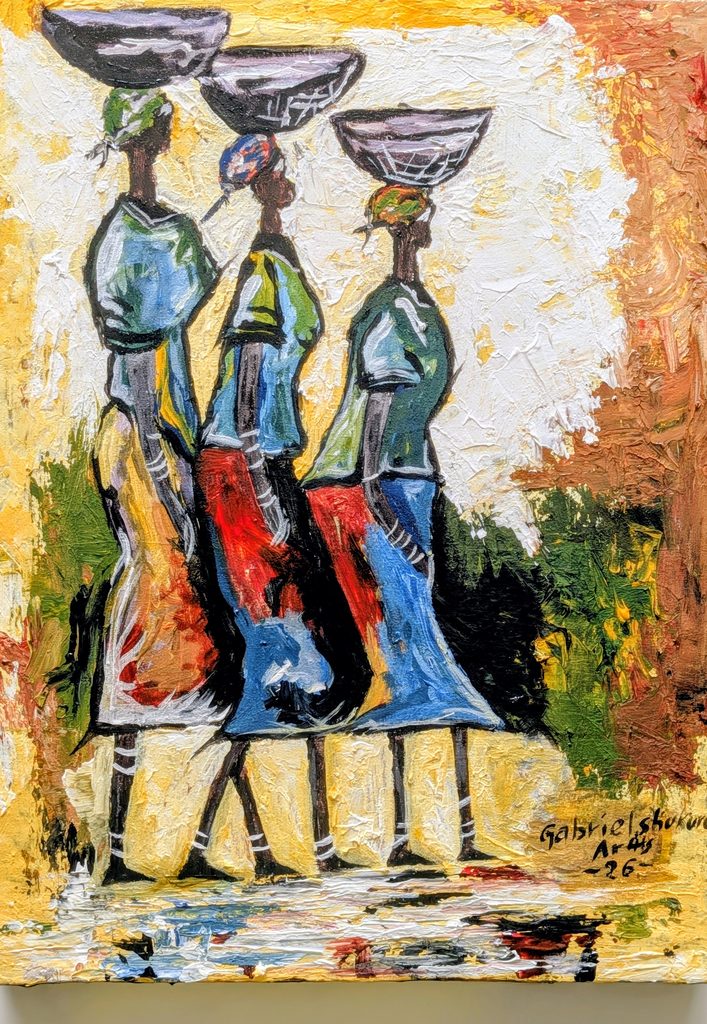
The women, of varying ages, between forty and fifty, dressed in dresses made of kitenge wax print, in intense, vivid combinations of mustard and blue, pink and yellow, orange and blue, almost all of them with hair that is braided, and with earrings made of multi-coloured beads, break into a song, or actually gospel lyrics, in Kinyarwanda, their native language.
Ibicantege byatuma nteshuka (Things that discourage me and cause me to stumble)
Bigeraho kensh’ariko bikamusha (May often happen, but will pass)
Ryabuye rizima rikomez’ipfuruka (The living stone remains the Foundation stone)
Ni ryo nubatseho (It is what I have built on).
The sights and sounds at nine a.m. are truly striking.
The women’s voices carry over to the surrounding hills, echoing across the steep, terraced slopes of red dirt. Their voices then linger among the surrounding banana trees and then boomerang back to them. They don’t run out of strength.
Meanwhile, the children they babysit, aged between eight months and two years, of varied skin tones and heritages, sit together with them—some in strollers and others on mats on the broad-leaf carpet grass—gurgling in unison, the gap-toothed among them making throaty, wet sounds.
Time seems to stand still as everyone here savours each moment—the moments that are truly lived.
However, the women are acutely aware that no matter how lovely and long the day feels, the sky will soon shift to a deep purple. When they finally return home, complete their chores, and close their eyes, memories of the past will loom large. The stories of their births and childhoods will resurface, and their buried ancestors and histories will come alive.
“The story of my birth and childhood? Does anyone really have time for that?” Angie asks, clucking her tongue impatiently. She suctions her tongue to the roof of her mouth to make sharp tsk-tsk sounds. “What a silly question,” she scolds her five-year-old son, Christopher, who is eager to know. He is the youngest of her five children and won’t sleep unless he has heard her story. “I have all the time in the world,” he insists, still endearingly lisping his words.
Angie has returned from her day job of babysitting. She has cooked dinner, fed her children, and now it is bedtime for them. After changing into her loose nightclothes, she feels a sense of relief as her ample frame is freed from the constriction of her dress. While her body feels freer, her mind remains troubled.
“How do I even begin to tell him about the genocide and its horrors?” she agonises. “How do I tell him of my orphaned existence, the crashing of my dreams, of my living everyday with a grieving heart and fearful soul?” she wonders,
She wishes she could wrap him in an earth-coloured kanga, the long, soft, rectangular cloth used to carry a child high on her sturdy back, and rock him to sleep. But he has outgrown that. Instead, she tells him fairy tales, pretending that the heroine is herself. The truth would be too difficult for him to handle right now. Sooner or later, he will hear about it from others, and when he does, it will break him. A whole generation being wiped out is no easy matter for a child to learn, or that matter anyone to handle.
After the children are asleep, huddled together in a single room, the atmosphere is desultory and dark, yet airy with the night breeze blowing in. There is no need for fans in her area or the place she works; Rwanda’s temperature is always moderate, the one thing that has not changed in years.
Angie’s mind drifts back to her childhood, her parents, and her maternal home, as it often does, despite her desire to avoid these memories. She recalls her childhood home in Kacyiru, one of the fifteen sectors of the Gasabo district, not far from where she lives now. Born in 1986, she remembers living in a small house with her parents and six siblings. Her parents worked on banana plantations, planting and harvesting produce.
She vividly remembers a group of men descending the hill opposite their home—men they knew, neighbours really, and with whom they shared meals and socialised. These men pulled each of her family members from their home, killing them with machetes in swift, decisive blows and setting their house ablaze. The flames roared, and then their house exploded. As a girl of ten, she had hidden in the cowshed and was miraculously saved. Yet, deep down, she didn’t want to be saved. She longed for the death her family had met. “Why me?” she had cried, both in the cowshed and for the years that followed.
Her aunt provided shelter in her uncle’s home, as a similar tragedy struck her—her husband and children were killed too. She and her aunt lived in poverty and in a perpetual state of fear, grief, anger, exclusion, emptiness, betrayal, suspicion, and hate. They seethed in silence, grappling with the lack of accountability for the perpetrators, the absence of community solidarity for years, and the death of their idealism. “We were not even aware that we were Tutsis and they Hutus,” she reflects. The abuse continued, for physical violence is not the only means by which someone can be devastated.
She got married at sixteen after the death of her aunt who died of misery. Angie’s husband, a truck driver, was often absent from her life and her children’s, spending more time on the roads and with other women than with her; she eventually learnt.
Does hate fade after a single generation, or is it passed down? Can the truth and the memories of killing eight hundred thousand people in hundred days be contained and stored away as thirty years have passed? Grandchildren are the crown of the aged, the Bible says. Why have the children of a generation been denied their grandparents and extended families? Yes, her older children are being schooled in community integration and bonds. In French, in English and in Kinyarwanda. But is such rebuilding and re-integration enough to teach loyalty, love and collective responsibility? Will the past seep into the present. That is what she truly fears.
The night is quiet, too quiet, unsettlingly so. No dogs bark or howl. There are very few dogs in this area and across Rwanda, as many were killed during the genocide for scavenging.
The stillness of the night, combined with the gentle breeze, gives Beline—Angie’s best friend and neighbour, who also works as a babysitter—the chance to reflect. The night, like all other nights, is full of unsettled questions and demands answers then and there, something the busy day tends to suppress. Like Angie and many others, she is haunted by memories of the genocide every night. Future generations will undoubtedly inquire about the past, seeking answers not from those who held power but from those who witnessed the events.
Beline understands that she is one of those witnesses—one among the many people who feel abandoned and whose voices often seem inconsequential. She, like them, can appear visibly broken yet maintain a stubborn resolve to carry on. She, like them, bears the weight of untold stories, as she, like many others, was orphaned after losing her parents and relatives in 1996.
Now, thirty years later, after bearing three children, and looking back on the past years, she reasons now that she can confidently say that it is the women survivors who have taught others how to maintain their sanity in a broken, hollowed-out and divisive world.
These women, like her, persist in their daily lives, managing household routines, cooking, sending their children to school, addressing health issues, and balancing the competing demands of family and work. However, she realises that their one practice of cooking—specifically, the preparation of simple dishes that their mothers and grandmothers once taught them—has played a vital role in bringing the community together and preserving culinary and cultural traditions.
How so? She seeks to unravel the mystery for herself.
Creating comforting food that connects people to their roots has united women with the people around them in a unique way. The sight of ripened tomatoes, beans, turnips and onions make certain that women think of and celebrate life not death. No matter if they cannot afford beef. Women have ingenuously begun to prepare simpler dishes their ancestors made, such as isombe, made from mashed cassava leaves, onions, garlic, and peanut butter. They also make ugali, a thick cassava dough typically used for scooping up food; igisafuliy, a one-pot meal containing chicken, plantains, and vegetables; and sambaza, which features tiny fish. Alongside these meals, they serve side dishes like ibishyimbo, slow-cooked beans; matoke, steamed or boiled cooking bananas; and ibirayi, potato-based stews.
By reigniting the past tastes and flavours, these women have not only forged a joyous affinity with their ancestral sisterhood—by preserving their secrets and honouring them by remembering their ways—but also connected the past with the present. And while these women prepare meals primarily for their families, they have also found the generosity to welcome their neighbours and friends, sharing meals with them. In this way, mutual support networks and social safety nets have been established. Women have found ways to not only share resources but child care and daily survival strategies creating strong, unbreakable bonds between themselves.
As they say there is no greater agony than isolation, no greater joy than being part of the community.
We will be okay, and so will our children, she thinks, relieved to have figured out how to survive this particular night and the nights that are to follow. And share her discovery with her community sisters. Women like my sisters and me will continue to nurture families, support the economy, and lead our communities. Perhaps together, we will be strong enough to deter violence, as we have managed to keep local families and communities connected despite their different ethnicities over the years. She does not miss her husband, who, like Angie’s, is missing. He, like many men, has succumbed to social and psychological pressures, while she and her sisterhood have found ways to endure.
She sees the lights twinkling on the neighbouring hillsides. She believes that if women of her community show their will, they can keep the world safe.
As her children sleep peacefully, she hums softly to herself, knowing that her faith in the Almighty and the support of her sisterhood, along with the angels within them, will help them through.
Umv’ umpumeko, reb inambuko (Listen to my testimony, look at my journey)
Urabon ubwiza, bw Imana (You see God’s glory)
Her eldest son, Simon, joins her in bed and hums sleepily. She gently rocks him to sleep, hoping that this generation will emerge stronger and filled with less hatred and anger. She wishes for them to carry books instead of machetes, to banish the demons around them, and to listen to the angels within. To them to return to a place of ease and trust.
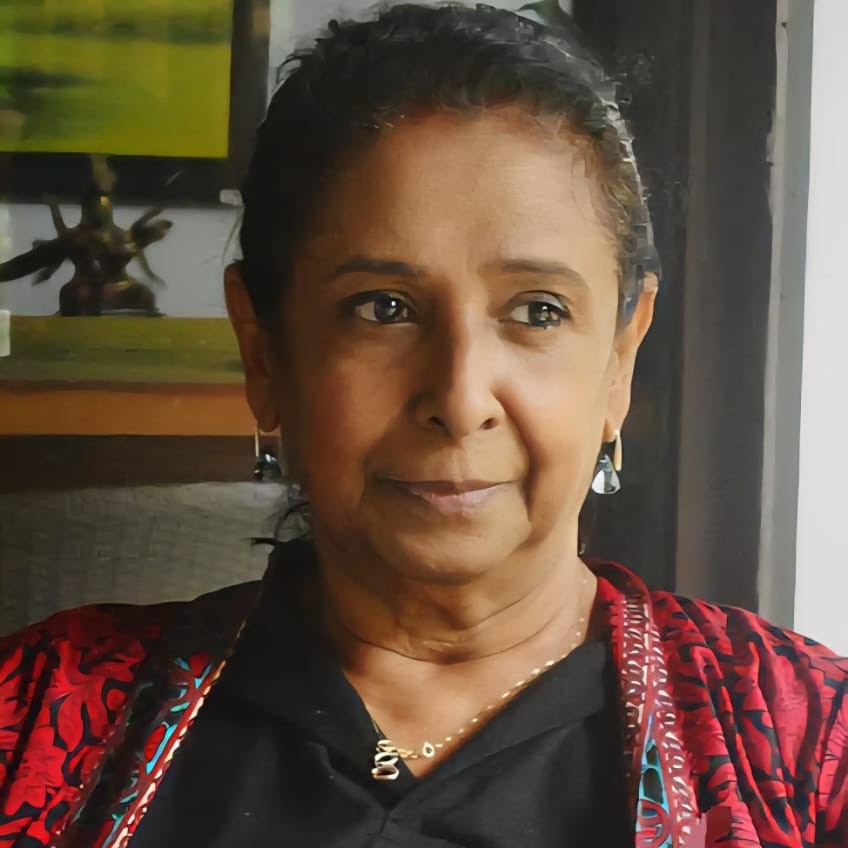
Chitra Gopalakrishnan pursues fiction, creative nonfiction, poetry, essays, book reviews, and opinion pieces. Based in New Delhi, she uses her writing to break firewalls between nonfiction and fiction, narratology and psychoanalysis, marginalia and manuscript, and tree-ism and capitalism.
Website: www.chitragopalakrishnan.com