Chitra Kalyani
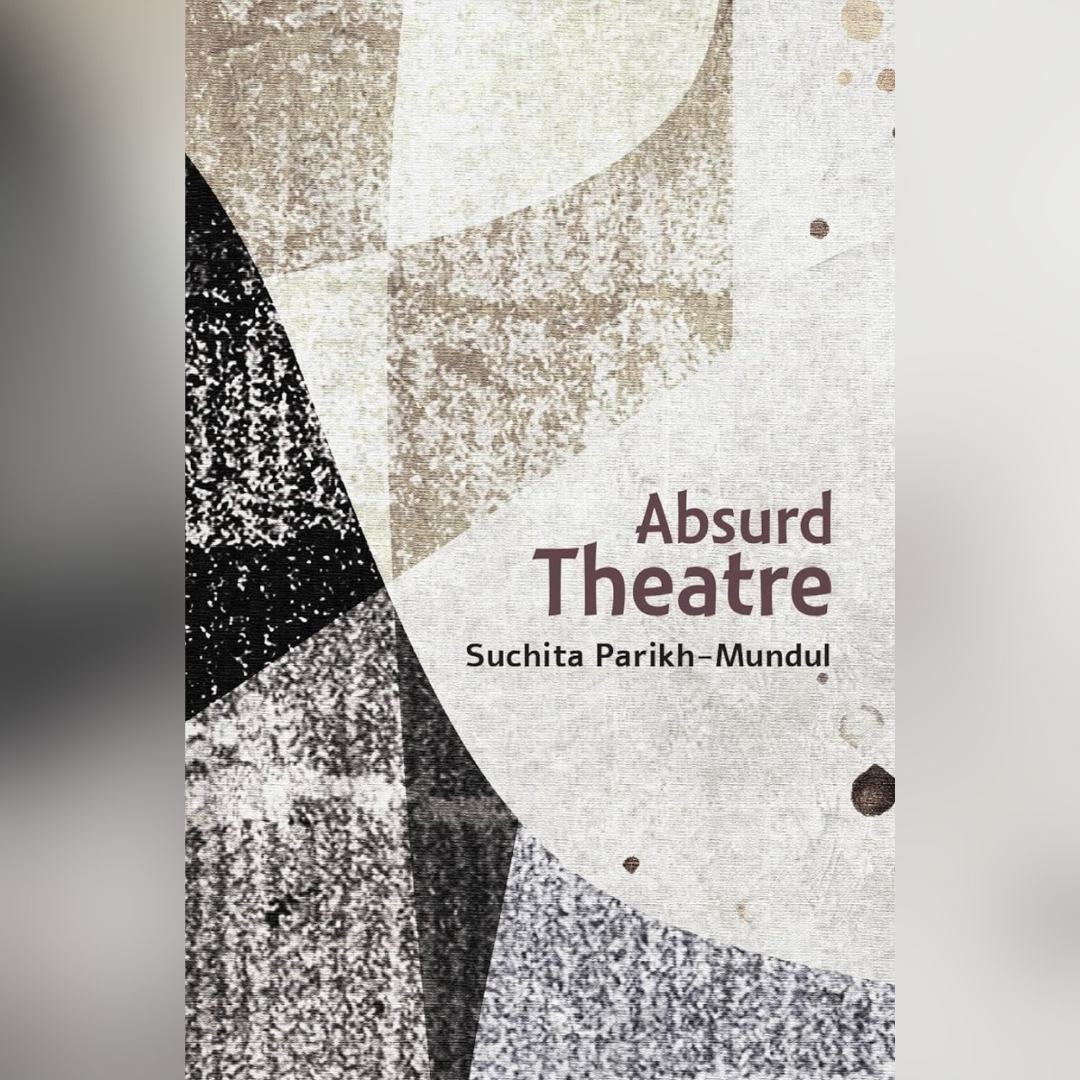
As someone who often reads the last page first, it is only with a little reluctance that I recommend starting somewhere in the middle when reading Suchita Parikh-Mundul’s Absurd Theatre. (Given the book title, I suspect the poet might welcome the idea of beginning somewhere in the middle.)
If you open the book midway, you might arrive at ‘Collect grandmothers’. Likening grandmothers to flower petals, this poem offers an afterlife to their essence: “so when you speak of them, / petals can fall from your mouth / for others to gather / and begin again.” A faint connection is made between death and flowers—a sublimation of life—and also appears earlier in the book in ‘Funeral’—where the narrator chews on flowers, “their fragrance— / a temporary distraction from the familiar / scent of death.”
Death pervades various poems in the book. “I deleted my birthday this year,” begins ‘Birthday’, signalling a kind of death. In the penultimate poem ‘Discontinued’, the narrator’s afterlife is a barcode; “use its carbon,” the narrator advises, “to fuel eco-poetry.” And in the final poem, ‘Addiction’, the “addictive obscurity” too could be construed as death.
While death may be a preoccupation in Suchita Parikh-Mundul’s poetry, it is accompanied by the wisdom and belief that nothing is final; that everything has an afterlife, and in nature.
Humour is also a hallmark of the poet, who—true to the title—moves as far away as possible from sense in ‘How to answer inappropriate questions’. As an example, here is how you may answer a question:
On not having children
a. The summer breeze is like a mother’s embrace.
b. The sun speaks in long days and warm nights.
c. I lie in bed until I’m ready to begin.
Her humour is more direct in poems where family is present. ‘TV’ describes parents lulled by the flatscreen into sleep: “my father, with head over lap and phone nearly dropped as if in surprise, and mother, dreaming in colour.”
The ordinary hilarity in ‘The mistake’ endears the reader to both the narrator and her husband. The interminable classical music session to which he takes her turns into “an hour-long lesson / in love and patience” and into the moment when “the rest of our lives / began.” In ‘My husband is broken’, the narrator ties the husband’s body to the institution of marriage and to herself, when after all his treatments, “he becomes complete / like the institution of marriage / As do I.”
Sprinkled with playfulness, ‘Waterbody’ captures an innocent moment of playing with shapes of water on tiles, turning them into a map, “while I strategise the future / with fingers and toes.” Meanwhile, ‘Years’ makes the humble admission that one cannot comprehend misery despite time, “despite our eyes / having travelled the clouds / where our gaze remains.” And here the author’s dedication, “to all who have been lost,” resonates more than ever.
A series of poems trace the body—breasts and spine, eye and tooth—reconciling it with its nature: physical, biological, mortal. ‘Mammography’—the longest poem in a collection of short poems—announces the test result in a passive voice. “The verdict is pronounced: / my landmass is infected, its earth rotting.” Yet the narrator appears detached, impersonal, only observing. “No solution / appears before us, save / to clothe myself / in shadows and follow / the descent of my breath.”
‘Garden time’ introduces us to a grandfather lost in his musings. When, at the end, the young grandchild holds his hand, describing him as “the man I never met,” the reader too is broken out of the grandfather’s reverie.
Enjambment is used frequently by the poet to create suspense and surprise. In ‘War poem’, the accomplishment of this device is most apparent, as new meaning is taken on by every turn of the phrase:
Here there
is no blood—
tainted phrase releasing
like a bullet. No artillery—
laden words joining arms…
In ‘Night Owls’, the enjambment and language lock wonder with wisdom. The murmuration of the trees, too, is heard in “trees are true / philosophers, look how / each leaf / is a patient journey…” At times such as these, Parikh-Mundul’s concern with nature is reminiscent of Mary Oliver, whose poem ‘Wild Geese’ she references in her poem ‘Body’.
Since the poetry moves and concludes so confidently, the glossary at the end comes as a surprise. The reader is tempted to approach it as another poem, where even the sanest explanations appear superfluous and absurd. Consider paan: “areca nut and other ingredients wrapped in betel leaf, consumed as a mouth freshener or digestive.”
The subsequent gratitude list and acknowledgements, too, make for engaging reading.
I must admit that in this rare case, I have cheated and read the book from cover to cover.
Absurd Theatre is available globally on Paperwall and Amazon India.
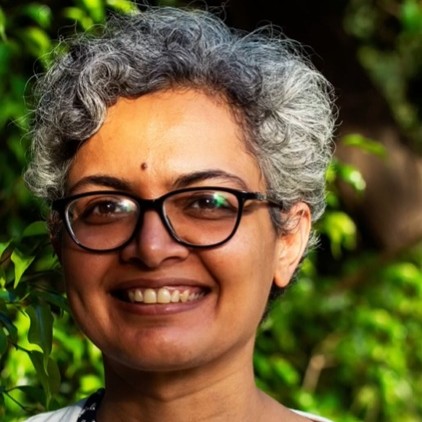
Chitra Kalyani is a writer based in New Delhi. Her poems have appeared in a pamphlet by Candlestick Press and in The Passionfruit Review. Her short essay “How to tell him you have bipolar disorder” was published by Point of View’s Skin Stories.