Anasuya Basu
A road trip through the Dooars in the winter month of January not only invigorates with its crisp, chilly wind and clear skies, but also fills the senses with its vistas of mountains, mist, and lush tea gardens.
Dooars can be reached from Kolkata via New Jalpaiguri (NJP), which is in the foothills of the eastern Himalayas. The town is connected by road, rail, and air.
The New Jalpaiguri station is chaotic. While taking the railway overbridge, be on the lookout for the 1st platform, which is reserved for the UNESCO World Heritage Darjeeling Himalayan Railway (DHR). It is somewhat cleaner than the rest of the platforms and has the UNESCO plaque for the DHR. The exit of the NJP railway station is choked with traffic on a weekday afternoon. Once on the highway, it is a smooth ride.
Travel by road through the Dooars
Though a train line cuts through the Dooars, visiting multiple locations in the belt is best done by road. There are ample tourist cabs for hire with drivers. We chose to self-drive a sub-compact SUV that served us well through the hilly inclines and twisty, turning roads with hairpin bends. At Jalpaiguri, a city in the foothills of the Eastern Himalayas, we checked into Stop By Zone, a motel of the Government of West Bengal’s Tourism Department initiative that is now operated by the Apeejay Surrender Group that has The Park chain of hotels.
A sprawling property right beside the highway, it is a perfect pit stop with large rooms, attached baths, and a restaurant with Indian cuisine. It has ample parking space with WiFi facilities and a small Flurys outlet selling their signature rum balls, brownies, and almond cubes. We ate a filling dinner at their restaurant of chapatis, palak chicken, and some vegetables.
On way to Kurseong
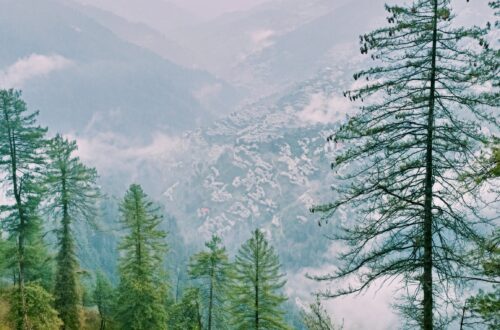
Through the winding roads of Rohini (tea estate), we reached Kurseong, a small hill town in Darjeeling district, about 2.5 hours later, sitting pretty at an altitude of 1,482 metres from the plains. It is best known for the tea gardens of Makaibari and Castleton, its cool climate, Dow Hill School, and a peekaboo view of Kanchenjunga.
The Darjeeling Himalayan Railway
Kurseong town, also known as the Land of White Orchids, is criss-crossed by the narrow-gauge railway lines of DHR, which was established in 1880. You will spot the toy train chugging along the narrow mountainous roads alongside vehicular traffic. The town centre has the DHR Kurseong station, where an archive of the DHR, along with the locomotives, is on display. A train turntable that turns an engine a full 180° is also a must-see at the station.
The DHR has a quaint café at the station where live bands perform in the evenings. The café has an array of cakes and savouries on offer, as well as an extensive continental cuisine.
Baking Diaries
However, the most happening café-cum-restaurant at the town centre was the Baking Diaries, which offers a cliffside view of Kanchenjunga along with the town. We made a meal of their chicken sandwiches and burnt garlic chilli noodles, washed down with some piping hot lattes on a chilly afternoon. Their supersized pastries, I was told, were the talk of the town.
The shops lining Hill Cart Road offered everything, including cashmere three-piece suit dresses, ankle-length boots, warm long mufflers, and soft, light bomber jackets, among other things.
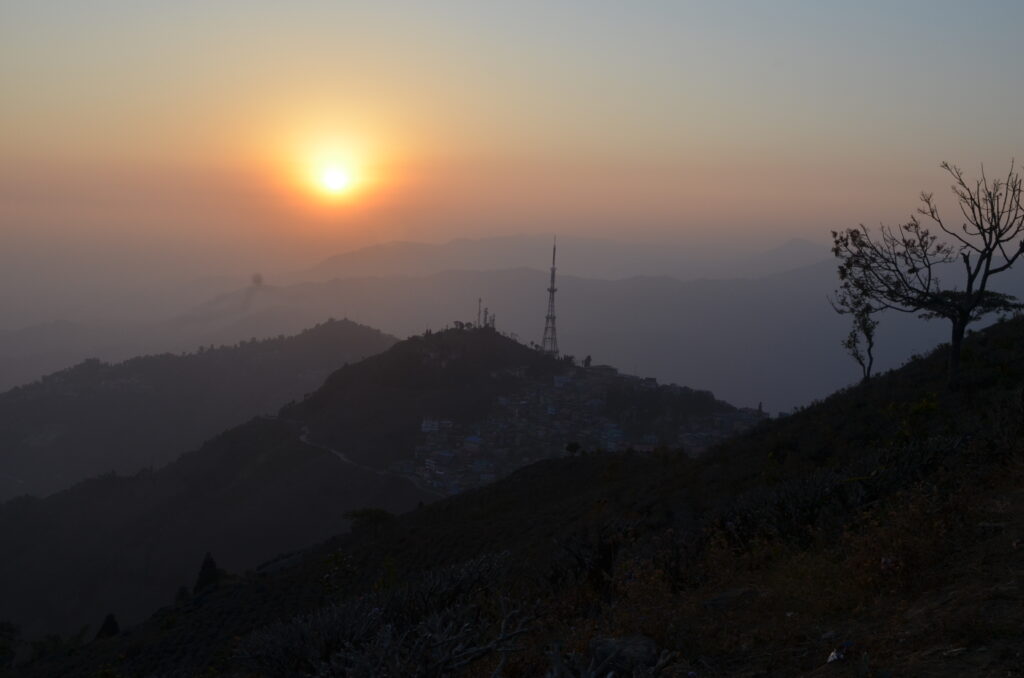
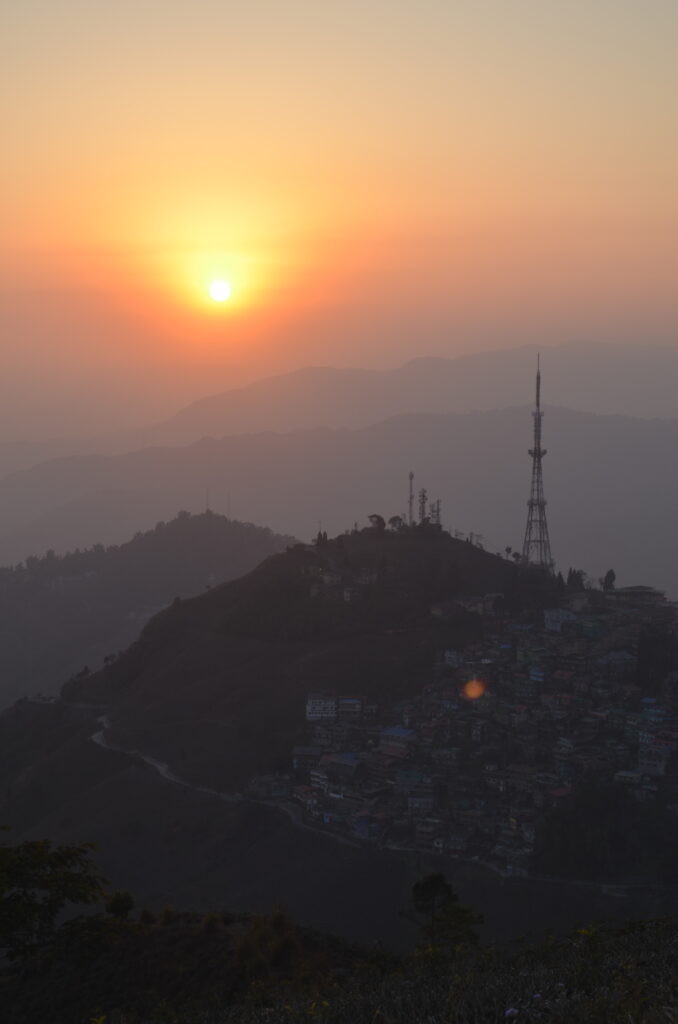
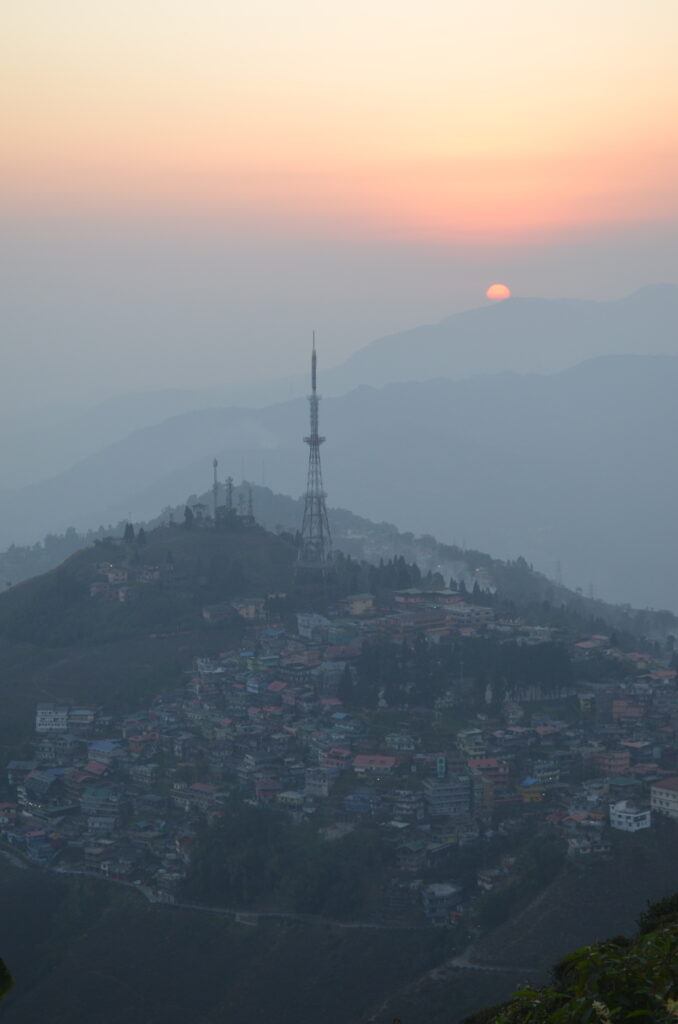
One of the viewpoints at Kurseong is Hanuman Tak which stands amidst Castleton tea estate, an elevated site offering a bird’s-eye view of the town and a scenic sunset. En route, one crosses Dow Hill School.
The roadside eateries at Kurseong offer some sumptuous vegetable momos. A tiny hole-in-the-corner a few metres from the West Bengal govt’s Kurseong Tourist Lodge offered barbecued chicken and pork done to perfection.
View of Kanchenjunga
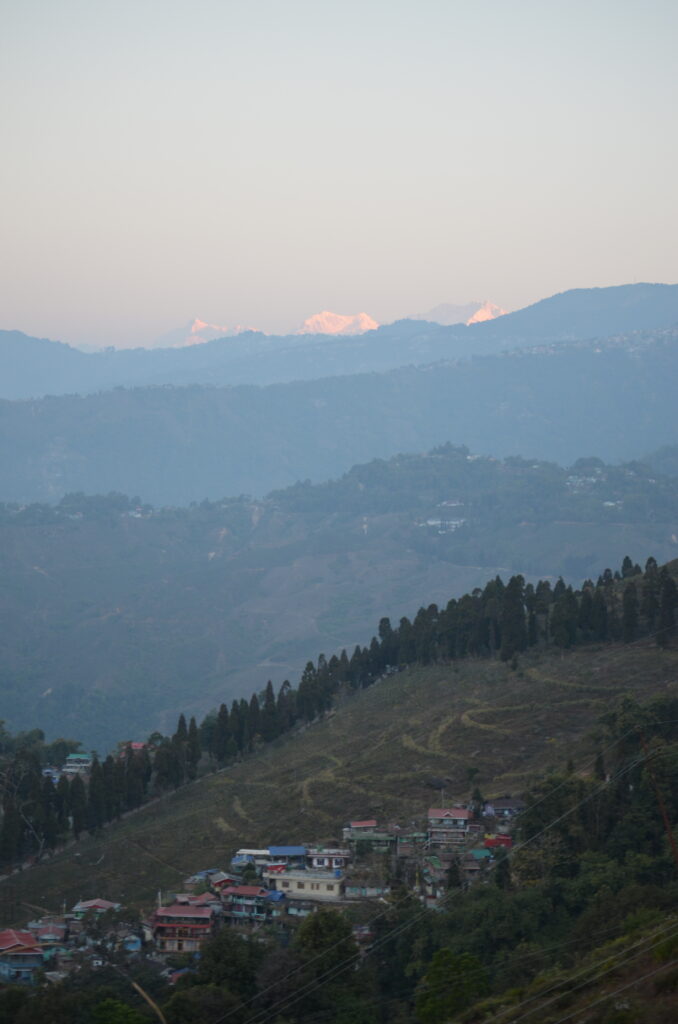
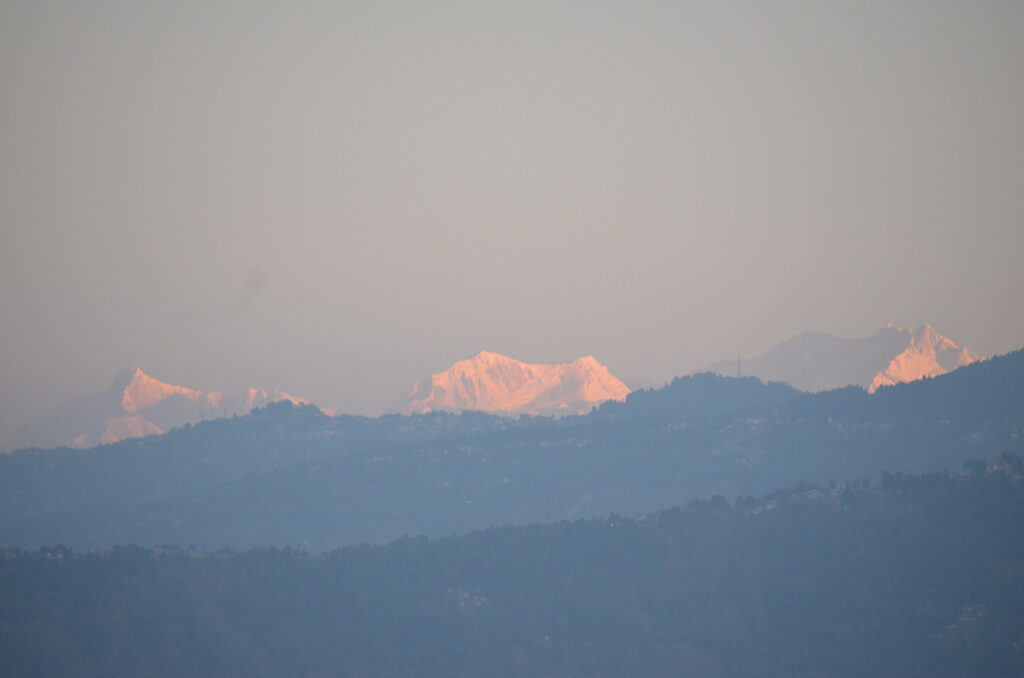
Next morning, as advised by the rosy-cheeked students of St Paul’s School, which stands right opposite the tourist lodge, we made our way to the Kurseong bus station, a couple of kilometres away, to catch the peaks of Kanchenjunga during sunrise. As the dawn sky turned pink with the first rays of the sun, the distant snowy peaks took on the hue of a blushing pink to the sound of multiple shutters. Later, as the sun rose high in the eastern sky, the peaks were bathed in a golden light.
Driving to Dooars
We made our way down to Lataguri, in the foothills of the eastern Himalayas, a village in the Dooars and a gateway to the Gorumara Forest Reserve, the one-horned rhino country. The Teesta barrage falls en route. Right beside the barrage, local shacks sell fresh fish from the river. One can eat fried boroli, the native fish of Teesta, at the shacks.
Local rice varieties like Kalo Nunia and Kaun millet are also available at the weekend market. As we drove through, signages of elephant and deer crossings appeared at regular intervals, marking the beginning of an extended forest area including the Gorumara, Chapramari, Chilapata, and Jaldapara forest reserves.
At Lataguri too, there is a Stop By Zone, a spacious, well-appointed motel with a good restaurant. The chef rustled up some delightful meals during our 2-day stay, including a radish chutney that was an amazing amalgamation of grated pink radish mixed with roasted and ground peanut and sesame seeds, and a generous portion of mustard oil.
A short drive from the motel is the Mahakal temple at the edge of the Gorumara reserve. It is a natural space with a number of lingas on the forest ground smeared with vermilion. Trishuls and Nandi bulls mark it as a temple of Shiva. Locals revere the elephant here. Apparently, the animals make an appearance at the spot, as is evident from their droppings nearby. The banana and milk offerings draw them here.
Gorumara Forest Reserve
An elephant safari is the best way to experience the jungle. The quiet, stealthy steps of the huge beasts through dense vegetation promise better sightings of animals and an exhilarating experience of the forest. A jeep safari is extremely noisy and jerky. Early morning safaris are recommended.
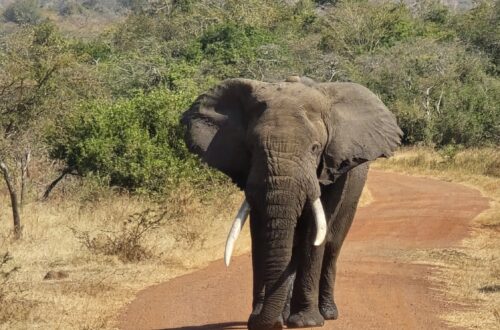
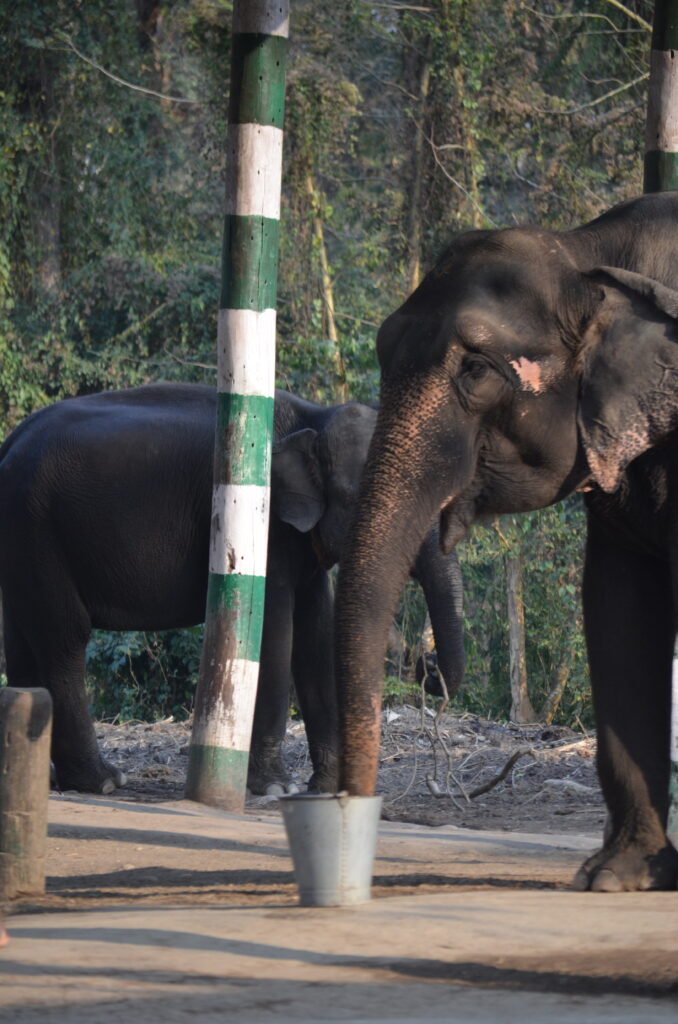
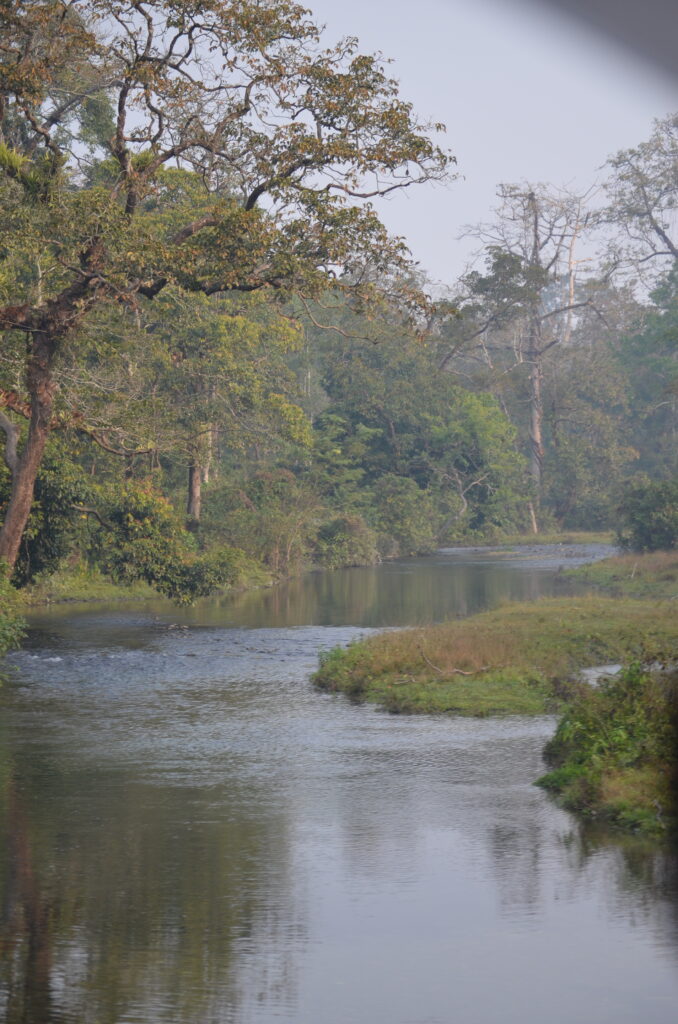
Gemini, our ride, took us through unbeaten tracks of dense forest ways, through streams, the Murti river, and grasslands. Often we stopped as Gemini’s companion in front of us dropped his turds and relieved his bladder. Gemini too did the same as we heard thuds in frequent intervals.
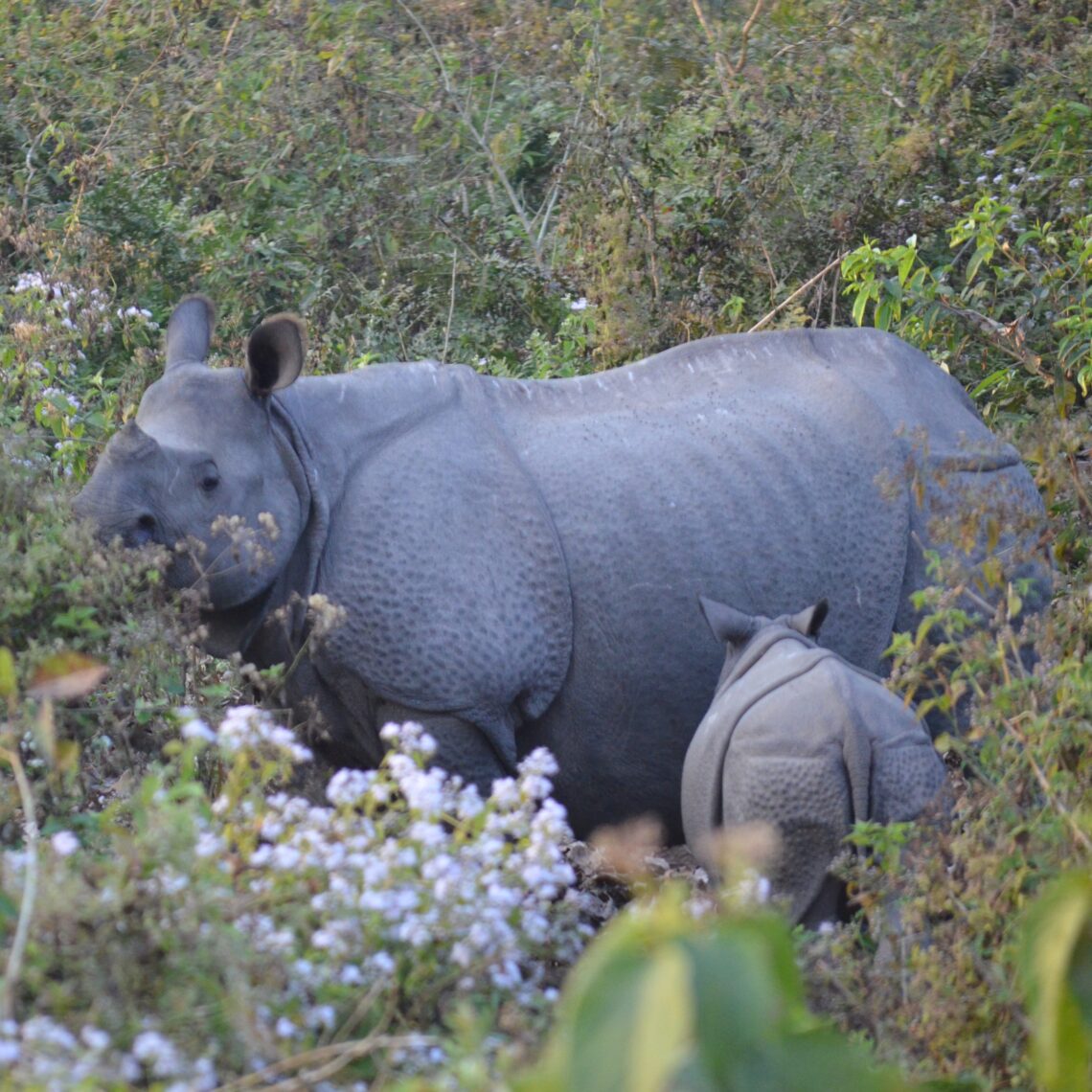
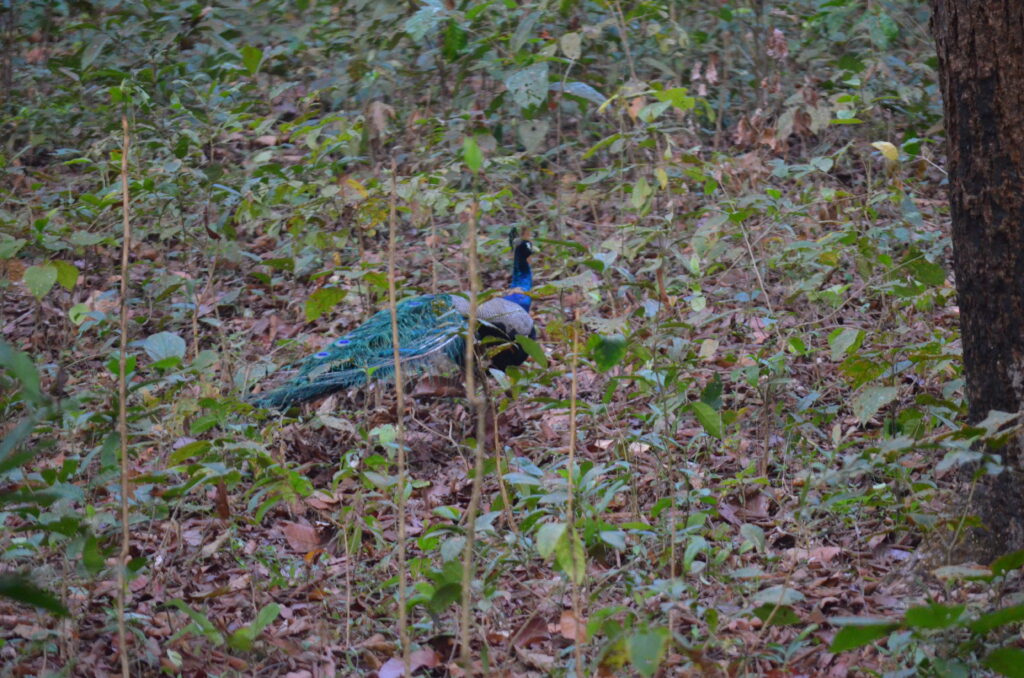
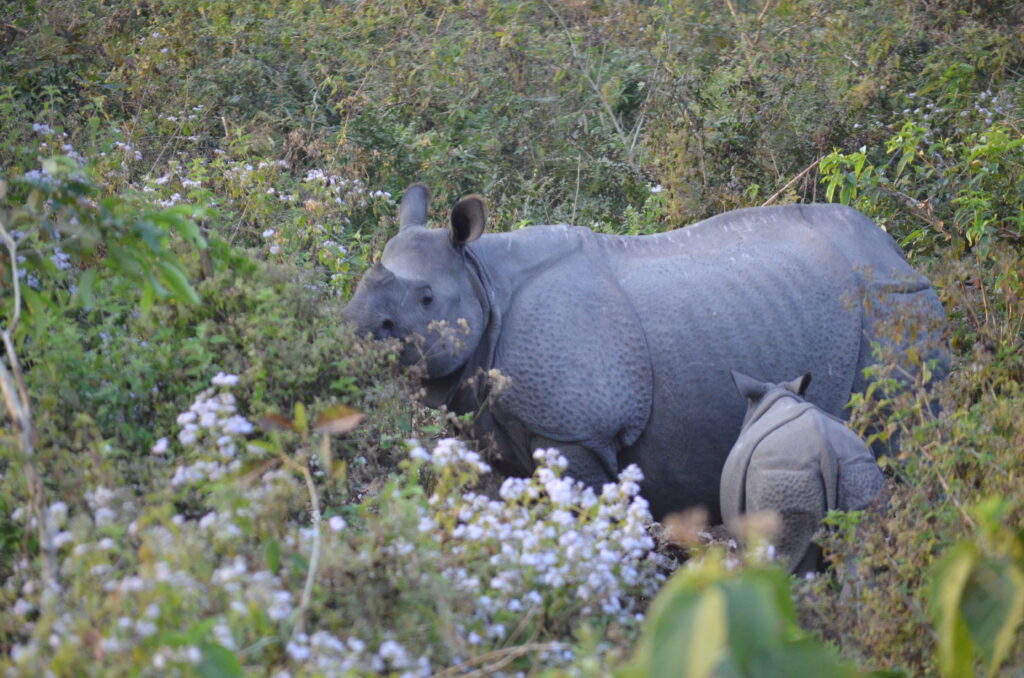
We spotted a rhino mother with her baby in the grasslands, and a herd of Indian bisons too. The Gorumara forest has the highest number of bird species, which made their presence felt as they came to roost at day’s end. We caught sight of spotted eagles, a hornbill in flight, peacocks, and peahens.
From Lataguri, nearby spots to visit are Jhalong, which is an hour’s drive away. It offers some beauteous views of the mountains, along with the Jaldhaka hydel project with its barrage. Bindu, a few more kilometres away through broken roads, borders Bhutan. These spots transform during the monsoon, with rivers in full spate. When we visited, most rivers were just thin streams.
Our next stop was Madarihat, which has the Jaldapara Forest Reserve. As with Gorumara, we booked an elephant safari in the morning. One has to report the evening before at the forest office to collect entry passes and guide allotment.
Jaldapara Forest Reserve
The entry to Jaldapara Forest Reserve is through a mile-long gravelly road that has scores of peacocks and peahens strutting or perching on trees and logs on either side, and sometimes on the road as well. Our guide told us the road is named Peacock Revenue Road, where we saw one dancing with its plume in full display.
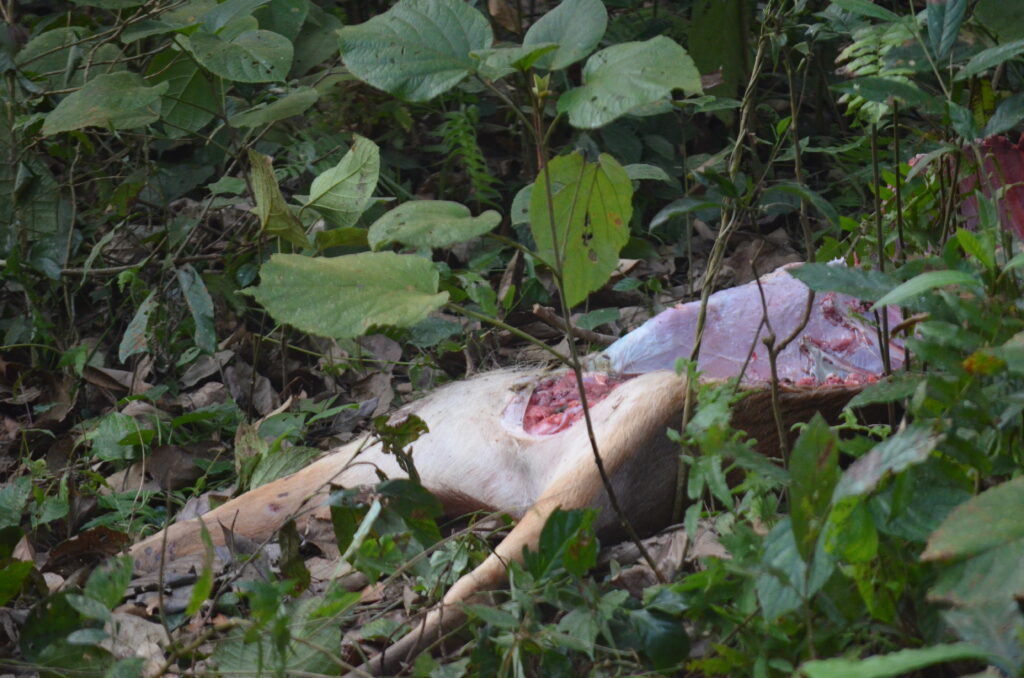
The elephant ride at Jaldapara was a tad more comfortable than at Gorumara, with cushioned seats on the elephant’s back. With nudges and calls of “Mile” from the mahout, our ride, took us to the site where a leopard made its kill that morning. A half-eaten carcass of a deer lay between two bamboo thickets. Strident calls of low-flying crows signalled the presence of the kill, but there was no sign of the predator.
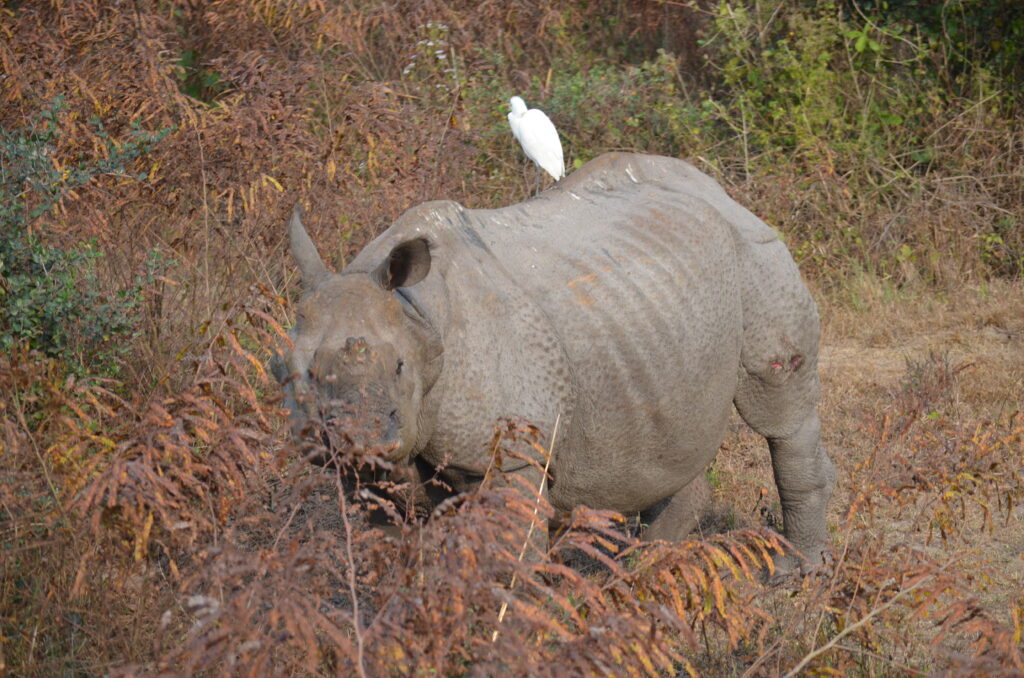
Crossing the Hollong river, we spotted a rhinoceros in the grasslands with a bruised horn. Apparently, rhinos fight among themselves, probably over territory. A little later, we spotted a herd of bison behind tall simul trees. They are shy creatures and as soon as our ride approached them, they ran away.
We rounded off the safari by spotting some of the avian species, including a large hornbill in flight, its wings spread and its hooked beak open to catch a kill. There were cormorants, egrets, and kingfishers near the ponds. An empty space near a group of buildings at the edge of the forest marked the presence of the famed Hollong Tourist Lodge that burnt down in June 2024.
Our stay at Madarihat was at a cosy homestay amidst tea gardens called Tea House, a place with basic amenities and home-cooked food.
From Madarihat, we drove down to Makrapara, a 45-minute drive, where there is a Kali temple and the Gomphu Gate to Bhutan. One could cross over to the Himalayan country on foot or by vehicle by showing documents of citizenship at the border gate.
Another nearby spot is Lankapara, where we got a view of sprawling tea gardens surrounded by Bhutan mountains. Rampant illegal collection of sand and stone dust was on at the dry riverbeds.
Oodlabari
Our journey ended with a day’s stop at a quaint, colonial-style resort called Manabari Greens Eco Resort at Oodlabari. Essentially a bamboo factory, the resort had white cottages built around sprawling acres of trees and foliage. The cottages were once the quarters of factory officers.
How to Travel
By flight from Kolkata to Bagdogra
By train, Howrah-New Jalpaiguri Vande Bharat
By road, cab hires or self drive
Where to stay
At Siliguri: Stop by Zone at Fulbari
At Kurseong: Kurseong Tourist Lodge of West Bengal Government
At Lataguri: Stop by Zone
At Madarihat: Tea House (homestay)
At Oodlabari: Manibari Eco Green Resort
What to do
At Kurseong: Get a majestic view of the Kanchenjunga peaks
Drive up to Dow Hill School for a view of the town
Take a ride on the DHR
At Lataguri
Take a safari at Gorumara Forest Reserve (prior booking a must at West Bengal State Forest Development Agency)
At Madarihat
Take a safari at Jaldapara Forest Reserve (prior booking a must at West Bengal State Forest Development Agency)
Anasuya Basu is an independent writer and media educator based in Kolkata.
Instagram, Threads and Substack: @anasuyabasu
LinkedIn: Anasuya Basu
Photos by Anasuya Basu