Michael Smith
Editors’ Note: In October 2009, Michael Smith landed in Tokyo, Japan, accompanied by a colleague and students from the British school he taught at. Having explored the capital, he hopped on a high-speed train to Hiroshima. In this instalment we find the party changing boats and trains to reach the port city of Oita. Next in this series would be Kyoto, and Tokyo again before Michael and company fly back West.
Day 4
Hiroshima to Oita
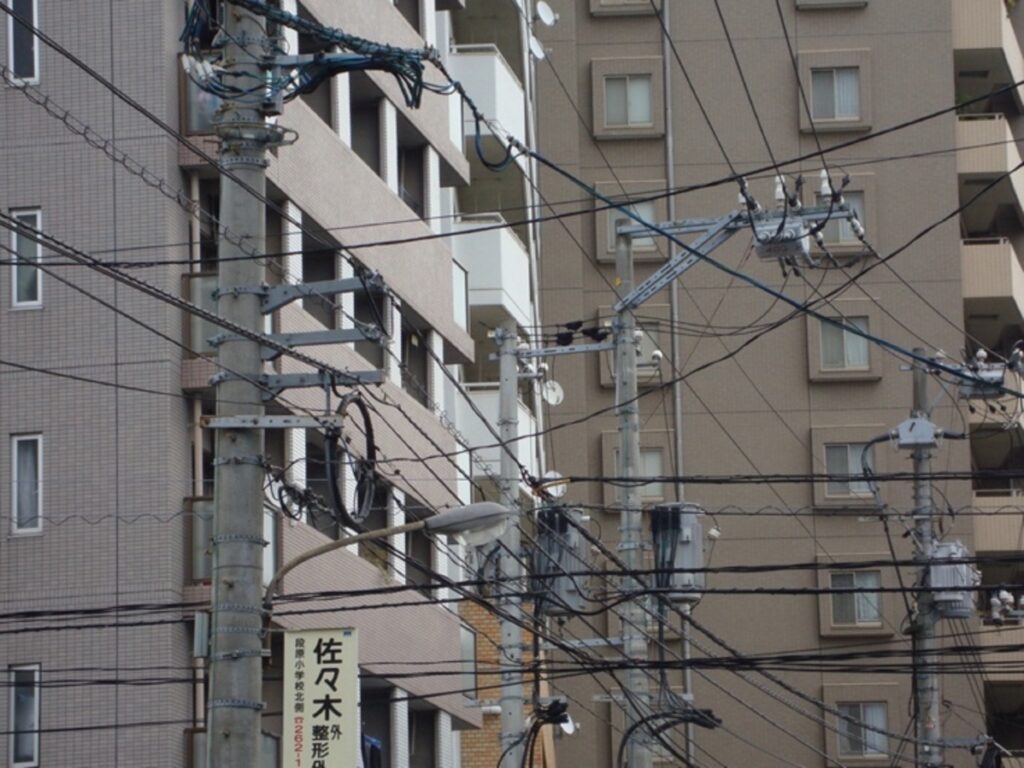
On these trips, it is easy to lose track of the different hotels visited. There were some common themes, however. Each one was located in the suburbs, was small, clean and efficiently run. Being in the suburbs, we got to see regular Japanese life, rather than the tourist’s view. In most cases, the streets around our hotels were all overlooked by a complex grid of power lines. This is unsightly but done for a very practical reason. Japan is prone to regular earthquakes, and having powerlines above ground means they can be easily and quickly repaired should the need arise following such an event.
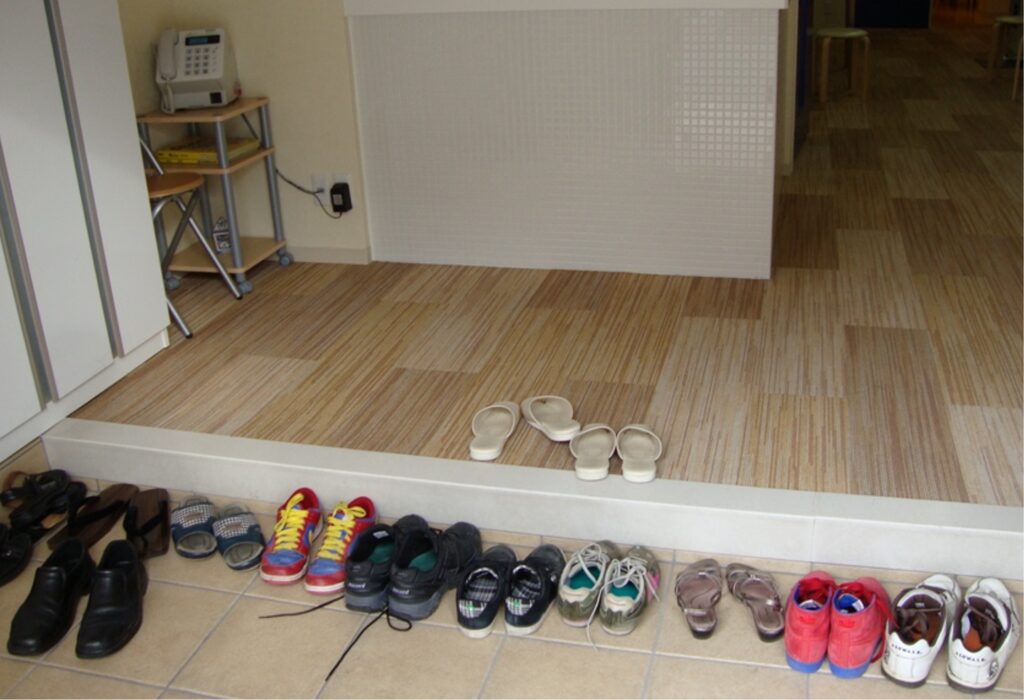
We also grew accustomed to the ritual of leaving one’s outdoor shoes by the entrance. We learned later that the ‘proper’ way is to leave the shoes pointing outwards, demonstrating one’s intention to leave.
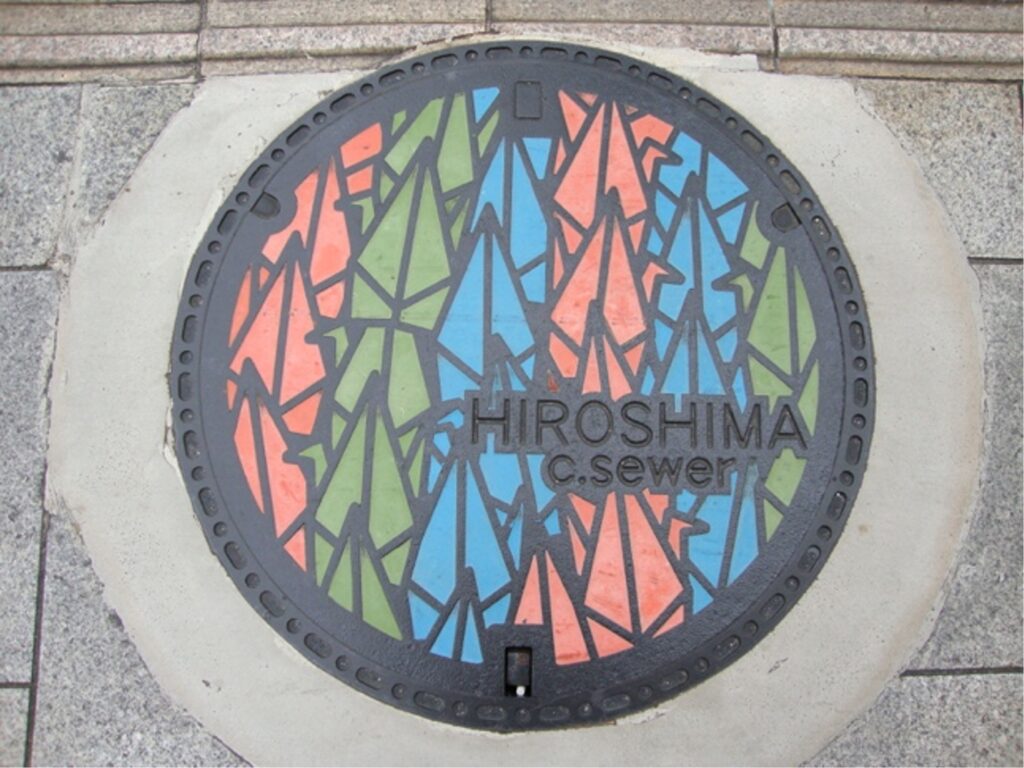
Another feature we saw when walking through Japanese cities were the ornate covers for the sewer systems. In Hiroshima, they were even coloured.
Itsukushima
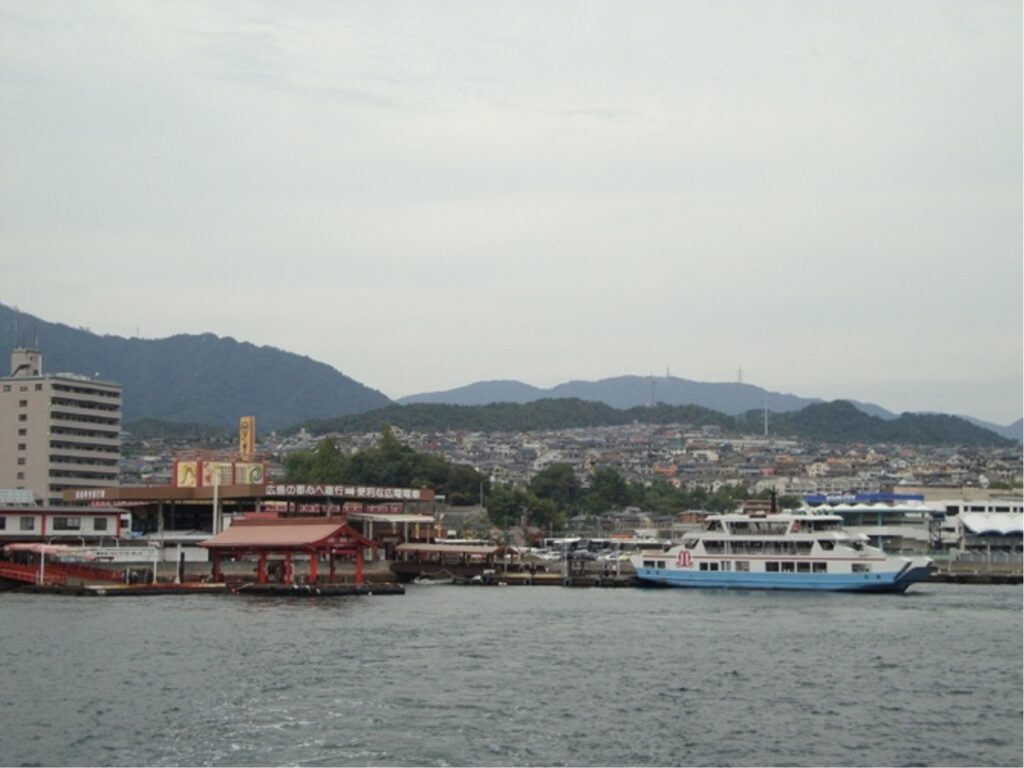
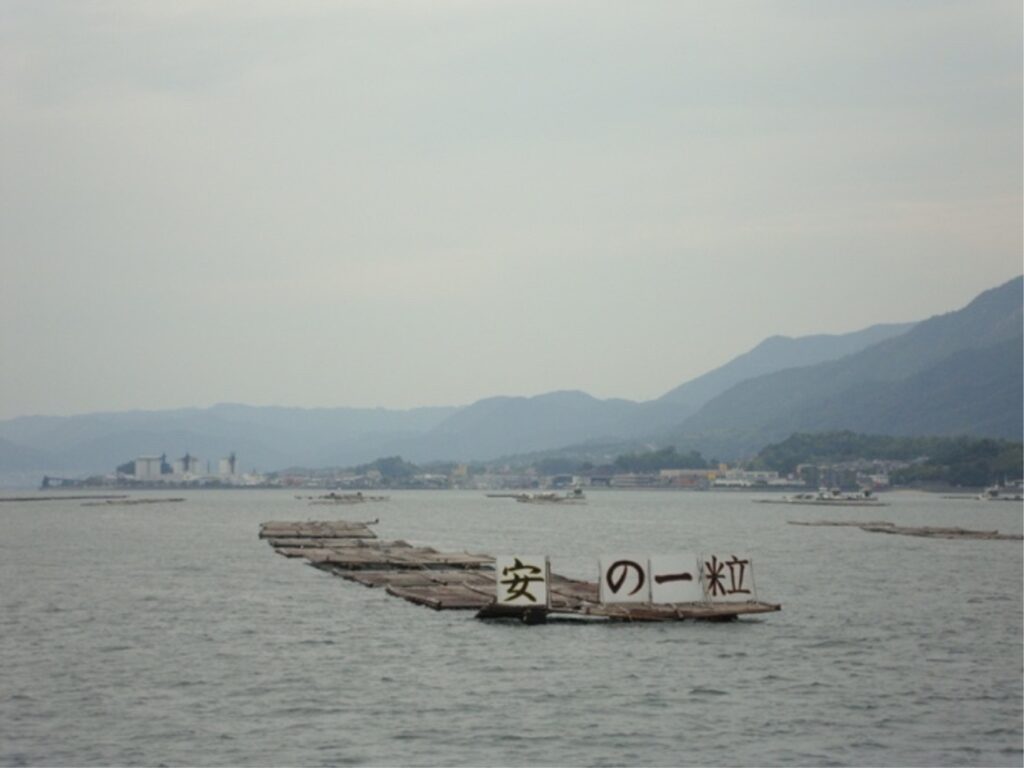
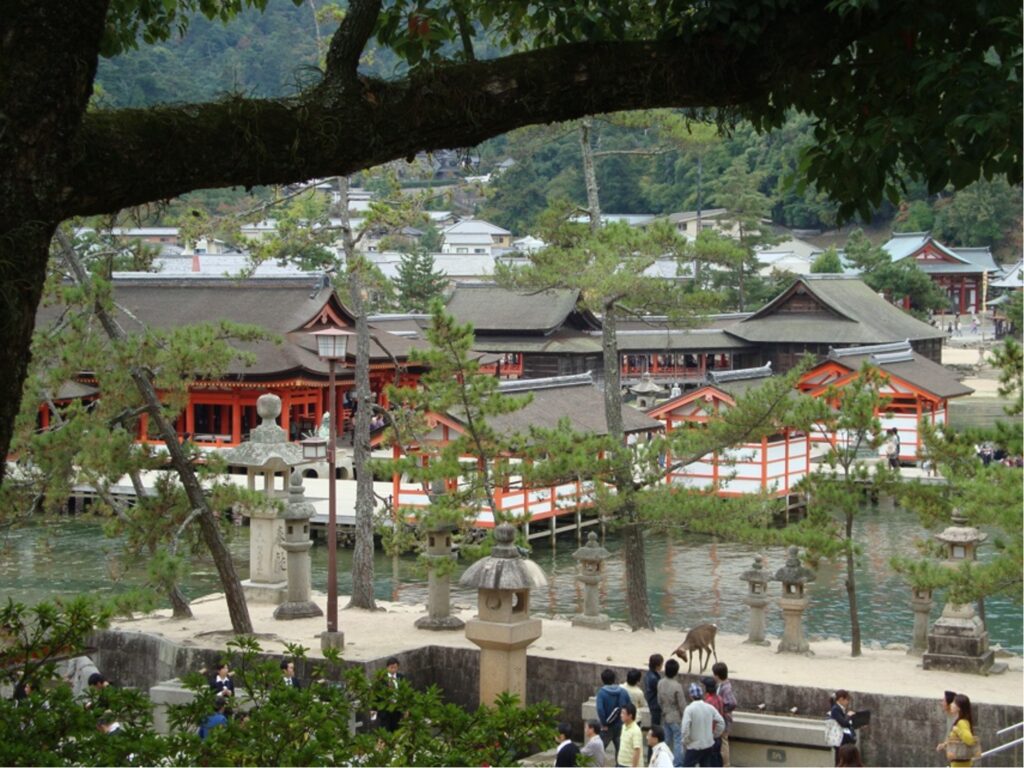
Our first mode of transport today would be boat. We were taking the ten minute ferry ride from Miyajimaguchi to Itsukushima (aka Miyajima, meaning ‘Shrine Island’), located in the northwest of Hiroshima Bay, and famous for the Itsukushima Shrine, a UNESCO World Heritage Site, one of the three locations Japanese people are supposed to see in their lifetime (one of the ‘Three Views of Japan’, as specified in 1643 by Hayashi Gahō). The temple was first built in 593 AD, expanded in 1168 to its current form, and is regarded as sacred in Shinto belief. Leaving the harbour we sailed passed large oyster farms.
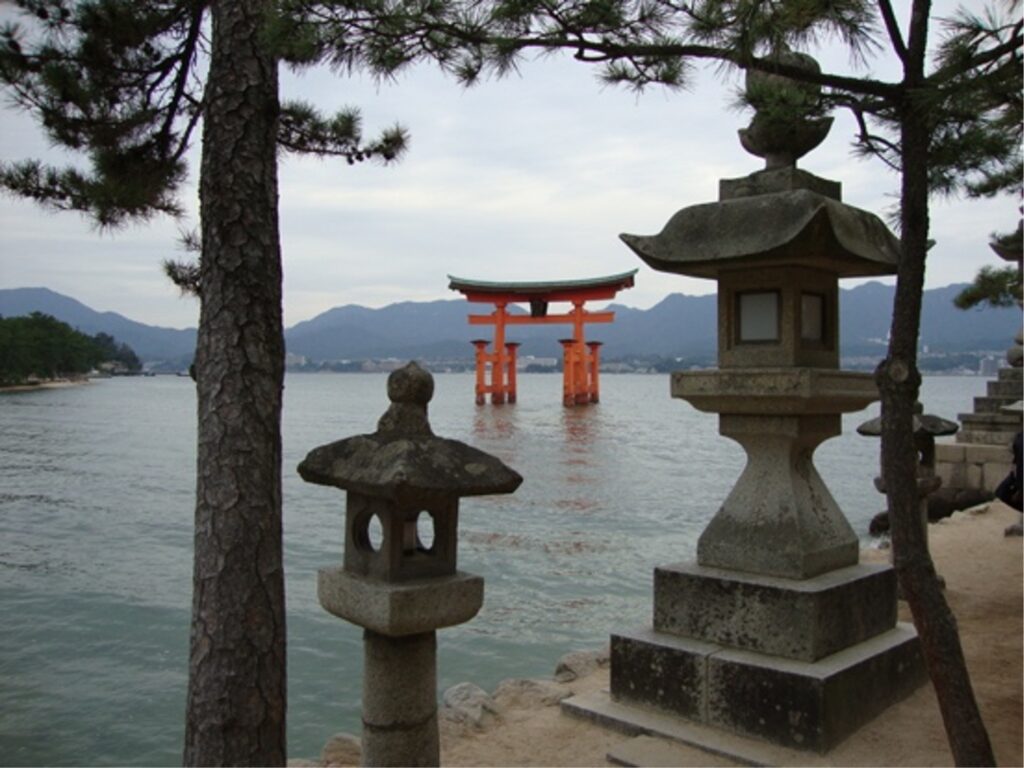
As the island is set in the Seto Inland Sea, tides add to the charm of the place. At low tide it is possible to walk from the Itsukushima Shrine to the Torii, the massive vermillion gate protecting the entrance to the shrine. However, our visit coincided with high tide and so a personal visit was not possible. However, high tide does mean the shrine stands impressively on stilts above the water.
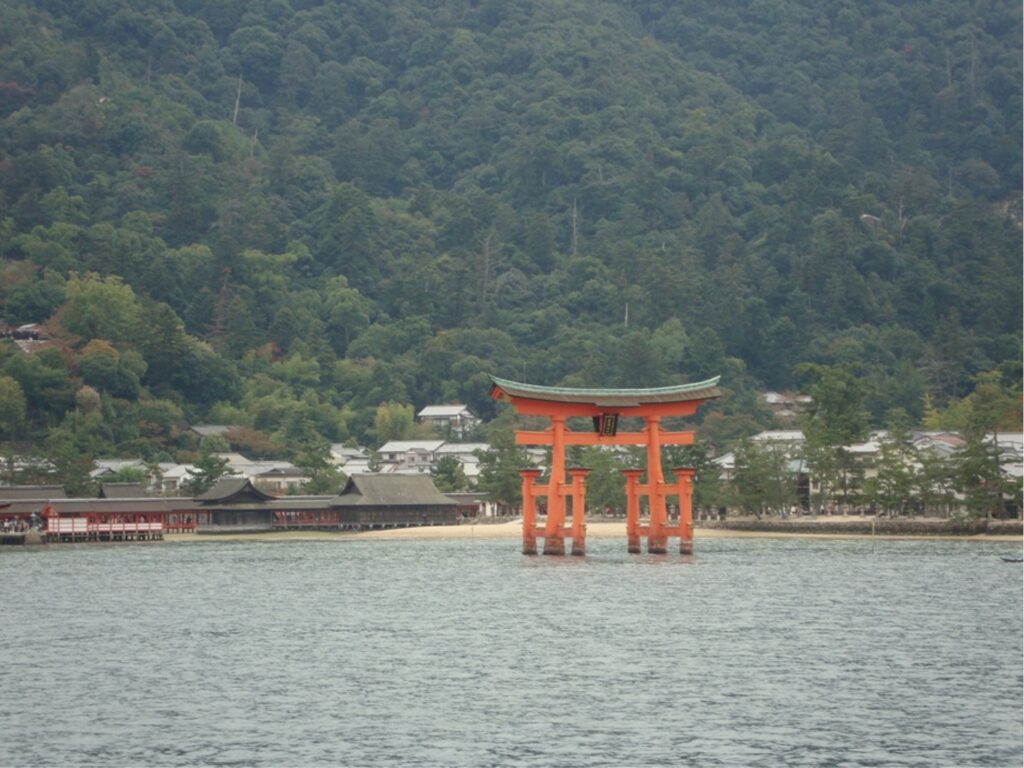
The torii was not built in the bay’s sands, rather it was grown there. Some farsighted builder planted into the bay’s bed at low tide, six camphor tree saplings in two groups of three. Once they had grown sufficiently they were transformed into the 15 metre high structure we see today. The torii we saw dates back to 1875, but the original dates from 1168.
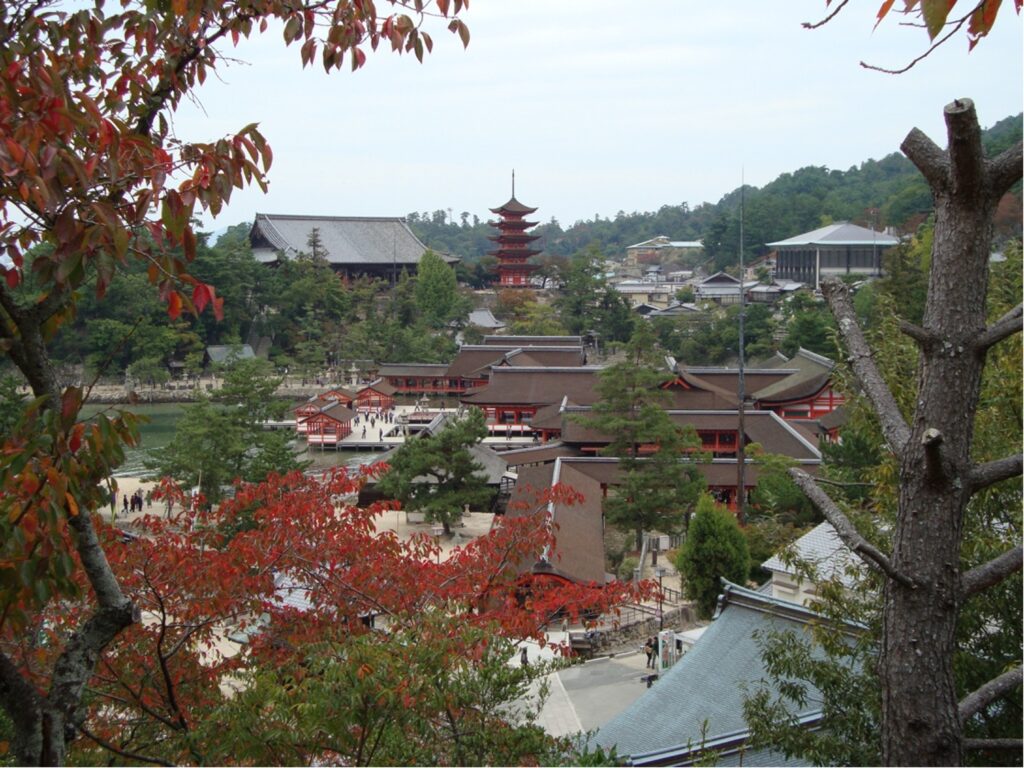
The island boasts a number of shrines and temples, all beautifully enhanced by hillside cherry blossom in the spring or, during our autumnal visit, maple leaf foliage. These trees are known throughout Japan, especially for the deep crimson hue they add to the island.
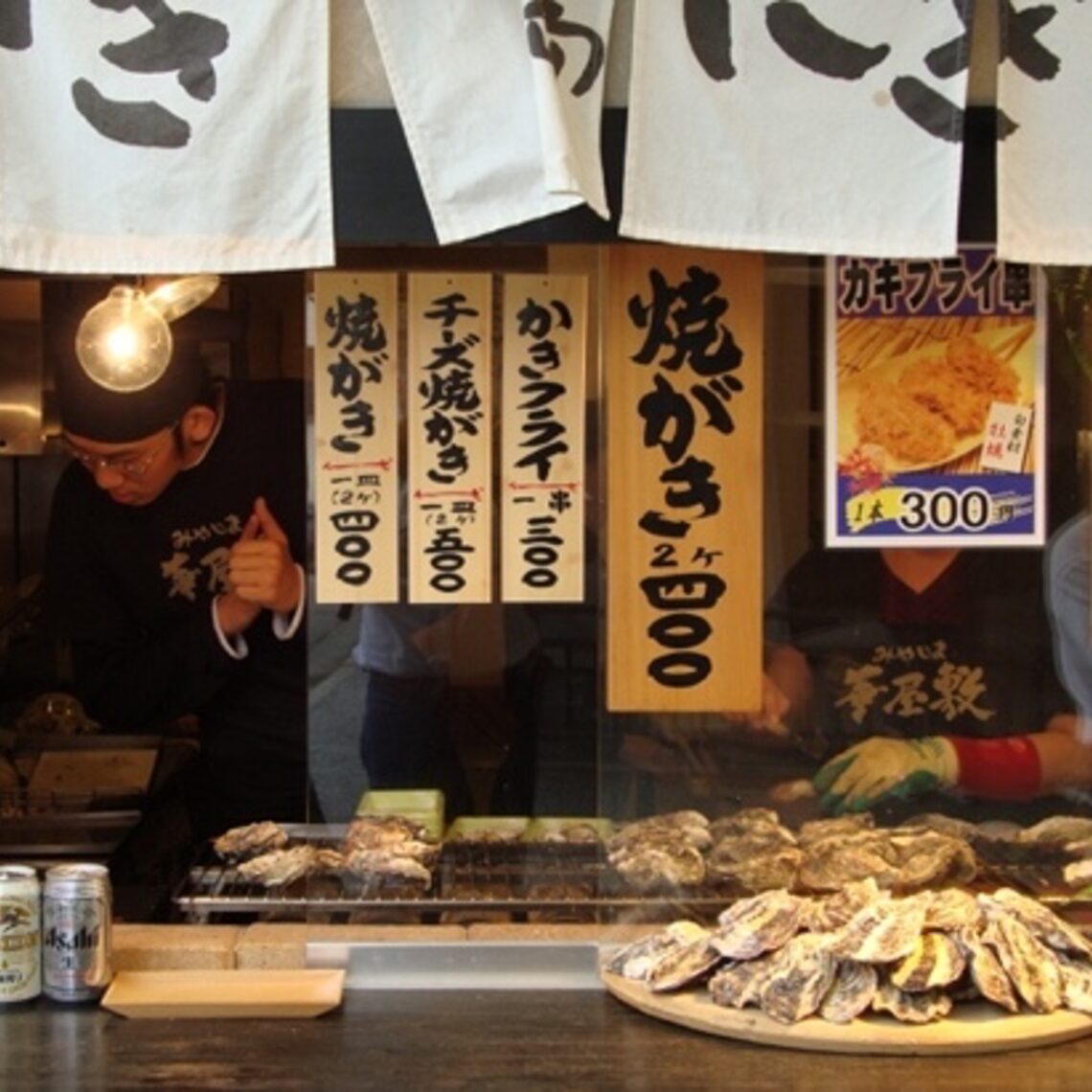
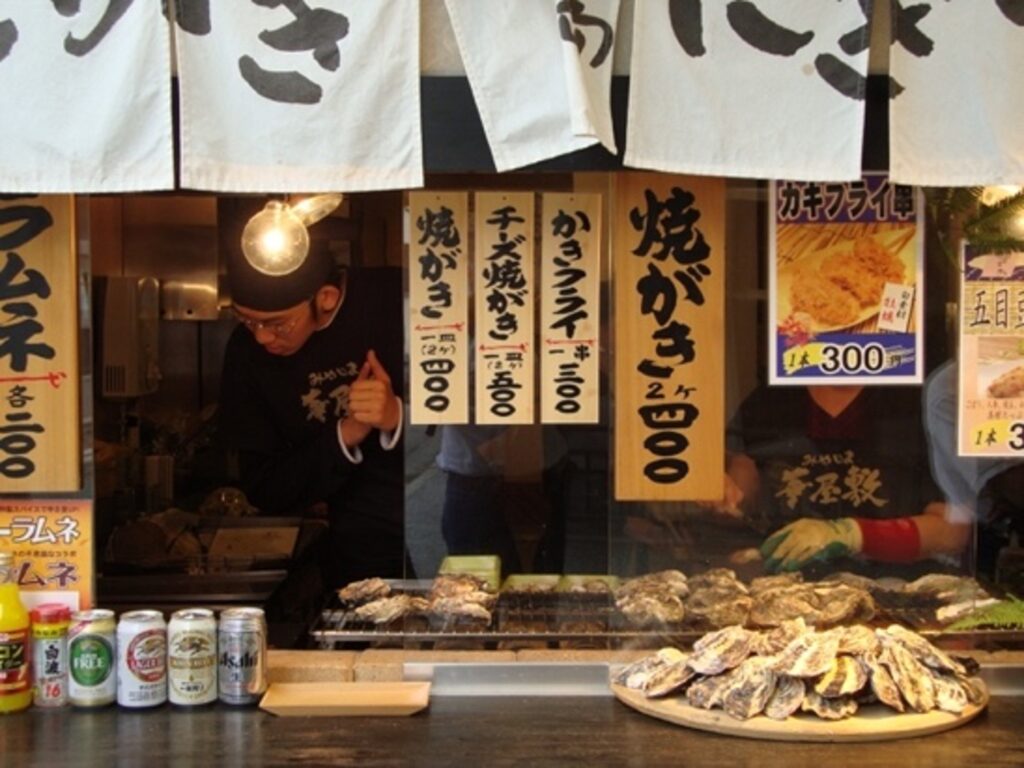
In addition to the shrines and temples, it is also possible to buy seafood such as oysters or eels, and see the manufacture of Momiji manjū, which are pastries filled with jam, custard or chocolate, and stamped with a maple-leaf design.
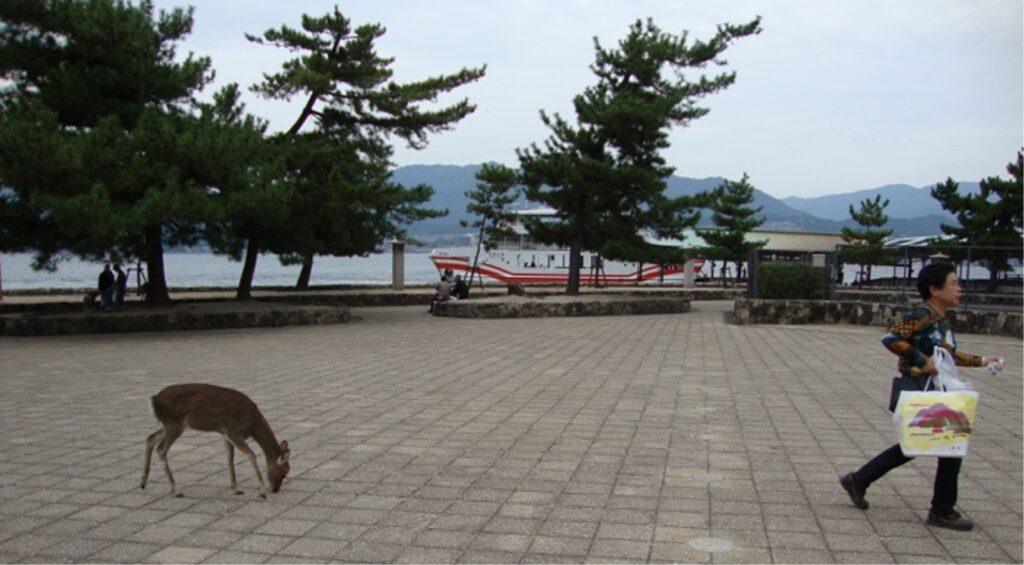
Another noteworthy attraction on the island are the Sika deer (sacred messengers of Shinto), which roam freely, unafraid of the many tourists (although the opposite may not be true).
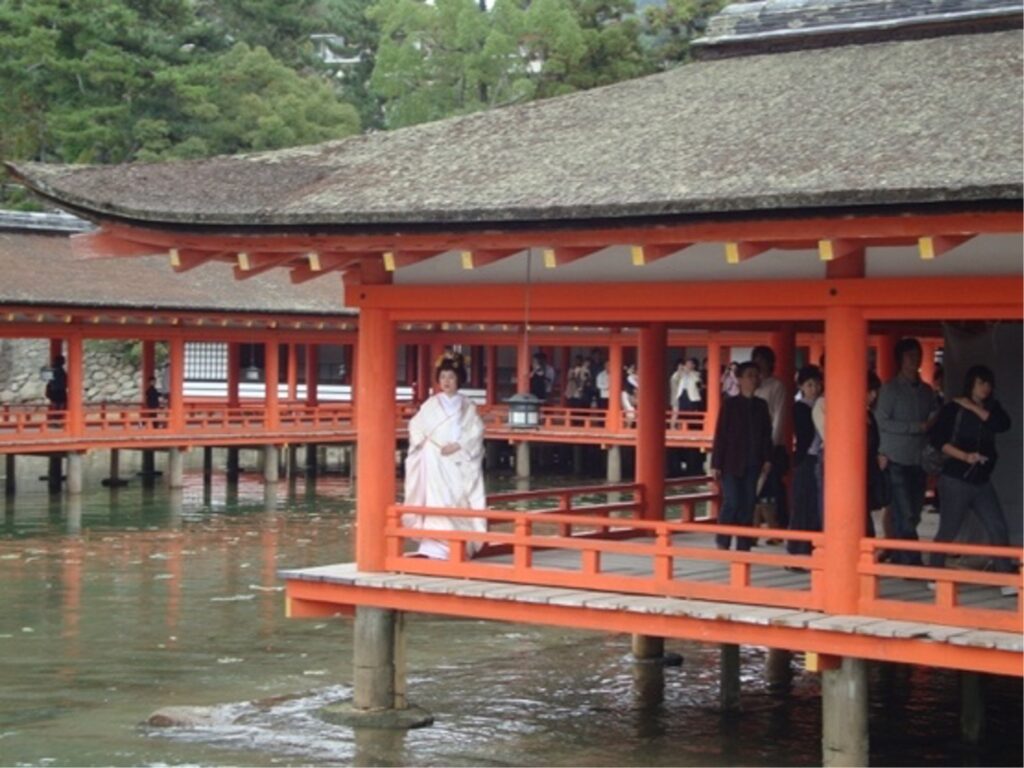
In addition to the thousands of tourists visiting each year, today we were treated to the spectacle of seeing a Japanese bride using the shrine as a venue for the shooting of her wedding photos.
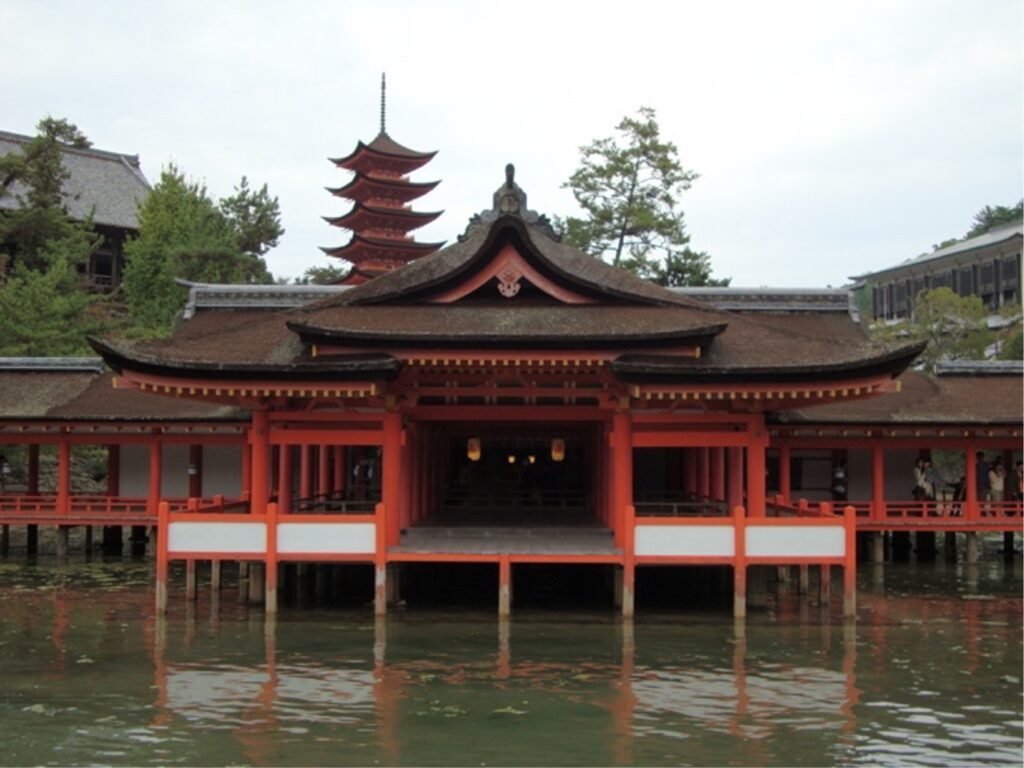
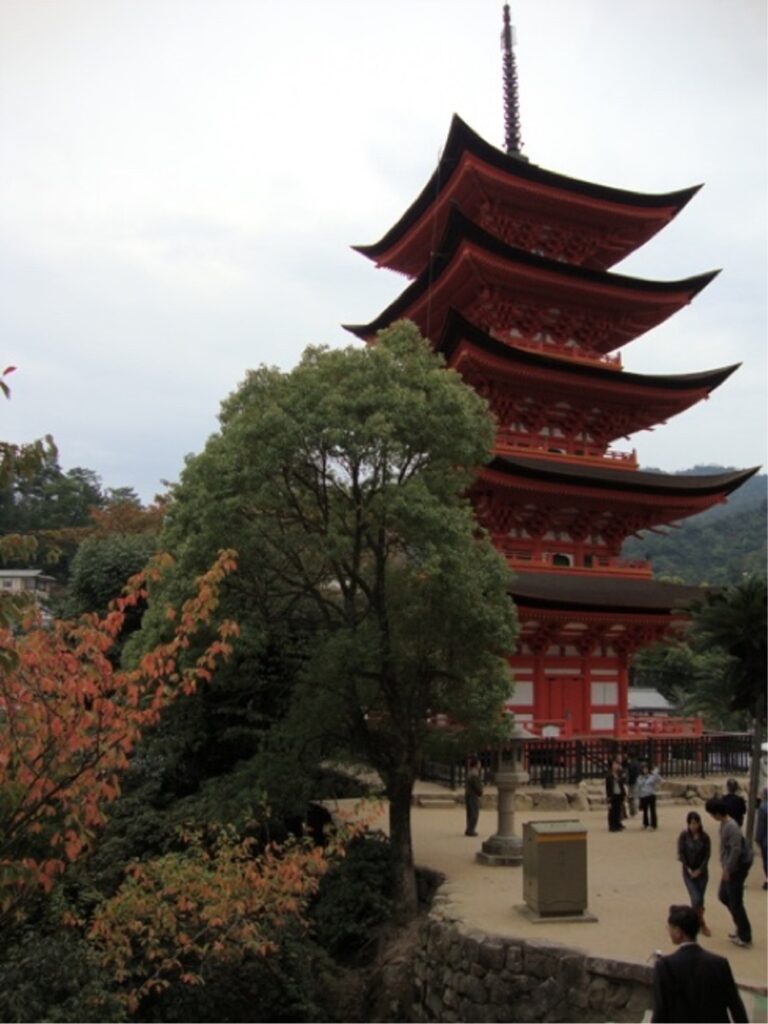
From the waterfront we moved inland, walking along trails among the autumnal maple trees, never far from the Itsukushima Shrine, and occasionally coming across a shrine or temple. Most impressive was the five-storied Pagoda (Gojunoto), constructed in 1407.
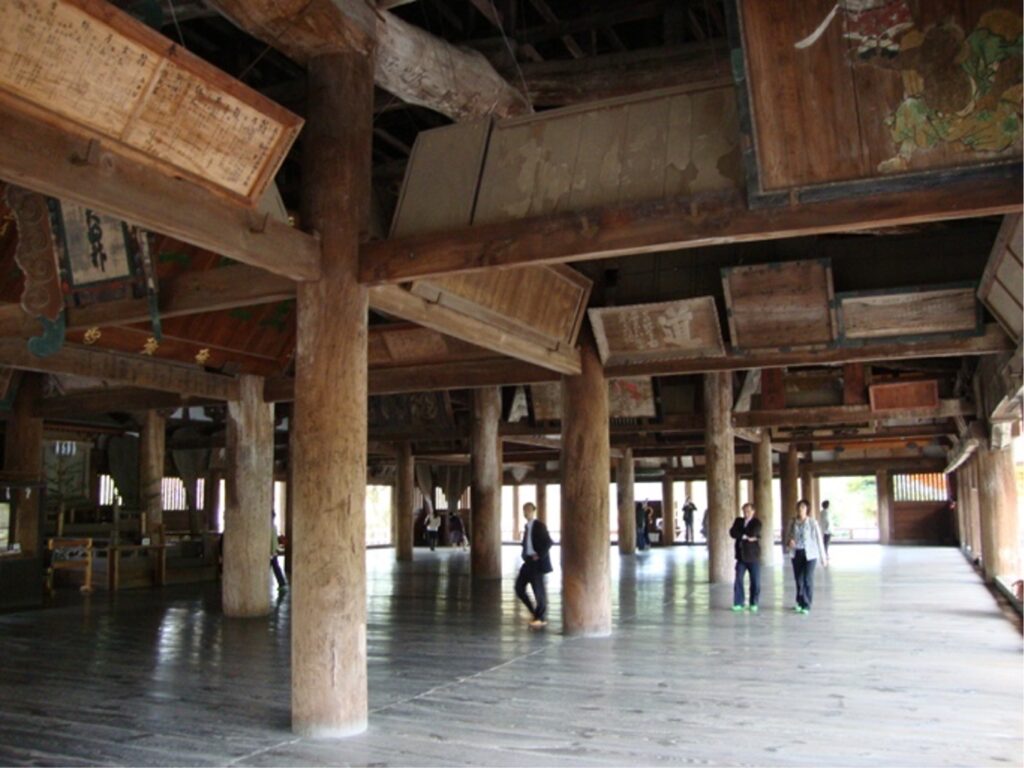
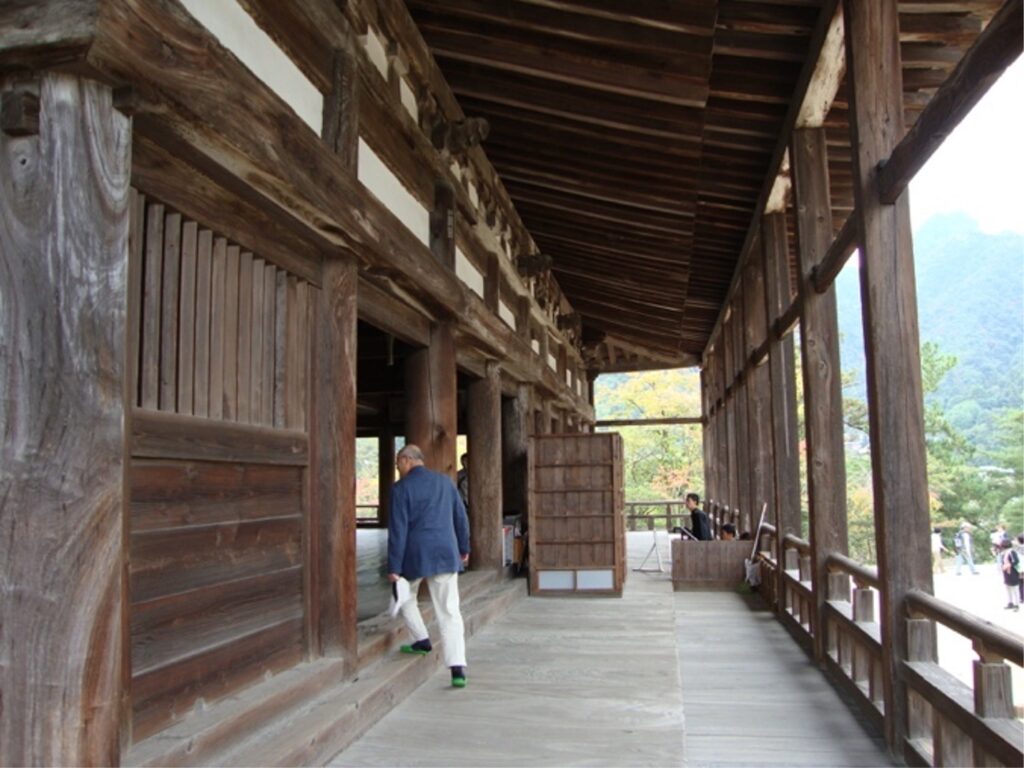
Close to the Pagoda lies Hokoku-jinja (Senjokaku Pavilion), a solidly-built wooden structure, built in the year 1587 at the behest of Toyotomi Hideyoshi. Construction stopped, though, upon his death in 1598. Now, more than 400 years later, it is still unfinished, void of the planned gold leaf that would have made it magnificent. Once again, we were expected to remove our shoes upon entering. Inside, above the large open area, hung many wooden shutters that would have been lowered or raised to create differently sized rooms, as needed.
Visiting Miyajima was one of the real highlights on this tour of Japan; in fact, one of the real highlights of any of the trips I have made.
Eventually though we had to take the ferry back to the mainland, collect our luggage from the hotel, and head for the rail station. We needed two trains from Hiroshima to reach our next, and very different, destination, the city of Oita. We had to change trains because at this time there was no Shinkansen service on the island of Kyushu, the location of Oita.
Oita
Oita is an industrial port, and not an obvious tourist location. However, the school where I worked had been twinned with a school in Oita, and we were soon to be spending time there, learning firsthand about Japanese education.
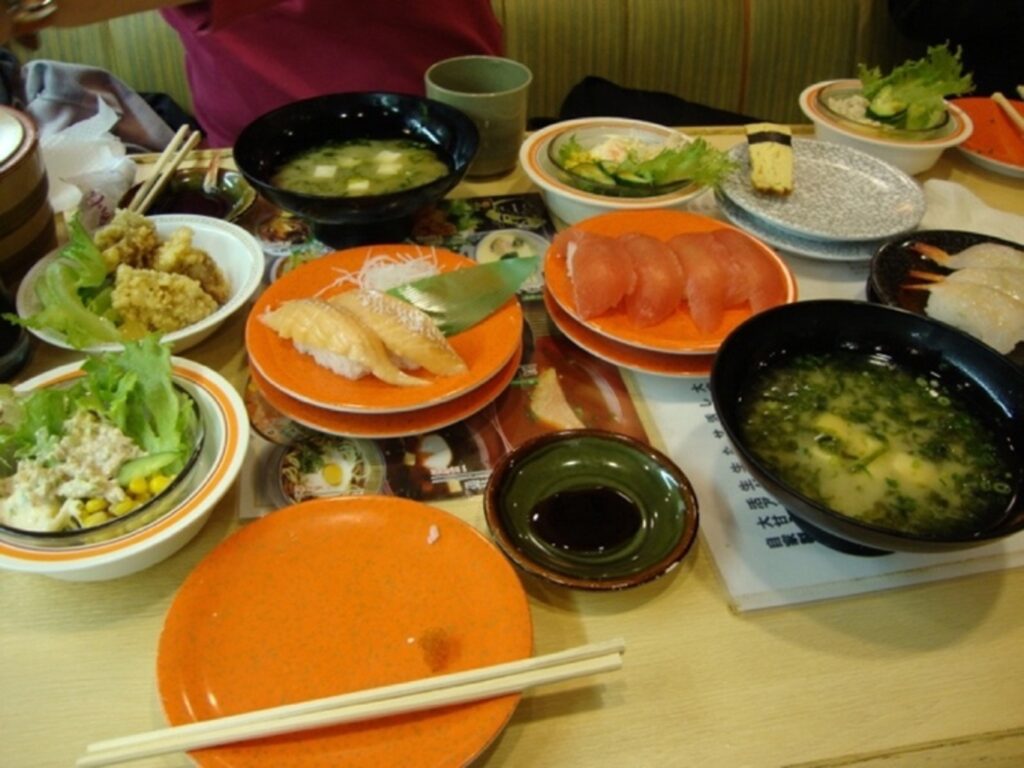
Students and parents were waiting to greet us at Oita station, and each of our students was placed with a host family. I had the honour of being looked after by the school’s deputy headteacher. On our way home, we stopped for an evening meal at an authentic sushi bar.
Days 5, 6 & 7
Oita
Today we were back in school, but not our school back in England; no, we were on the other side of the world. This was an exchange visit, and we were to spend three days experiencing life in the Japanese education system, and the contrasts were to be every bit as startling as the cultural ones we had already encountered.
We had been given a classroom of our own for the duration of our visit, which we used as a base for the variety of activities in store for us. (I couldn’t help noticing that the clock in this photo shows the same time as the one we saw in the Hiroshima Museum.)
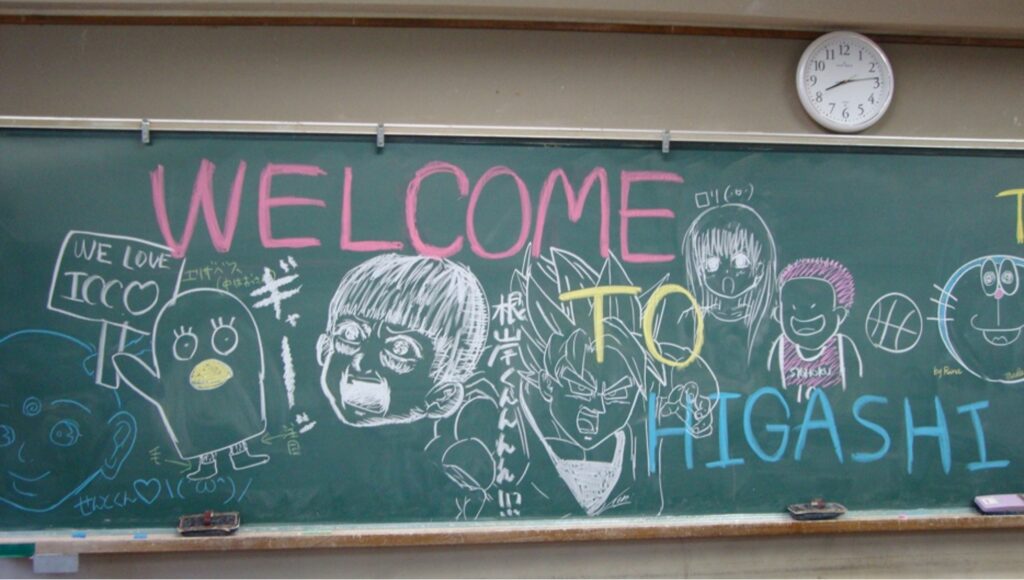
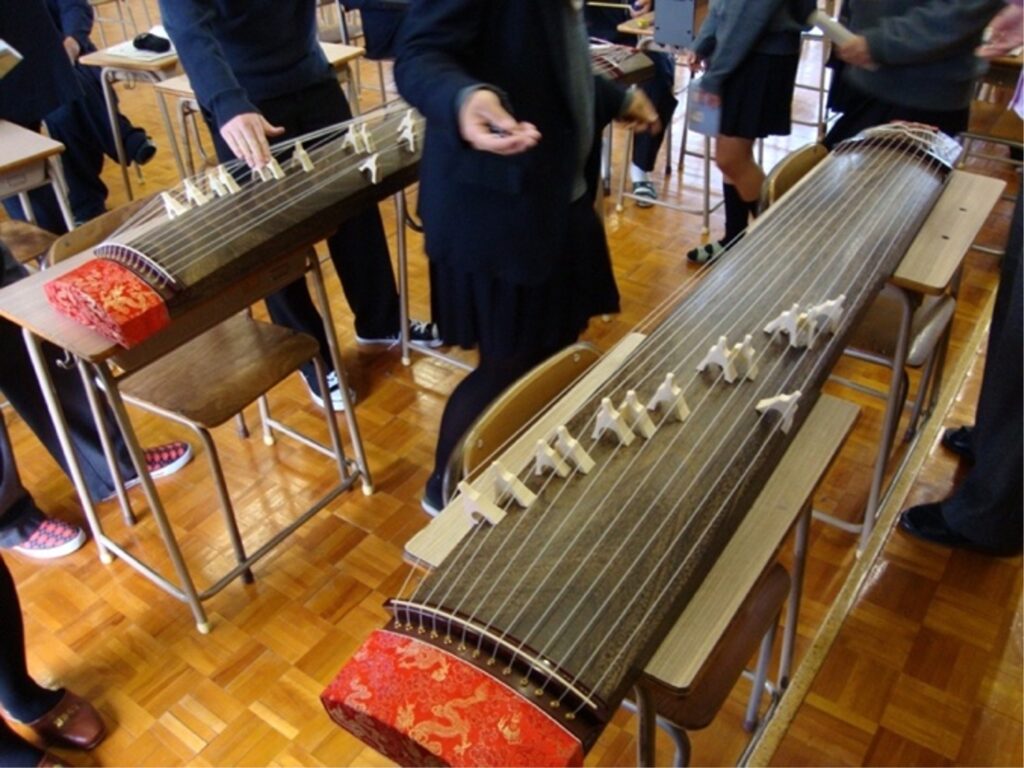
Our visit took place at the same time as an outbreak of swine flu in Britain, and the Japanese school were cautious about possible infection. This meant one of the proposed highlights, a sushi cookery lesson, had to be cancelled. Nevertheless, we were able, individually, to see lessons in language, physics and music (using traditional Japanese instruments).
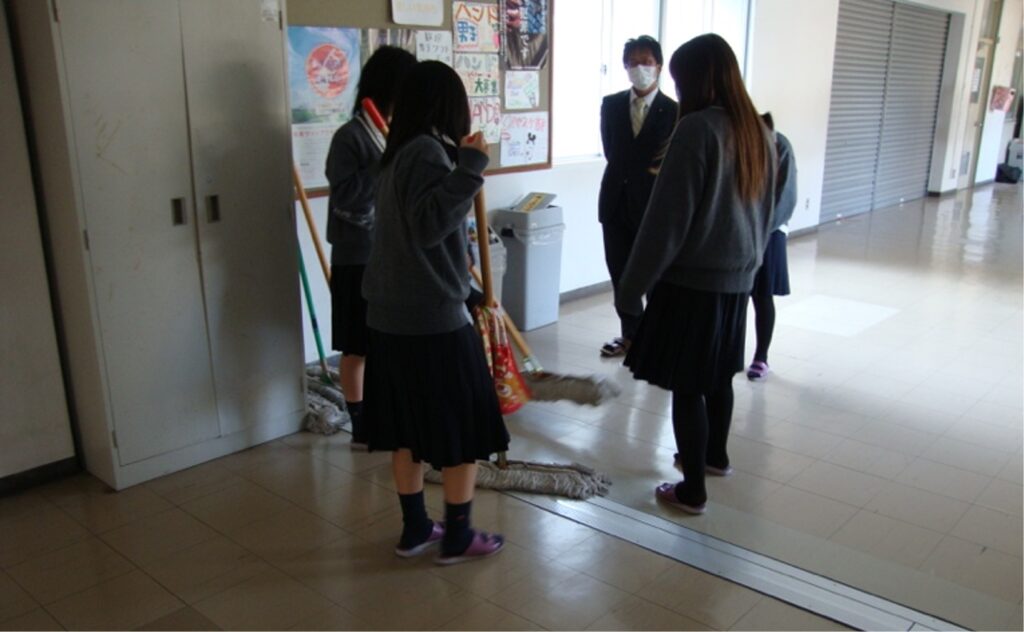
At break and lunch times, we would reconvene at our base and compare notes about what we had seen. It wasn’t long before our students were using the blackboard to draw up a list of things they thought would be good to introduce back in our British school. The list included such things as fizzy drinks at lunch, music at lunchtime, shorter lessons, and wearing trainers to school. Top of the list, however, was “Sleep in lessons”. Yes, we had all encountered this strange (to us) phenomenon of allowing students to sleep in class. It is also worth pointing out that one Japanese school tradition our students did not want to import into Britain was the practice of students cleaning the school at the end of the day.
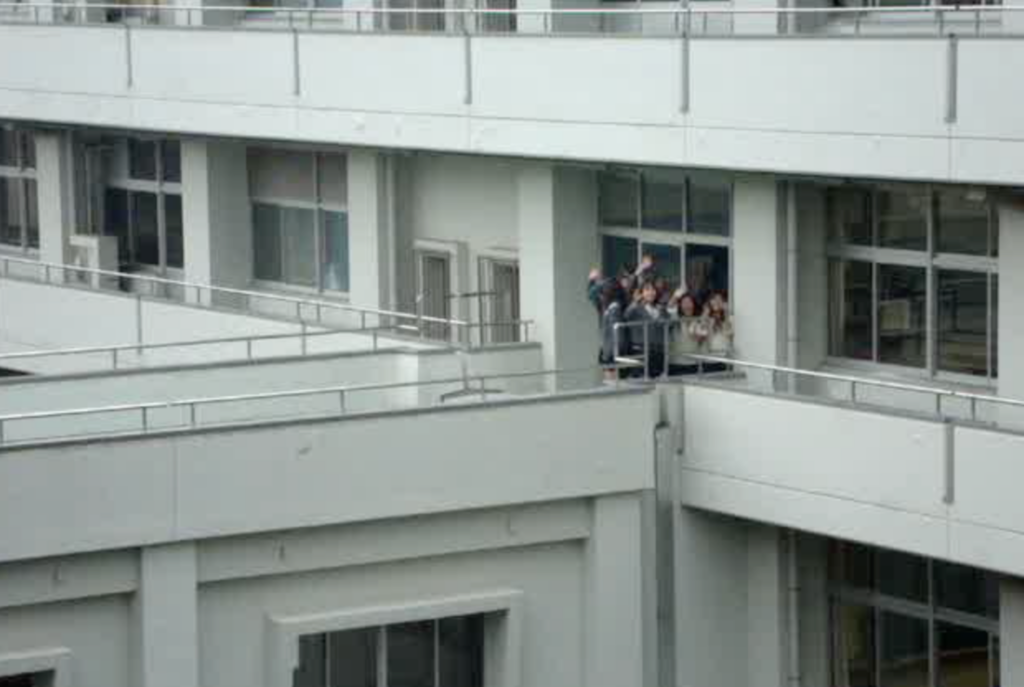
Another thing we learnt about the cultural differences was that for a girl in Japan, having a European boyfriend is considered quite a catch. This meant the boys on our trip (all English) received the type of attention and, indeed, adoration, of which they could only have dreamed back in Britain. At one point, stepping onto a balcony across the quadrangle from a group of Japanese girls, these boys induced the kind of screaming, waving reaction one normally associates with old footage of The Beatles.
Beppu Hot Springs
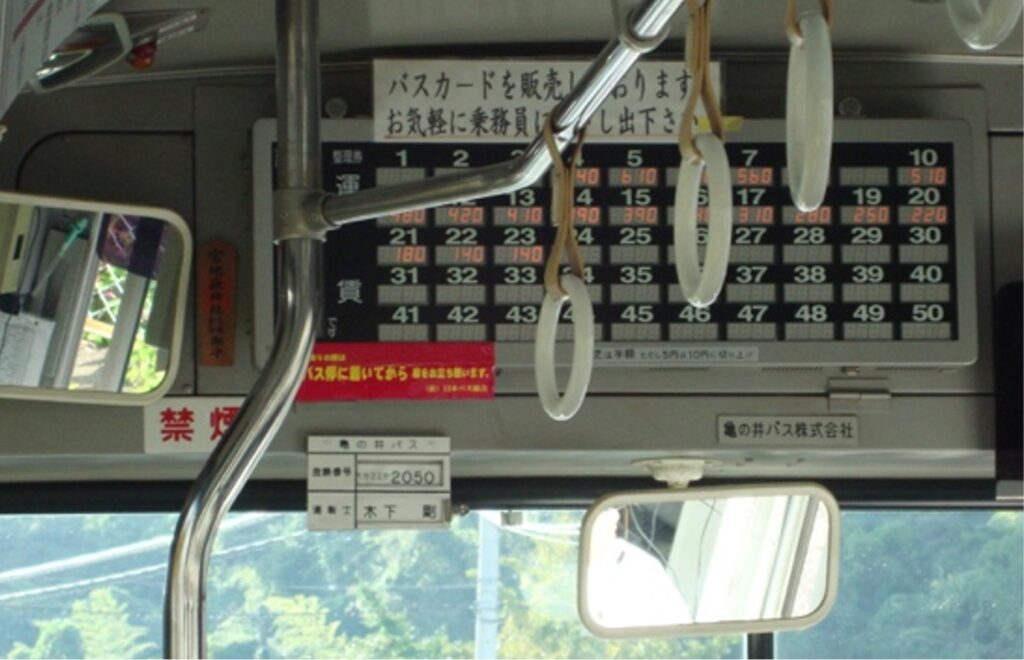
Oita is the Japanese prefecture with the most geothermal springs (nearly five thousand), and our first afternoon at school included a trip to the nearby Beppu Hot Springs, a nationally designated ‘Place of Scenic Beauty’. The springs are called ‘hells’ (jigoku in Japanese). We travelled there by public bus, but were somewhat confused by the ever changing display of prices above the driver’s seat.
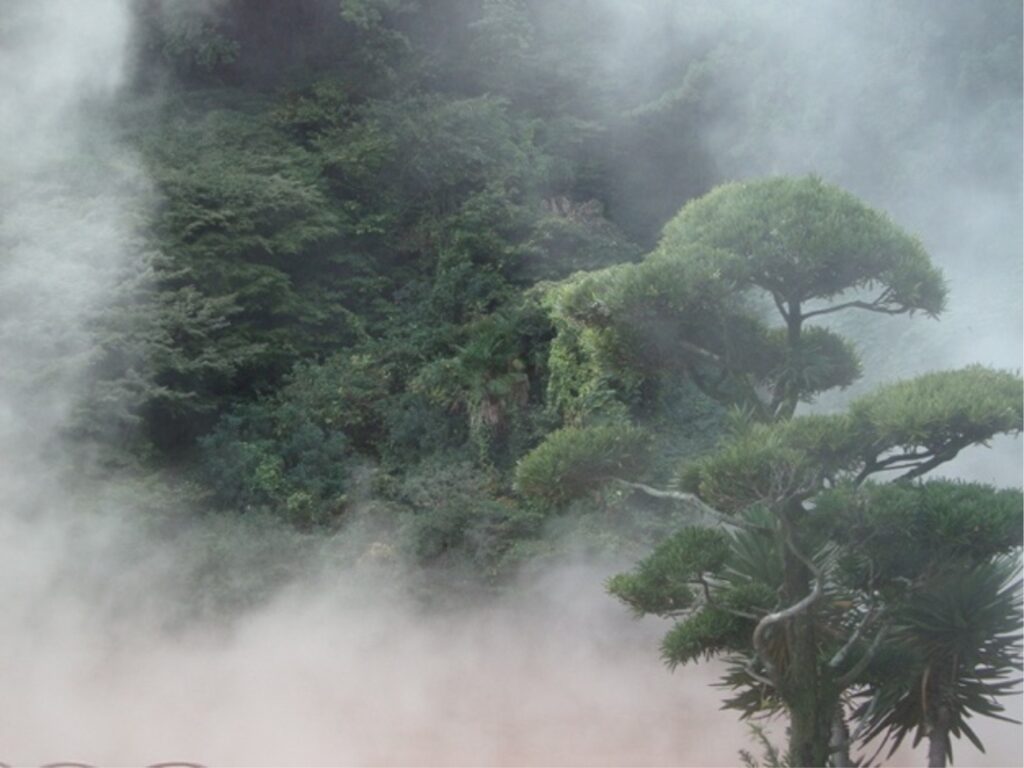
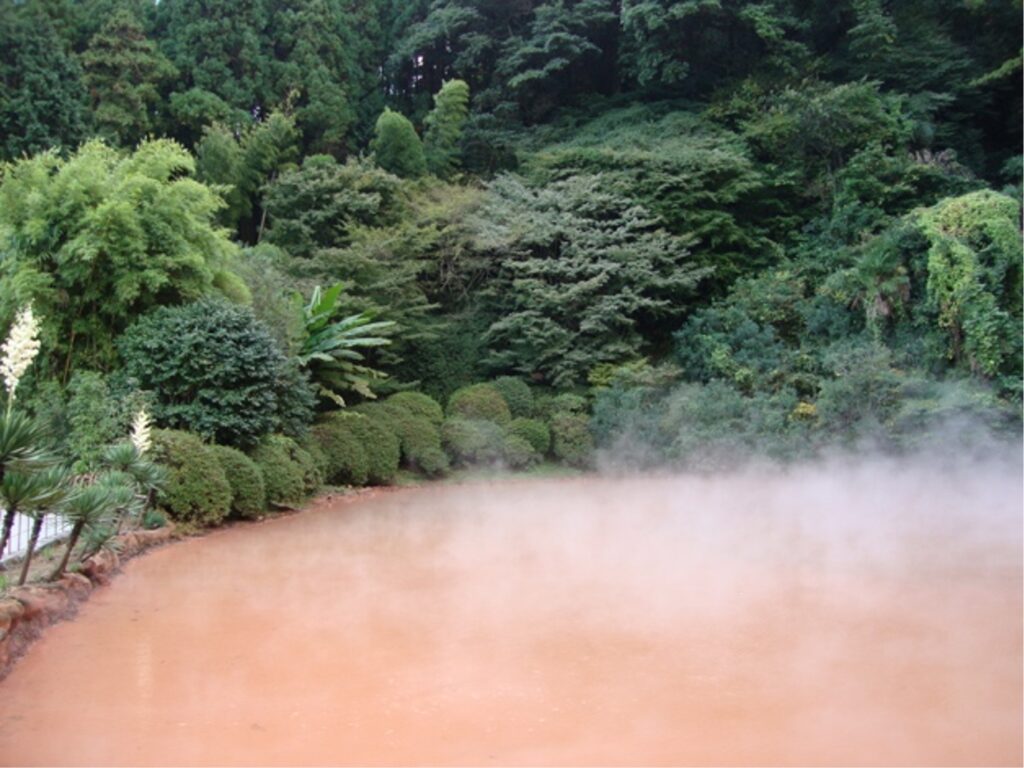
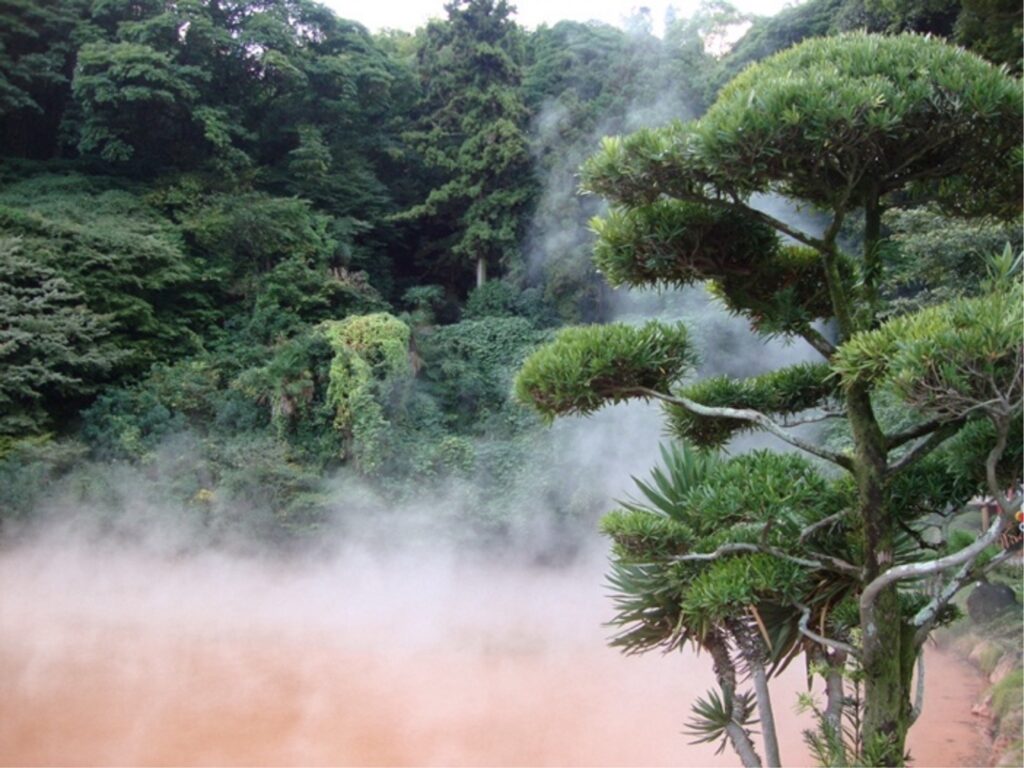
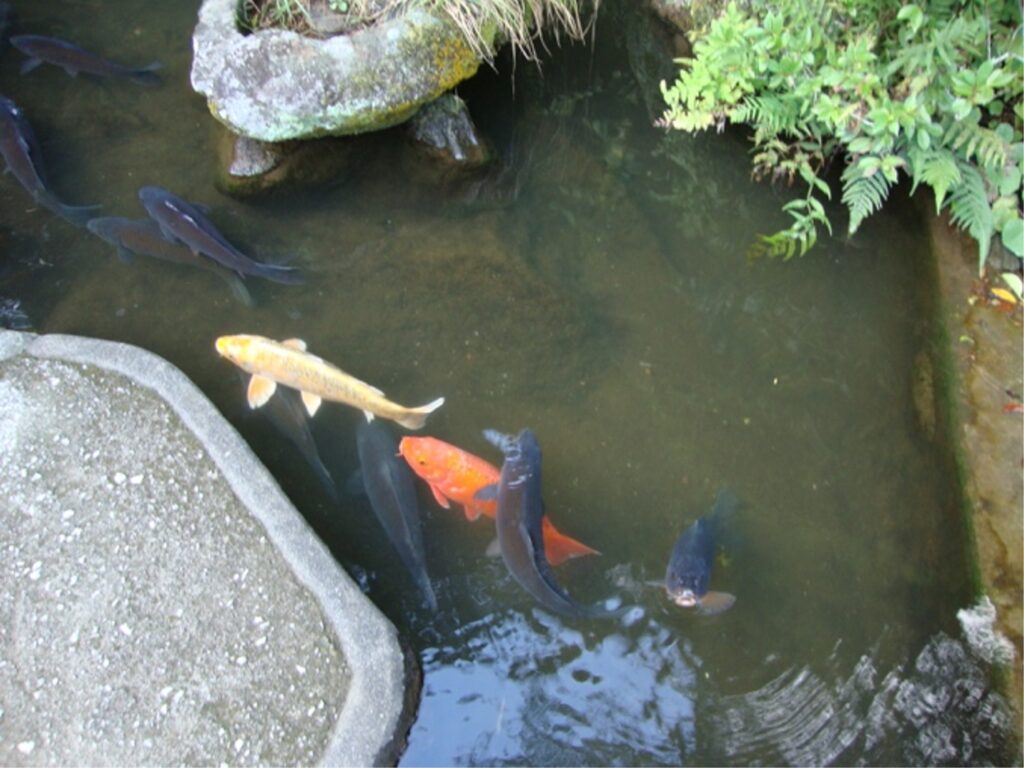
The particular spring we saw was the Chinoike Hell, the oldest natural hell in Japan. Its name translates as ‘blood pond hell’, presumably because of the hot, red-coloured mud. There were also sections of cleaner water, in which one could see fish of different colours.
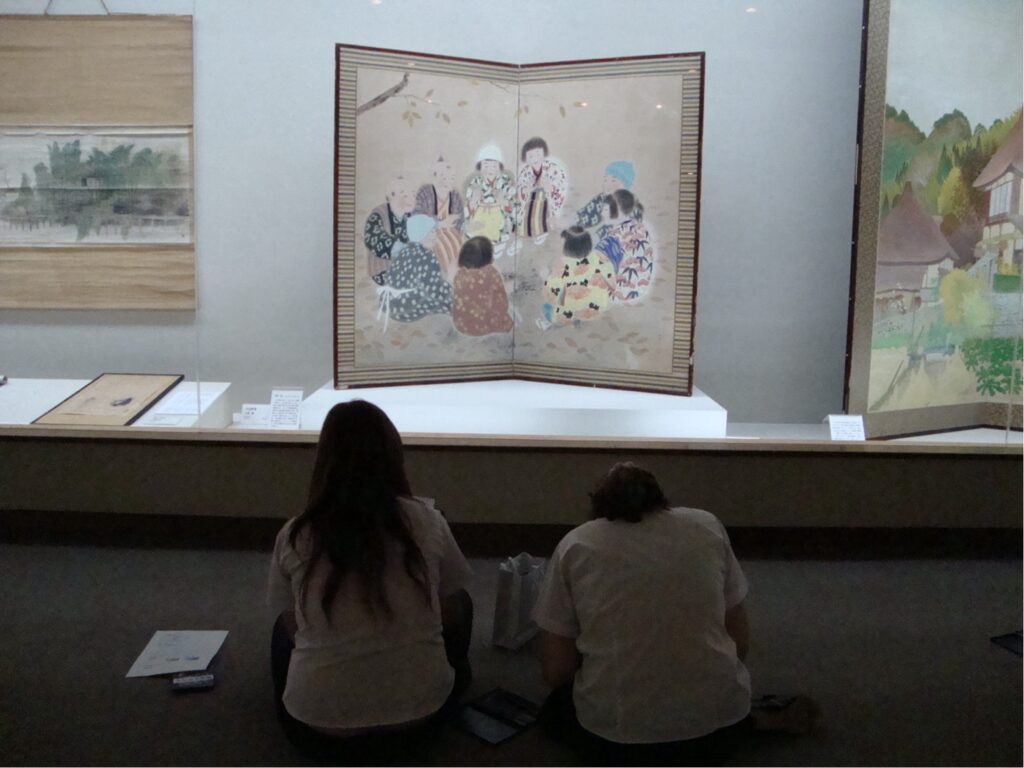
On the following day, we had a second outing with the Japanese students and teachers. We visited Oita Art Gallery, and spent our time discovering more Japanese art, the students attempting their own versions of the pieces on display.
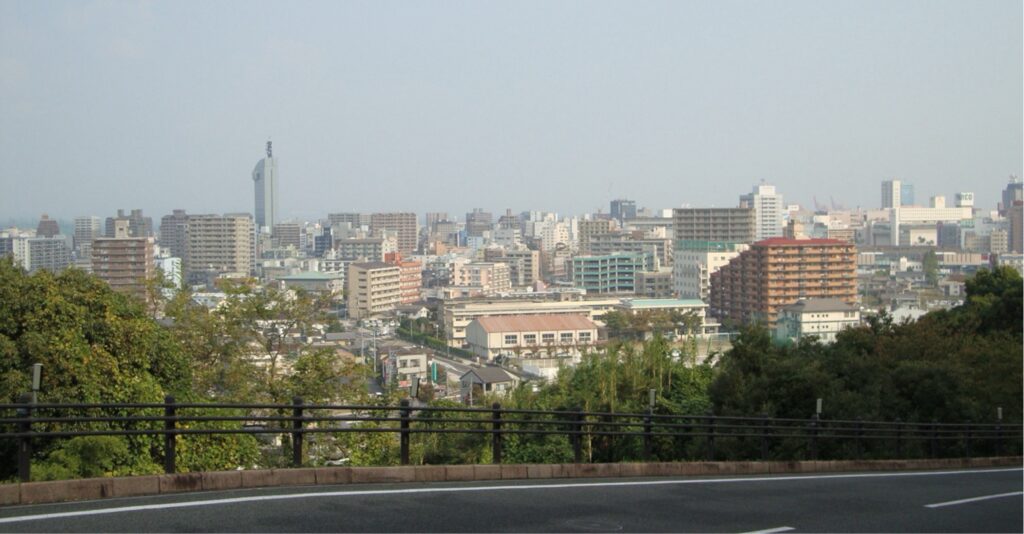
The gallery was located on a hill on the outskirts of town, and this vantage point gave us the opportunity to gain an overview of the sprawling port of Oita.
Kamezuka Kofun
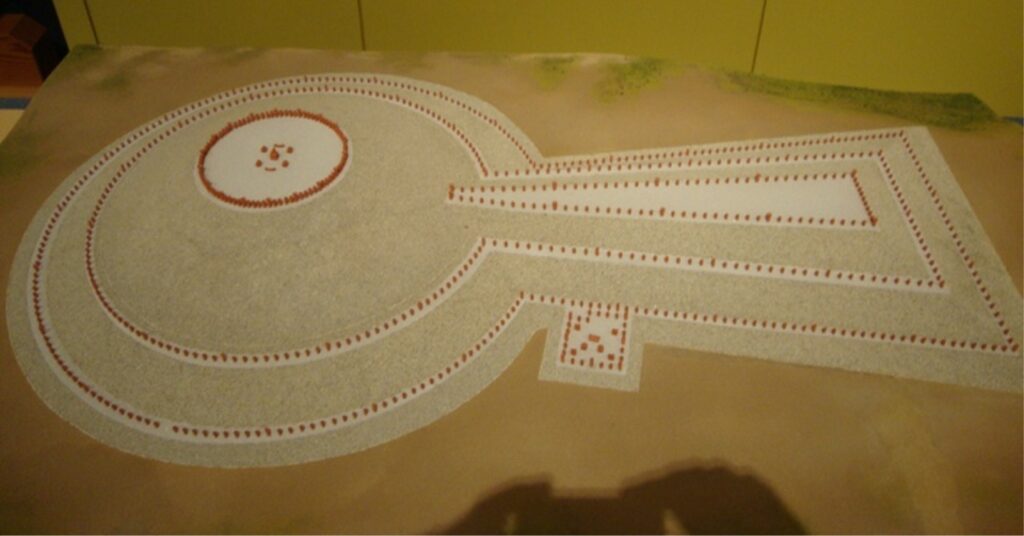
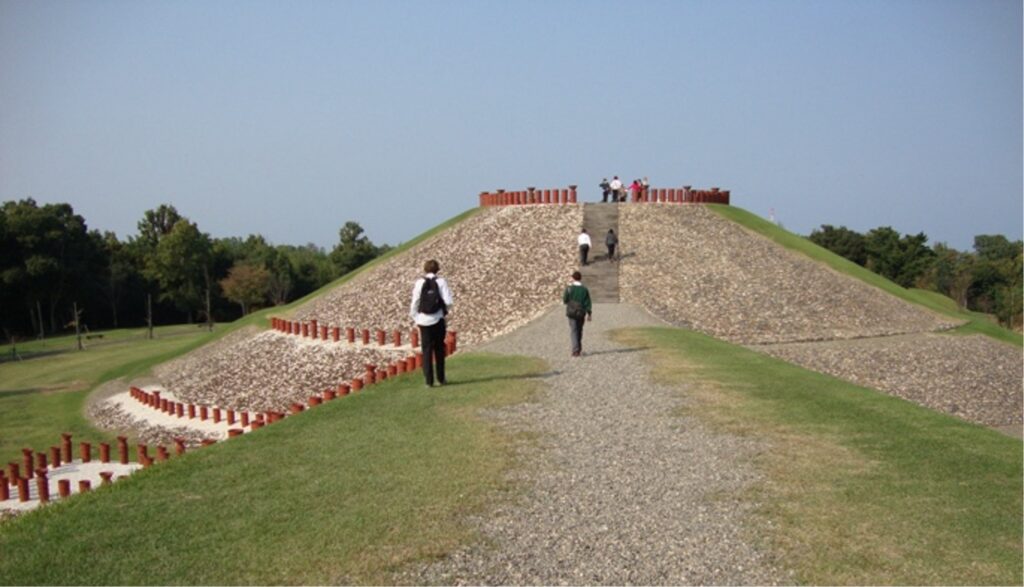
Our third day in school provided us with a third excursion, this time to the Sato suburb, to the site of the remains of a local burial mound from the early 5th century; Kamezuka Kofun has been a National Historic Site since 1996.
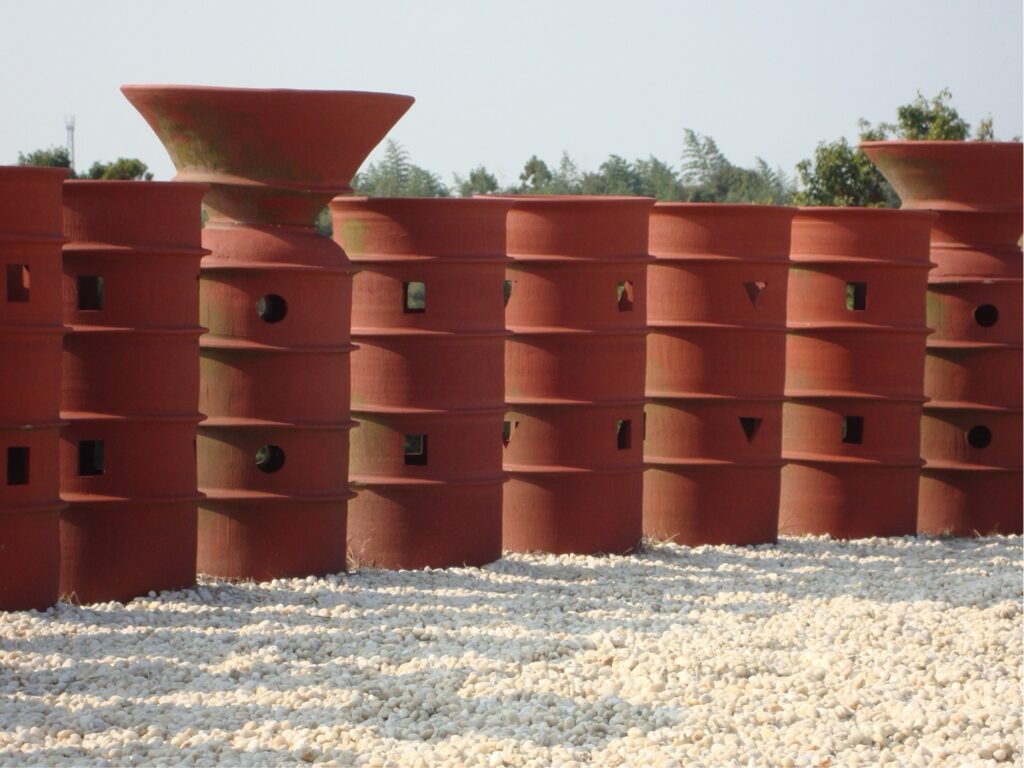
Located on a hill in the Kamezuka Kofun Park, next to the visitors’ exhibition centre, is a burial mound, three tiers high, shaped like a keyhole, and with dimensions of approximately 120m by 60m. It was covered in fukiishi (white quartz stone), and ringed by replica cylindrical, terracotta haniwa (‘circle of clay’). From its design and remaining artifacts, it is estimated to date from the turn of the 4th to the 5th centuries, and be the grave of King of Amabe no Kimi.
In the past year, Michael Smith’s fiction has appeared in Fabula Argentea, Witcraft, Literally Stories, Microromance, Heimat Review, The Hooghly Review, Little Old Lady Comedy, and many other online literary journals. To date, he has self-published a historical fantasy called Dinner Time, two volumes in the Gruseltal series, and three collections of short stories, Fonts, Songs, and L < M, all available from online bookstores.
Website: https://frucht-schleifen.weebly.com/
Photos by Michael Smith