
Aditi Dasgupta
As appeared in the October Issue of Aghori Monthly (1956)
In the twilight lanes of Uttar Pradesh, a small town called Maranganj was ensconced in contentment. At the immediate outskirts of this small speck on the map, there lived a sadhu of ambiguous age and unmistakable odour. He was known only as Mahaguru Shambhu Nath Bhairavi, but city-dwellers referred to him with devotional hesitance. His sadhna was of the most rarefied kind. Trained for years in ghor tapasya, he had mastered pishaach vidya and tantra to great depths.
On nights when the moon absented itself entirely from the sky and the neem trees leaned away from their own shadows, Shambhu Nath Bhairavi began his meditation with a skull overflowing with congealing blood and a fire pit burning unnaturally strong. Sitting under the roof of a half-constructed cowshed, he spoke to the crackling fires in reverse tongues, throwing ash every now and then. His chest was smeared with ash taken from fresh funeral pyres, and a garland of crow feathers and garlic orchestrated around his neck. As the night thickened, the transformations began in the lives of people he conspired against. Maranganj’s periphery was Shambhu Nath’s home.
During the day, the insides of this city shimmered like fresh molasses in the newly minted Indian bureaucracy — thick, slow and irresistibly attractive to flies. The government of Maranganj, in its infancy, had begun laying down a tax system. Every bidi, every pinch of turmeric, even a midday nap under a government tree, demanded a receipt. But the lines between office and shopfront, officer and shopkeeper, were blurred like the carbon copies on Form 14B. The chaiwallah outside the Tehsil office knew the property tax slabs better than the clerk inside, and the local kirana shopkeeper, a wiry man named Lallan Prasad, was often consulted to decode official circulars before they reached the postmaster. Corruption in Maranganj was a ritual that was fueled and furthered by Shambhu Nath during full moon nights. The city-dwellers bribed the system, offered it laddoos and hoped it wouldn’t forget their names when it came to waive their goat registration fee.
The trouble began, as most troubles do, with a missing ingredient.
Shambhu Nath Bhairavi, on the cusp of an Amavasya tantrik summoning, realised that he was in a grave crisis. He was out of gomutra. Not just any urine, mind you, but that of a cow who had seen a solar eclipse. Clutching a brass lota with the urgency of a man carrying state secrets, he descended from his cowshed and entered Maranganj proper. His first stop was Gaushala Number 3 (North Division), overseen by one Pandit-Honorary-Cum-Cow-Controller Mishraji, a man whose moustache obeyed the strictest discipline than the state police.
“Gomutra?” Mishraji asked, squinting over his spectacles with suspicion, “Personal use or spiritual export?”
“Tantra,” Shambhu Nath replied.
“Aha,” said Mishraji, flipping through his register, “Form 7U. Countersigned by the local Pradhaan or a certified Magistrate.”
“I don’t do forms,” muttered Shambhu Nath with a look that unpacked that he hadn’t held a pencil in his hand in the last 40 years. He walked towards the Cooperative Cow Milk Association. A few kilometers further ahead, upon reaching there, as he wiped his forehead, Shambhu Nath was informed that since the gomutra had not been licensed by the government yet, it could not be dispensed without necessary permission.
Somewhat frustrated by now, Shambhu Nath asked, “Can I simply borrow some from that cow?” pointing to a sleepy bovine chewing cud near the typewriter.
“Not possible. We need permission or you will have to wait till the end of fiscal year,” said the official with an undeniable decisiveness.
Three hours, four departments and a failed altercation with a watchman for urinal theft later, Shambhu Nath sat down on the curb outside Lallan Prasad’s kirana store, dejected and sweating through his ash. His brass pot now dry, under the harsh sun, the stench of urine intoxicated the vicinity. Just then, a low moo echoed through the alley. Shambhu Nath didn’t move for a moment. With a speed that only desperation teaches, he stealthily went behind the ambling cow and collected what he needed. The brass lota had come to life with the pulsating warm outflow from the Divine that would be perfect for tonight’s siesta. No tax. No forms. No witnesses. The day had grown tight with purpose promising a night of tantra-efficacy.
As the moon slipped in between the darkness, Shambhu Nath smeared a fresh layer of ash on his chest. The fire roared unnaturally, and the crow feathers rustled with an untimely wind as he furiously did Kapaal Bhati while flinging a cat paw into the fire. The night was going to be his, again.
And then — a knock.
He opened his eye. Standing at the edge of his cowshed was Dinanath Dubey, Assistant Revenue Inspector (Temporary), wearing chappals and a clipboard.
“Sir,” said Dubey, adjusting his Gandhi cap. “As per the new guidelines under the Cow-by-product Monetisation and Fair Usage Taxation Act, you are liable to pay Gomutra Cess — seven annas per ounce.”
“I got it for free,” said Shambhu Nath, blinking.
“Then it is a gift of the Tantrik Output Monitoring and Manifestation Accountability Bill (TOMMA) 1956 or the Baba Audit Bill. Also, since this ritual may cause unverified celestial consequences, there is a Ritual Outcome Levy pending assessment.”
“You want to tax the result now?”
“Only if the result is successful. If it doesn’t, you may be eligible for a refund — Form 14B, with a cross signature from the party in concern or their next of kin.”
Shambhu Nath shook in anger. The fresh goat blood in the skull had begun to congeal by now. He sighed deeply and handed the lota to the Inspector without a word and muttered, “Here. Take the gomutra back. Next time, I’ll just use lemonade.”
But Dubey did not move. He squinted at the lota and cleared his throat.
“Sir, I’m afraid it’s not that simple. The fluid has now entered the pre-ritual sanctification phase. Under Clause 6B of the Exceptions Act, it must be submitted to the District Liquid and Effluent Certification Officer — DLECO Office — within 24 minutes, or it becomes contraband.”
“Contraband?” Shambhu Nath barked.
“Schedule C under the Spiritual Substances and Residue Act. If left unresolved, it must be buried 108 metres below surface with a certified Brahmin witness and a notary.”
Shambhu Nath’s nostrils flared. His garland of feathers now fluttered dangerously. “Do you know who I am?” he thundered. “I can raise the dead, reverse your bowel movements and make your shadow file a police complaint against you!”
“Yes sir”, said Dubey politely, “which is precisely why we’ve opened a file in your name under the Preventive Sorcery Surveillance Scheme. At this Shambhu Nath’s hands trembled with disbelief. The ritual fire had now turned into a sullen heap of smoking embers and the cat paw remained half-burnt. He stood up slowly, his knees cracking like a bad omen and gazed out toward Maranganj. The city twinkled in the distance fully colonised by carbon paper. In the quiet that followed, he muttered, “They’ve out-tantrik-ed the tantrik.”
Dubey gave a small sympathetic shrug, the kind government officials reserve for flood victims. And as he turned to leave, Shambhu Nath called out, “Wait.” Dubey paused mid-step.
“If I grant a quick marriage for your daughter and your promotion in the next week, will you look the other way?”
Dubey pursed his lips, thinking. “Throw in a months’ supply of Ganguram’s pan and we can settle this informally,” and he walked off into the moonlight with the brimming brass lota and a folded affidavit stuffed in his pocket. But barely ten minutes into his victorious stroll toward the DLECO office, the lota rattled around a pothole he tried to jump. Before Dubey could react, the gomutra erupted like a tiny volcano, splashing onto his clipboard and melting the official ink into illegible stench. Back in the shed, Shambhu Nath pulled out a crumpled lemon from his side pouch, and sighed, “Lemonade it is.”
And thus ended the darkest Amavasya of 1956 Maranganj had ever seen, with the fizz of a citrus compromise. And not a drop of gomutra to show for it.
Note from the Editor, Aghori Monthly: We regret to inform that Shambhu Nath Bhairavi is currently undergoing a three-week course on “Compliance for the Occult Practitioner” at the Lal Bahadur Shastri Institute of Public Administration (Occult Wing). He will not be available for further comments. Shambhu Nath sends his blessings to his subscribers.

Aditi is an Institute for World Literatures, Harvard, alumnus and completed a residential program at Yale University to understand the nuances of modern storytelling. In addition, she has authored Language Has No Homeland, which captures the fluidity of languages and identity across India. Aditi also won an award at the Prakriti Poetry Contest led by Prakriti Foundation and Hindu Lit For Life. Some of her works have been published in Borderless Journal, Muse India, The Wise Owl Literary Magazine, The Hooghly Review, Pangyrus Literary Magazine, Contemplit Magazine, The Chakkar, WritingWomenCo, The Hemlock Journal, InkNest Poetry, MeanPepperVine, SheThePeopleTVXUsawa and The Writer’s Hour Magazine.
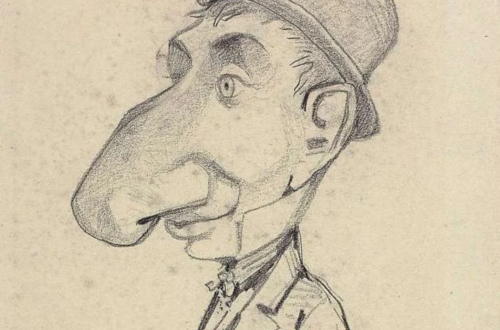
Featured photo by Retratos del Mundo (Wikimedia Commons)




Delectably humorous! Love the controlled narrative and eye to detail!