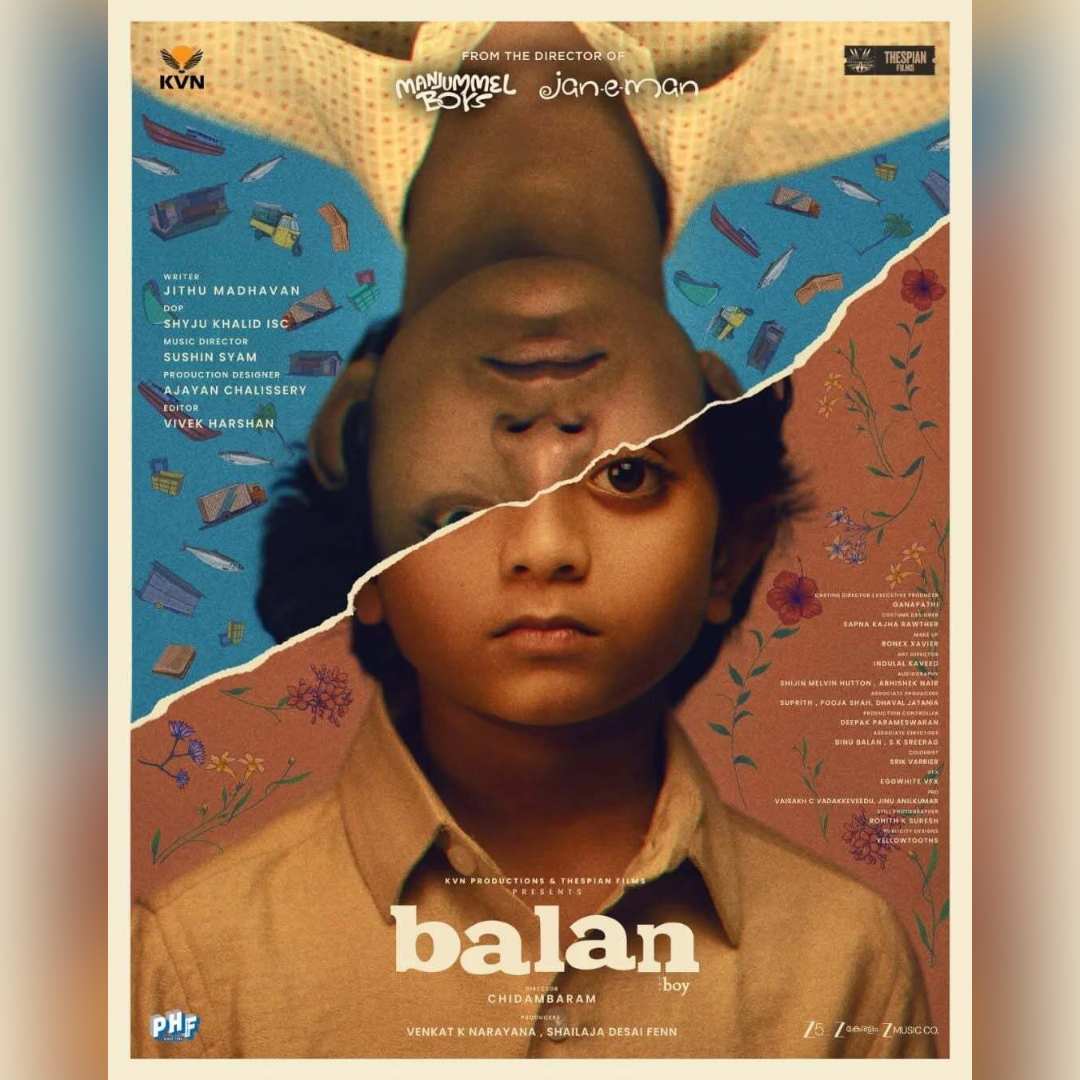
An elegy to the unforgiving swiftness with which the wide-eyed little kid slipped his childhood from his hand like thin glass, only to grow up, in the brief darkness of an INTERVAL, into the forlorn, yet street-smart adolescent boy, carrying a silent cry buried deep within his heart.
A lament to the childhood that left him quietly, yet abruptly, like a mother who promises she will be back.
Nothing more. Nothing less.
And it’s always the children.
Always the children who are left to carry the emotional debris of lives that came apart before theirs had even begun, for they are born into stories they did not write. It is always those children whose coming of age is marked not by growing up, but by learning the same hide-and-seek adults have always played with life, hiding grief behind routine, disguising abandonment as resilience, and mistaking survival for maturity
Balan, the boy, never really comes of age.
But his innocence does.
It becomes older than he ever will, carrying the burden of knowing what no child should have to know. That, perhaps, is the deepest sorrow that Chidambaram’s latest Malayalam film leaves us with. It is not merely the story of a missing mother or an abandoned child; it is the story of a childhood interrupted before it could fully become one. In Balan: The Boy (2026), childhood itself becomes the protagonist, while the boy merely walks through its ruins.
Yet, Balan: The Boy, the Malayalam film, does come of age.
Certainly not by glorifying what should never be glorified, as certain criticisms point out, but by reminding us that cinema does not always have to wallow around mothers waiting endlessly for their long-lost “Unnis” (“son” in Malayalam) to return to immaculate courtyards, carefully laid dining tables, and emotionally reassuring homes. Cinema is not obliged to protect the moral fantasies a society repeatedly tells itself in order to sleep peacefully. Sometimes, it must force us to acknowledge that not every home remains a home, not every mother returns, and not every child receives the luxury of remembering childhood with nostalgia.
Chidambaram and his team succeed precisely because they unsettle the Malayali audience, long accustomed to seeking refuge in familiar homes, familiar mothers, and familiar endings. Instead of offering emotional closure, he leads us into landscapes where the earth beneath childhood has already given way. Following Manjummel Boys, a film that explored survival against the terrifying indifference of nature, Chidambaram turns inward to examine an altogether different kind of survival.
Perhaps what distinguishes Chidambaram most as a filmmaker is his extraordinary faith in silence. He refuses to manipulate emotion through excessive dialogue or melodramatic confrontation. Instead, he allows pauses, unfinished conversations, hesitant glances, and empty spaces to reveal emotional truths words are incapable of carrying. That emotional honesty finds its visual equivalent in Shyju Khalid’s deeply evocative cinematography. His camera neither romanticises poverty nor aestheticises suffering. Rather, it patiently witnesses lives suspended between hope and despair. Houses seldom appear as homes; they become temporary shelters where memories linger longer than people. Roads cease to be geographical pathways and become emotional transitions, carrying Balan from one fragile certainty to another. Khalid photographs landscapes with the tenderness of someone documenting memories rather than locations, allowing every frame to retain the melancholy of something already slipping into the past.
Complementing these visuals is Sushin Shyam’s hauntingly restrained score, which understands that silence itself can often become music. The music never attempts to overwhelm the narrative; instead, it breathes alongside it, allowing grief to remain intimate rather than theatrical. In doing so, Sushin once again demonstrates why he continues to redefine the emotional language of contemporary Malayalam cinema. The screenplay, co-written by Chidambaram and Jithu Madhavan, displays an uncommon understanding of childhood. It recognises that children rarely know they are losing their childhood while the loss is taking place. They simply adapt. They invent games around loneliness, normalize instability, and mistake endurance for maturity because life has offered them no alternative
The performances embody this emotional truth with remarkable sincerity. Adhisheshan K. R., as the young Balan, delivers a performance of extraordinary restraint, reminding us that children seldom articulate grief; they absorb it. Muhammed Zinaan, who takes over as the adolescent Balan, seamlessly carries that emotional inheritance forward. He is no longer the wide-eyed little boy we first met, but neither is he a young man who has truly outgrown his childhood. He merely wears the armour of someone who has learnt that vulnerability is an expensive luxury. Farzana Palathingal, portraying the mother, resists every temptation to turn the character into either a saint or a sinner. She exists instead as a deeply human figure—flawed, conflicted, loving, absent, and painfully real. The supporting performances, including those by Jean Paul Lal, Girish A. D. and the rest of the ensemble, never seek attention for themselves but quietly strengthen the emotional fabric of the narrative.
Equally deserving of appreciation is Vivek Harshan’s editing, which understands that a film such as Balan: The Boy cannot be hurried. Memories do not arrive with urgency; they return in fragments, often lingering longer than we expect them to. The transitions between childhood and adolescence, between hope and resignation, are handled with remarkable sensitivity, allowing the emotional rhythm of the film to unfold naturally.
Not that the film is without flaws.
It does stumble, now and then, when artistic honesty brushes against cinematic compromise. Certain passages appear to hesitate between remaining uncompromisingly intimate and accommodating the expectations of a wider audience. momentum. Yet these remain relatively minor blemishes on a film whose emotional integrity remains largely intact. Chidambaram never frames Balan as a symbol of victimhood, nor does he reduce him to an instrument through which the audience may experience guilt. He simply presents him as a child trying, in the only ways he knows, to make sense of a world whose rules continue to change without warning
Cinema has always remembered childhood with a certain tenderness, often looking back upon it through the comforting haze of nostalgia. Balan: The Boy chooses a different path. It remembers childhood through mourning Balan’s childhood is not simply something that has been lost. It is something that was interrupted before it had the chance to complete itself Balan: The Boy deserves to remain with us, like the refrain of a melancholic elegy to lost childhoods. Not because it is a perfect film, but because it possesses the rare courage to remain emotionally truthful in a cinematic landscape that often mistakes reassurance for honesty. Chidambaram and his collaborators have created a work that refuses easy consolation, choosing instead to bear witness to lives that remain unresolved. In doing so, the film quietly reminds us that not every story ends with reconciliation, not every wound heals with time, and not every child grows up with the luxury of remembering childhood as the happiest season of life.
Indeed, some childhoods are not remembered.
They are mourned.
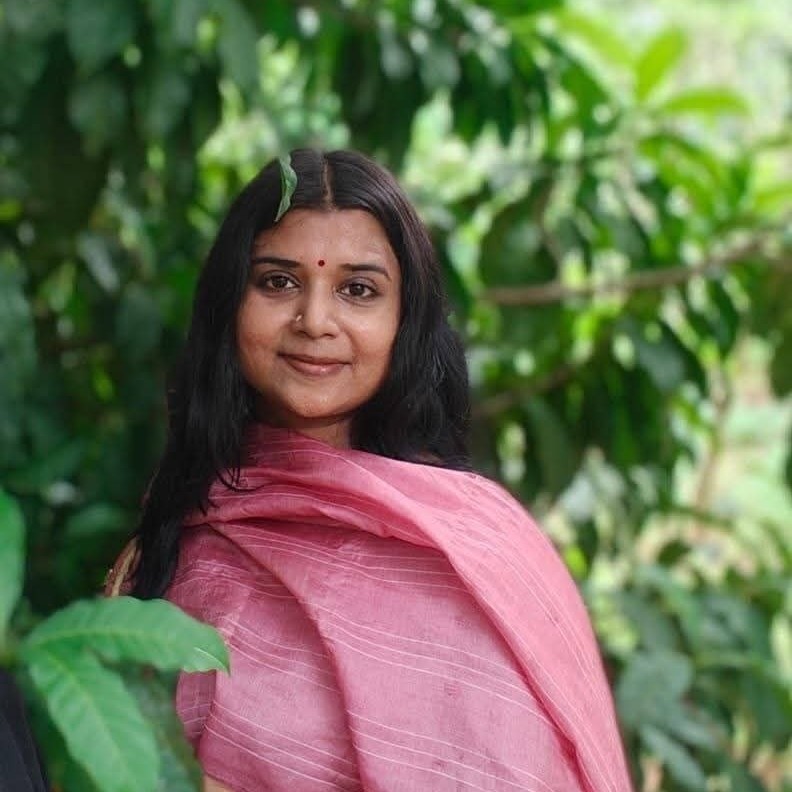
Neetha Prasad is an Assistant Professor in the Department of English at S. D. College, Alappuzha, Kerala. A teacher, researcher, and avid cinephile, her interests include English literature, film studies, and cultural studies. She enjoys writing reflective essays and film reviews that explore the intersections of cinema, memory, identity, and the human condition.
Instagram: @neetha.jahanara.vysakh
Facebook: Neetha Prasad




“children rarely know they are losing their childhood while the loss is taking place”
A perspective most viewers would never have thought to look at.