Chitra Gopalakrishnan
This novella, spanning 112 pages, has the rhythm, technique and finesse of pole vaulting: an approach run, plant and take off, swing and extension, and flyaway and landing.
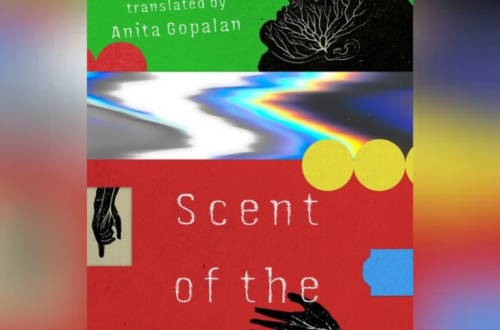
It features an enchanting cover, and charming illustrations to begin with. Then it audaciously blends multiple genres—folklore, magical realism, fantasy, mystery, and contemporary realistic queer literature—to move fluidly across various locations and timelines, portray characters who deeply reflect the realities of the landscapes they inhabit, and feature a leitmotif of identity—one that grips the narrative like a lifeline. Enterprising and ardent by all counts!
The novella begins with a story that has been unearthed, both literally and figuratively, from centuries of dust. This story establishes the deep connection between the tree and the well mentioned in the title. It serves as the foundation of the novella, from which other stories emerge and ultimately return.
This initial story marks the genesis of various crises, highlighting a lack of empathy and compassion, as well as the struggle for identity—illustrated by the drag queen, the final jigsaw piece of the title. Additionally, it marks the origin of numerous intergenerational upheavals and conflicts that often end in tragedy. In summary, this story encompasses both beginnings and endings.
The story is roughly this: in a bountiful village in Kerala, a couple named Maaran and Marutha live in harmony with their neighbours. One night, they have a strange dream about a treasure chest, or “nidhi”, made of gold. Unsure of its meaning, they decide to consult a sorcerer. The sorcerer reveals its secrets and warns them to beware of it. However, driven by greed, the couple don’t heed his advice. The soul of this story holds the substance of the novella, of how their defiance leads to a seed, a tree and a well to deplete the village’s resources, and people’s generosity towards others and nature, and cause irreparable damage to future generations.
This story segues into the tale of a boy who dreams of being buried in a jackfruit, surrounded by its sticky, white sap. His grandmother, Ammachi, helps him escape from his nightmares and his village in Kerala, leading him to the city of Mumbai. There, he transforms from an ordinary man—or rather, a well-groomed office worker dressed in a sky-blue shirt and navy-blue trousers—into a dazzling drag queen. Complete with a sequined dress, kajal, eyeliner, fake eyelashes, bronze eyeshadow, and vanilla custard nude lipstick, he takes centre stage at a gig.
The novella shifts focus yet again, bringing us back into the story of the boy with a dream and his Ammachi. This time around Ammachi recounts the past and the early lives of their family, their beginnings as it were.
Such unexpected twists to the plot and jack-in-the-box-surprises in terms of genre, events, and timelines, and blending factual and figurative elements, are central to the novella, showcasing Salini’s remarkable skill as an enchanting storyteller.
As the novella courses along to unfold several such unforeseen swings, it gradually begins to reveal the struggles of a young boy trapped within his home, society, and himself as he transitions from boyhood to manhood.
We witness his fumbling attempts to meet his family’s expectations of being a strong and commanding male, capable of leading the family business. We observe his emotional breakdown as he is cast out from his circle of male friends, perceived as weak and effeminate. We see his isolation deepen when he is rejected by his childhood girlfriend and her friends, who claim they have outgrown their friendship. We see his heart flutter with despair as he fails to meet the demands of the workplace and, more significantly, his struggles to understand his own identity and the essence of his being. Throughout this journey, we experience the taunts he endures, the beatings he suffers, the lack of love he faces, and the constant rejection he encounters at every turn.
Another curveball in the plot arrives in the shape of Kelu Ashaan, a vagrant who transforms into a miraculous ‘other’ as he performs Kathakali. And Dhamini, a drag queen, who brings energy and excitement to her gigs at his workplace. Together, they show him a different way of life and open up opportunities for him. The boy-turned-man realises that these gender-fluid individuals represent who he aspires to be.
But can he fully confront his demons, his family’s rejection, to emerge as his own person who transcends familial, societal, and internal ostracism is what the novella grapples with. And when he retraces his steps into the original story, delving into the depths of the tree and the well, and metaphorically descending into his own abyss, into the pitch black of his soul, does he emerge a new person or is he defeated by the primaeval forces is another focal point of this novella.
If Salini Vineeth has successfully blended different genres into a cohesive work, her prose is nothing short of electrifying. Kerala comes vividly to life on every page, along with Mumbai and other small towns. The imagery of paddy fields, with their golden grains, along with millet and sugarcane fields, long lines of cucumbers, yard-long beans, snake gourds, and massive pumpkins, paints a striking picture. The coconut trees standing sentinel over Kerala leaves a lasting impression.
Her text evokes sensations of jackfruit’s sticky white sap, its sweet flesh, and its sickly-sweet aroma. It captures the menacing billhooks used to cut the fruit, moth-eaten wooden pillars, laterite stone walls, the polla plant that drains life from trees, the rich red earth, a yellow chiffon sari, and the dim, narrow alleys where men prey on the vulnerable.
Ancestors take the form of exotic animals. A tree beckons with both threats and promises. There is a well that is dark and dank. In contrast, there is the drag queens’ dancing, which is described as fiery and vibrant: these details linger in the mind. As do phrases like “the river gushed through the gorge, effervescent like a young girl’s heart,” “the laughter, like pearls, poured into a glass box, dissolving my worries,” “bloated memories floated on it like dead bodies,” and “my body tensed up like a piece of cloth being wrung dry.”
The novella’s simple message is that to respect diversity we must all embrace our humanity.
Salini Vineeth’s The Tree, the Well & the Drag Queen (Red River Story, 2026) can be ordered here.

Chitra Gopalakrishnan, a writer based in New Delhi, uses her writing to break firewalls between nonfiction and fiction, narratology and psychoanalysis, marginalia and manuscript, and tree-ism and capitalism.
Website: www.chitragopalakrishnan.com