Madhulika Khaitan
Indisputably, there is the will of God. But then, there is also the will of a woman.
A woman is dead, dying of natural causes, mostly to do with her advancing years. Her thoughts, strangely uncharacteristic of her tradition, have always made her argue non-compliantly.
“Why should family and friends, in fact, the whole community spend time praying in the mosque after I’m dead, asking the Almighty to be kind to me, to spare my soul the hell it might deserve? I can do that for myself. When I’m alive and definitely after I’m dead. It will be time for veils off, the final face-off. Therefore, I’d rather insist that everyone be by my side at home before I am buried and banished from memory.”
She summons a lawyer and dictates a step-by-step enumeration of what is to be done when she passes on. The mis-execution or failing of which, she impresses darkly upon the man, would land him in Jahannam, smack in the middle of Jaheem, where he would burn and break into pieces which would then fall into the lowest abyss of eternal fire.
In other words, she leaves a will for her burial rites.
All done and said, she dies.
It is a typically delayed Aqeela, a cheerfully loquacious woman at all times, who is desperately trying, just this once, to reach her aunt’s home on time. Aunt’s funerary gathering seems more done to death in all ways than it generally is in such cases. Suffocating, with the sickeningly sweet smell of an exaggerated number of burning incense sticks. Whitely crowded with hardly any space to move around. Human beings divided, as always without imagination, into gender groups. White clad men on one side and women clad in white on the other. The white plastic chairs, as always in such cases, preoccupied.
People seem to be turning older faster, complaining of creaking knees or aching backs, but organizers invariably make arrangements with memories of better days when the lot could be loaded onto the floor. Nowadays on such occasions, scheming, chair-hungry younger women profess to be either pregnant or conveniently recovering from some bout of surgery or a disease that attacks, perhaps, stomach, bone, leg or spine. Younger men stand in groups just outside the room, making their smaller spaces congenial swapping gossip, global politics; visiting through their conversations economic policies, holidays and sexual peccadillos, restaurants, gyms and the like.
Into one of these configurations in bursts the niece, out of breath, absent minded, still in conversation over a tired mobile phone till her own voice resounds in her ears asking her to shut up. Coughing and wheezing at the smoke and smell inside, fearing an asthmatic fit she pulls out her inhaler, sprays the medicine into her mouth and inspires deeply. Then slips into the first seat that becomes vacant in the inevitable game of musical chairs that accompanies a post-modern wake. In which the chairs’ temporary residents jump out at the slightest ring to receive the many gravely pressing calls that keep calling them away.
A sixth sense prods her into an uneasiness which she promptly dismisses as death’s smirky play with the living. Until a few discreet gestures and barbed looks from here and there indicate the problem.
“Ooo… I’m sitting with men is it…” she stage-whispers to the women’s baleful glares that sear through her body.
“Easily corrected,” she half-smiles, rising. An out and out smile turning into an irrepressible, self-reproaching giggle could be improper in the circumstances, she grins behind her teeth. “Never can understand why men and women are so uncomfortable around each other.”
Aqeela stands for many full minutes which stretch rapidly to seem, propelled by her impatience, closer to an hour. Finally, she spots another empty chair up front left. Wends her way indelicately, bumping and tripping over a collective of dangling legs — till she reaches the last chair but one; heaves a silent sigh of relief and lowers herself quickly onto the seat fearing a hasty snatching of the chair from behind her.
“End of the first leg,” she mutters to her new companion, “after this it’s beyond my control. Hope it doesn’t stretch interminably.”
Soon, her eyes begin to wander, acknowledging some blurry faces they may know with the same half-smile, then look down observing the ways of proper etiquette, then look up again glancing in a different direction. She sees some shoulders wrack with intermittent sobs.
Why sound and no tears? she wonders.
Some hands pat some backs reassuringly. A few louder cries bubble up from different parts of the room. The white person next to her, she notices through the corner of her left eye, seems a trifle over covered.
Each to her own, I guess, she shrugs.
Just outside the room, in a small attached veranda, is the Dude — the man who presides over such occasions; a notch below the Holy and a notch above the Mundane — harbouring great notions of invisibility. He sits on his haunches, a rocking movement accompanying his long drags on a beedi; each time the face turned surreptitiously away for his puffs. Just behind him stands an incongruous, squat cabinet with open wooden doors. He is dressed in his signature short kurta and pyjamas.
Pyjamas belonging to kurtas can be of varying sorts. Flared white ones, with a drawstring to pull tight at the waist and tie, as one does the laces of shoes. Narrower ones, with a drawstring too, to tighten and tie. Tight ones that are several inches longer than the actual leg length, that closely hug the lower limbs and fall cascading, one cloth ring over the other, onto the ankles. Likewise, to be secured at the waist by pulling the drawstrings and lacing them.
Sometimes, as happens frequently with shoes, the laces come undone.
And it happens so to the Dude. The bows of his drawstring loosen.
The man was interestedly watching the stream of mourners and moaners, the one great draw to an otherwise boring ritual of burying the dead. That is why he could continue doing what he did. There was always the thrill of seeing living people, live new faces, hearing their latest scandals, a salacious revelling in those till the next call of death. Through wisps of smoke, his kohl-smudged eyes sought out one story after another; beedi hidden behind back; neck craning, body straining this way and that to catch a glimpse of someone he might have missed.
Keeping pace with his thoughts, the well-concealed bow came undone transforming into two very visible white strings swaying innocently between his knees. They hung to the floor, would reach even below that if the ground were to lower itself.
The Dude was on a trip. Thoughts going down the strange alleyways of many a neighbourhood. Windows ajar, doors half open, terraces doing their own chattering, revealing their tales of this august gentry to our man’s ears.
“As for this lady,” he thinks, coming back from his travels, “the one that’s just gone… do I or do I know just too much about her?! Days were when men had their flings. But she! Rare appetite for love and lust. She was beautiful, have to admit. Men fell around her like moths around a flame or like swatted flies in summer. I did too. She was bold she was, though god-fearing I must concede. She knew her Quran, you couldn’t slip in any convenient interpretation, she’d throw it right back at you. And now, she has willed that the community should all be present and she is to be buried like that? In that manner? Ya Raby!”
“Well… what do I care! This is entertainment too.” He turns his back for a few seconds to take a long pull at his beedi. Even before he can about-face, his mind has lost itself to cruising again. To darkened thoughts of what could be hidden under so many white exteriors.
Meanwhile, Aqeela has, in those few moments of rest, been besieged by right side nudges; kicks on her chair from the back; wildly dilated eyes everywhere, pointing in various ways towards her left.
Weird, she thinks, but whatever! Relax folks. A strange surround sound invades the atmosphere. Quickly inhaled gasps. Icy reprimands hiss through clenched teeth as she notices shoulders that heaved in mourning now heaving with suppressed giggles.
Do I hear sniggers? Very odd, she thinks. Sniggers?
A puzzled Aqeela takes a slow deliberate turn to the left; saucily stares at the figure next to her; the mouth opens incredulously, jaw turning into unformed, unset jelly as it stutters.
“M..M… Mum…my?”
The yelp invites many an impolite rejoinder.
But Aqeela is beyond caring. Quaking, she looks uncomprehendingly at the swathed form installed next to her. This time it’s louder, the sound, her voice exploring many octaves.
“Mumm…umm…eee!”
Her knees buckle in disbelief as she tries to make a dash for it. She trips once again. This time over the perched mummy’s stiffly disapproving feet, all but falling onto the day-dreaming Dude.
“Damn! Wrong side,” is what escapes her mouth as she bumbles around gawkily until she’s hidden behind one of the veranda doors.
The jostled man, rudely pulled back from his delightful meanderings, automatically and unwittingly, jumps up at the screech. His confused feet get further muddled, as stuck within two conniving strands of white, they pull at the strings. A descent of pyjamas ensues as the nonplussed cleric stumbles backwards. Straight into the welcoming, open arms of the wooden cabinet. Doors that promptly shut as he falls into the box.
The willed coffin for a willfully seated mummy.
“Surely, Auntie wouldn’t want to be buried with him!” Aqeela thinks in a moment of post-hysteria. “If he doesn’t come out, how will she go in?”

Kolkata based Madhulika Khaitan has co-written, co-directed and produced seventeen full-length playscripts as part of a co-curricular program for children conceptualised and helmed by her, from 1986 to 2003, which explored alternative approaches to education using fine arts, drama and creative writing as primary tools. The scripts deal with complex themes like Space, Language, Colour, Mind, Evolution, Perception, Patterns, etc. Evolution was serialised on Doordarshan — India’s national television channel. Her stories have featured in The Riveraine Muse, The Wise Owl, The Galway Review, Cowbell Literary Magazine, EKL Review, and Hakara Journal. Everything must have its flower, her first collection of short fiction, awaits publication. She is currently working on a novel and a second compilation of short stories.
Facebook: Madhulika Khaitan; Instagram: @madhulkakhaitan
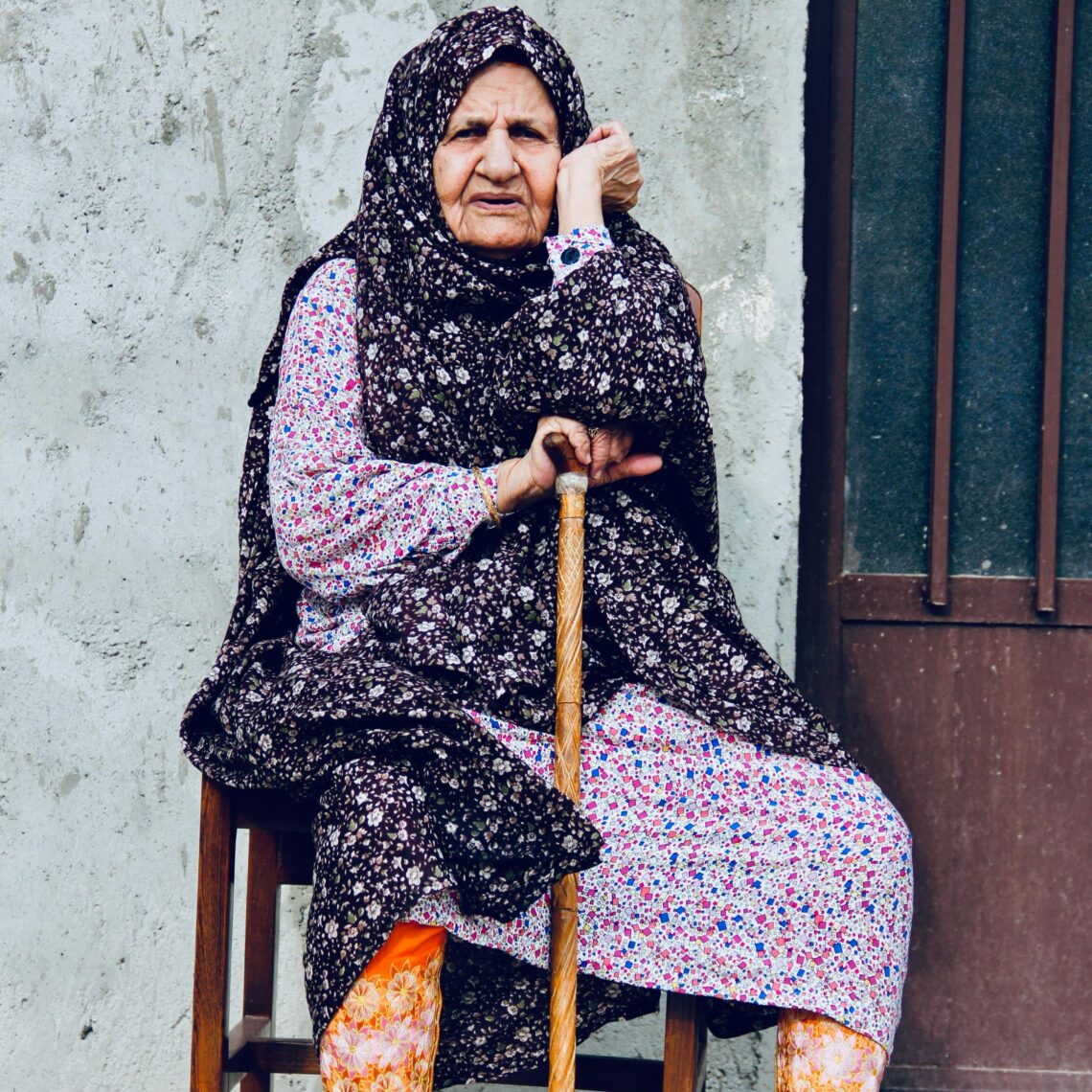
Featured photo by Yaser Nasiri (Pexels)