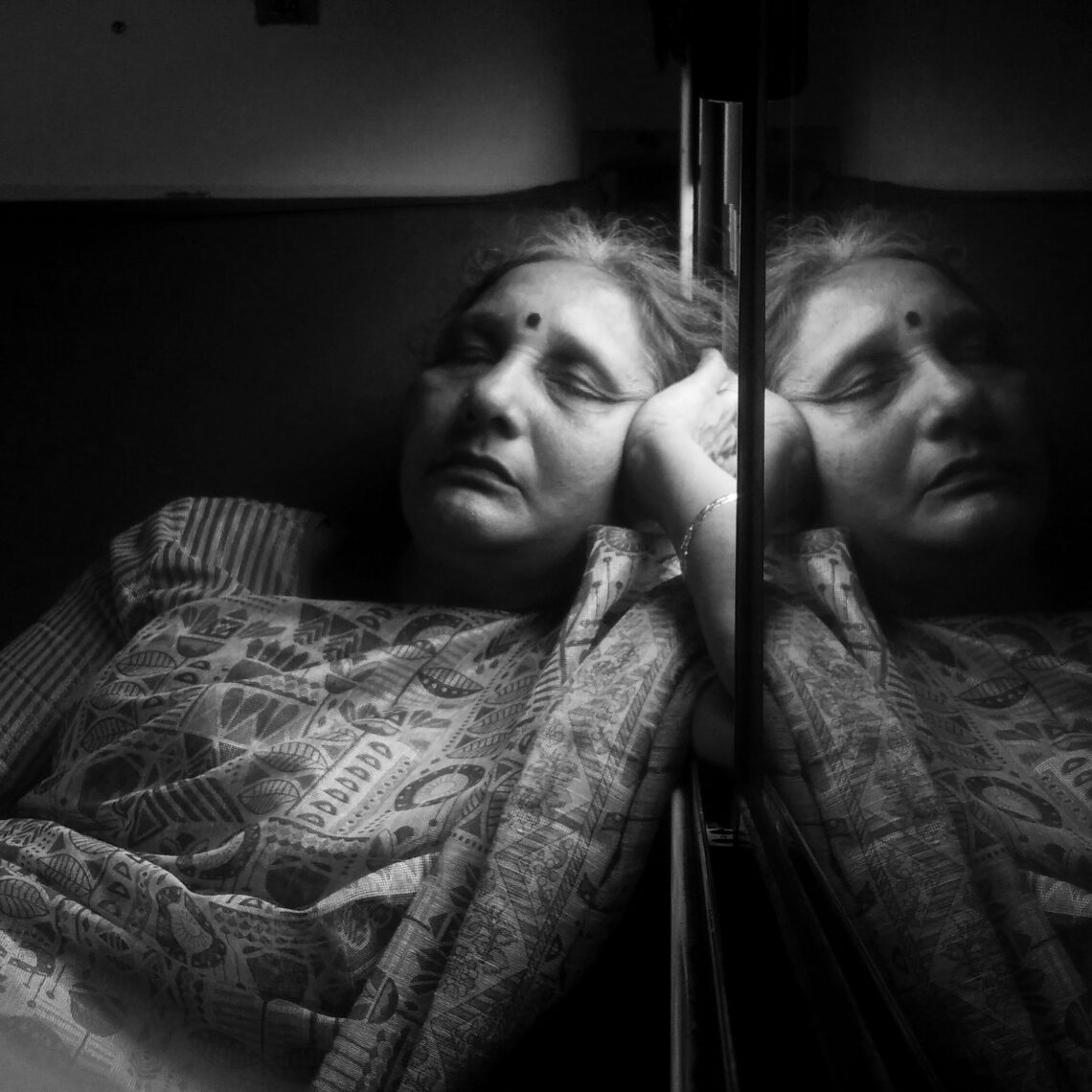
“I accepted very late that I had become a husband, it took me a long time. Nearly 10–15 years to realise that she is my wife. Before that, she was just a woman who had my children, cooked for me, and took care of the house. I had no feelings beyond that.” (Indian Express)
Renowned actor, singer and lyricist Piyush Mishra said this in an interview with journalist Shubhankar Mishra.
The internet responded with the kind of melancholy admiration reserved for tragic lovers. Here was a man still faithful to his great love after all these years. But I could not stop thinking about his wife.
Imagine being married to someone for decades, performing all the duties expected of a wife – emotional, physical, mental, and social. Taking care of his parents, family (extended and immediate), bearing kids and tending to them as they grow, managing the house, cooking, cleaning, remembering every single birthday, anniversary, important occasion and being there. Only to learn that all this while, your husband never loved you.
What does it feel like to spend your life beside someone who speaks of you like an arrangement life made on his behalf?
Indian cinema has always made room for male yearning and depicted it through the lost lover, the unfinished romance or even as the woman who got away. Entire films are built around men mourning loves interrupted by the Partition, family pressure, caste, timing, duty. Their sadness is framed poetically, almost reverently. The wife, meanwhile, stands quietly at the edge of the frame. The camera knows exactly where to look. It follows the man grieving the love he lost, while the wife who spends decades living beside that grief is left just outside the frame.
I thought about this while watching the recent Imtiaz Ali film, Main Vaapas Aaunga (2026), where an old man, nearing death, still aches for the woman he lost decades ago during Partition. The film treats this longing as beautiful, eternal, almost sacred. His emotional distance from everyone around him becomes evidence of how deeply he once loved. His family remembers this man as someone who talked less, was never emotionally available and was rarely warm in his interactions.
But somewhere in that house is also a wife. A woman who perhaps spent forty years trying to speak to a man already in conversation with a memory. A woman who bore his children and held his house together with love. Cinema rarely asks us to imagine her loneliness.
I often wonder, what happens to the wife in such stories? She lives decades beside someone emotionally elsewhere. Cinema rarely imagines her loneliness because the camera remains loyal to male yearning. The audience is invited to interpret his silence as poetic. And perhaps for the wife, it was simply absence. The tragedy belongs entirely to him. His silence becomes depth. His emotional distance becomes evidence of a love so profound that it survives decades. The wife, meanwhile, is expected to understand his absence without ever becoming the subject of the story herself.
In South Asia, women are usually told, “Men talk less. They are not expressive. They just want to be taken care of. Don’t expect more!” It is this messaging that leads to women being okay with an emotionally absent partner all through their marriage. Indian women are often taught that being chosen for marriage is not the same as being loved, and cinema sometimes reinforces this with alarming casualness. Perhaps that is why these stories feel so familiar. They mirror an idea many women have heard all their lives: Men are simply less expressive. Don’t expect tenderness. Don’t ask for emotional intimacy. Love him through his silence.
Women are taught it is their duty to take care of their marital home. The society at large has always ignored the wife. She cannot have desires, demands or dreams. She cannot have mood swings, health issues, or opinions. If she does, she knows she will be replaced. So, is it even right to complain when cinema also ignores the wife?
Time and again, it hurts to see how cinema remembers the woman a man could not have. Rarely the woman who had to live beside that memory for decades.
Rocky Aur Rani Kii Prem Kahaani (2024) was a roaring hit and went on to win the National Award for wholesome family entertainment. In the movie, grandson Ranveer Singh sets out to find the long-lost love (Shabana Azmi) of his grandfather (Dharmendra) who is nearing his death. Unlike Imtiaz’s film, they do meet and share their feelings, including a kiss in front of their whole families, including Dharmendra’s screen-wife, Jaya Bachchan.
In the movie, this kiss is framed as liberation, unfinished love finally fulfilled. Audiences applauded because old-age romance is rare onscreen. What fascinated me wasn’t the kiss itself. It was how instinctively we knew whom to root for. The film had already taught us where our sympathy belonged. But the scene depends on another woman’s humiliation becoming narratively irrelevant. The wife is very much alive in this case, again unlike Imtiaz’s film. And she gets to witness her husband having the love, affection, kindness and respect for another woman in her own house.
Would audiences respond similarly if an elderly married woman rekindled romance with an old lover while her husband watched?
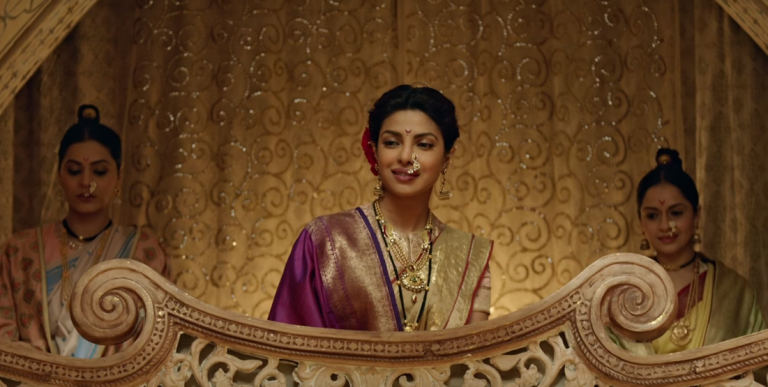
Even our historical romances are built on the same emotional architecture. In Bajirao Mastani (2015), Bajirao’s love for Mastani is portrayed as passionate, destined and epic enough to challenge empires and social norms. Audiences continue to celebrate them as one of Indian cinema’s greatest love stories. But somewhere within all that grandeur is also Kashibai, the wife who had known Bajirao since childhood, stood beside him through the making of his legacy, and was expected to endure his betrayal with dignity. The film allows her pain, but not the same romantic devotion it reserves for Bajirao and Mastani. We remember Bajirao and Mastani as lovers separated by history. We rarely remember Kashibai as the woman expected to continue loving a man whose heart had found another home.
A wife starts by taking care of the house, turning it into a home, learning his favourite dishes, participating in rituals, fasting for his long life, remembering every birthday and every relative. Then come the children, sleepless nights, school fees, medicines, groceries, ageing parents and endless responsibilities that quietly become hers. And yet, a woman is often alone even within marriage and a house full of people. The othering of a woman within her marital home is so deeply normalized that it rarely even registers as loneliness.
I have watched a woman’s loneliness closely. I have seen her cry herself to sleep, where she did not even know the reason behind her tears. I have spent years wondering about the women standing just outside the frame of great love stories. I have witnessed men being capable of love when they want to. I have seen the lengths they can go to when they are in love. Perhaps that is why I think so often about the women in the background of love stories. I grew up around one.
Namrata is a literary critic and columnist whose work focuses on the intersections of gender, literature, and media. She is the founder of Bookbots India and Keemiya Creatives.
Featured photo by Bharat Jhakal (Pexels)




Namrata, how well you’ve expressed the ‘othering’ of Indian women, mainly the wives. I had felt exactly the same emotions and asked similar questions while watching both MVA and Rocky Rani.
Thanks for giving a resounding voice to the women who simply wait at the fringes for their husbands’ turnaround…in case there ever is one!