The first time anyone asked me what my real name was, I was twenty-one and standing in front of a fried rice joint in Hohoe talking to the vendor, a girl whose numerous questions I had been trying, for about a week, to ignore.
She was Fante. Her own name, she had already told me twice, was Adwoa — Monday, the Akan way. She was holding the ladle with both hands, the way people hold things when they are about to ask a question they suspect is going to embarrass you, and she said, quite kindly, “So what is your other name? Your real one.”
I told her my surname. She shook her head. She meant the one that came before the surname and before the English first name on my passport. The one that, in any household worth its salt in the Volta Region, every aunt I have ever met begins to use the moment we are no longer in earshot of my mother.
“Yao,” I said. “They call me Yao at home.”
She nodded slowly, as if a small geometric proof had just been completed in front of her. “Thursday,” she said. And then, gently, like a clinician closing a file: “You’ve been busy.”
There is a way Ewes name children that nobody outside the family ever quite gets the hang of. The rules are simple in principle and shifty in practice, and they have been adjudicated for centuries by old women who do not, on the whole, write things down. Before anything else (before the surname, the Christian name, the school name, the nickname your friends will give you in Form 2 because of an unfortunate haircut), every child gets a day-name. We call them Dzigbe-ŋkɔ, which literally translates to “birth-day names.” These names are not chosen, because they have already chosen you.
Sunday is Kɔsi if you are a boy, Akɔsiwa or Esi if you are a girl. Monday is Kɔdzo/Adzo or Adzowɔ. Tuesday is Kwabla, Kɔmla/Abla. Wednesday is Kɔku/Aku. Thursday is Yawo/Yawa. Friday — and now we are in famous company, because half the world has heard of Kofi Annan without ever stopping to think that they have been told, in passing, that he arrived on a Friday. Friday is Kofi/Afi or Afiwa. Saturday is Kɔmi/Ami. Additionally, in Ewe (Eʋe) culture, children born on the same day who share the same day name are often delineated using suffixes like -gã for the older child or -vi for the younger child. The entire system, like most things in our culture, is precise enough to be functional and elastic enough to be argued about.
What the system says — what every Eʋe child grows up half-knowing, in the way you half-know the shape of your own face — is that you arrived on a day, and the day has weather, and the weather is now part of you. The week, in this scheme, is not a row of identical boxes. It is a slow, repeating chord. Some days are quieter, some are quicker, some are known to favour stubborn babies. You are introduced to your family, before you are introduced to anyone else, as a colour of the week. Long before they know what kind of person you will be, they know what kind of day you are. That, the elders say, is most of the work.
I have never decided how I feel about this.
For most of my early adulthood I went by my English name without ceremony. The school had taught me to. The schools had taught everyone to. By the time I was old enough to question the arrangement, my English name had become the part of me that signed forms, opened bank accounts, applied for jobs, and shook hands with people who wanted something. It was the part of me that performed competence. Yao, meanwhile, stayed at home. Yao was who I was when I was being scolded, fed, or laughed at by people who had known me before I had teeth. He was a smaller and less impressive person, but he had the advantage of being unmistakably real.
This, I think, is the quiet trick of the day-name. It does not bother to compete with the names you go out into the world wearing. It just stays in the kitchen, where the food is.
In my mother’s house in Aflao, every name I have ever been given is in use. The official one is for letters from the bank. The English one is for the cousins who studied in Accra. Yao is for everybody who feeds me. There is also a praise-name, Ahanoŋ́kɔ́, which I will not put in print because praise-names are private things, like keys, and there is one nickname I acquired around age seven on account of a chicken, which I will likewise spare. The point is that I move through a single afternoon, in that house, under five or six different names, and nobody finds this strange except the visitors. The naming, like the seating, is contextual. You are named according to who needs you.
There is a thing the day-name does that I only began to understand recently, and it has nothing to do with the day of the week.
You should know that Eʋe children, traditionally, do not get an individual name at all until the eighth day. The first seven days, you are simply the one who has come. Your parents wait. They wait to see whether you intend to stay. In another era, with another infant mortality rate, this was practical wisdom dressed up as theology; you did not give a serious name to a guest who might leave by morning. Even now that the medical reasons have softened, the custom has stayed. On the eighth day, in a traditional naming ceremony called vihehedego — bringing the child out — the elders gather, an elder dips a finger in water and touches it to the baby’s lips, then dips another finger in something stronger and touches it to the lips again, and they speak the names aloud. They speak the name of an ancestor. They speak the day-name. They speak the personal name. They speak, often, the praise-name — what the child is hoped, in the end, to become.
What the day-name does, in that ceremony, is hold the place. It is the name you have during the first week, when you are still half-a-stranger. It says: We know what day you arrived, even if we do not yet know who you are. It is the small handle the family uses to lift you safely across the threshold of those first seven days. After that, the bigger names can come. But the day-name does not retire. It remains, all your life, the receipt of your arrival.
I think of it sometimes as the part of a person that is older than their personality.
The girl in the fried rice joint, Adwoa-from-Monday, eventually became my friend and then unbecame my friend in the slow way these things happen. The last time I saw her, at a market three years later, she was holding a baby. The baby was three weeks old. The baby was, I was told, named Afua, because she had arrived on a Friday. The English name, she had not yet chosen. The official surname was on the birth certificate. The day-name was already, at three weeks, the name everyone in the room was using.
The baby looked at me, with the round flat regard of someone newly arrived from somewhere larger than this. I held out a finger. She gripped it, briefly, with the surprising strength of a person who has not yet decided whether to stay.
“Afua,” I said. ”Welcome.” And then, I was suddenly aware that I was speaking to her in the only one of her names that the room had not yet imposed. I was speaking to her in the name that simply marked the fact that she had got here on a Friday and was, for the moment, still on probation. So I added, quietly, in the language she will one day learn to argue with: “Miawoezↄ. You are welcome.”
The Thursday boy welcoming the Friday girl. A small private exchange of receipts, in a market in Aflao, between two people who had arrived on different days of the same long week, and whose families, in the old way, were the first to write it down.
GLOSSARY
-gã / -vi — Suffixes used to distinguish between older (-gã) and younger (-vi) children who share the same day‑name.
Adwoa — Akan female day‑name for Monday. The girl in the essay uses this name.
Afua — Ewe female day‑name for Friday (variant: Afiwa).
Aflao — A town in Ghana’s Volta Region, near the Togo border, where the author’s mother lives.
Ahanoŋ́kɔ́ — Ewe praise‑name; a private, often aspirational name given to a child, usually spoken only by family.
Akan — A major ethnic group in Ghana whose day‑naming system (e.g., Adwoa, Kofi) is similar to but distinct from the Ewe system.
Dzigbe‑ŋkɔ — Literally “birth‑day name”, the Ewe term for a day‑name.
Ewe (Eʋe) — An ethnic group and language of southeastern Ghana, southern Togo, southwestern Nigeria, and southwestern Benin.
Fante — A subgroup of the Akan people; the girl in the essay is Fante.
Kofi Annan — Ghanaian diplomat and former UN Secretary‑General (1938–2018); his first name marks him as Friday‑born.
Miawoezↄ — Ewe phrase meaning “You are welcome” or “Welcome”.
vihehedego — The traditional Ewe “outdooring” ceremony on the eighth day after birth, during which a child receives their names.
Yao — Ewe male day‑name for Thursday (variant: Yawo).

McLord Selasi is a writer and poet from the Volta Region of Ghana. His work has appeared in Panorama, Nenta Literary Journal, Apricot Press, The Shallow Tales Review, Shoegaze Literary, Trampoline, Rough Diamond, Isele Magazine, Eunoia Review, Poetry Journal, Graveside Press, and elsewhere.
X: @MclordSela64222; Instagram: @mclord.selasi; Facebook: @mclord.selasi
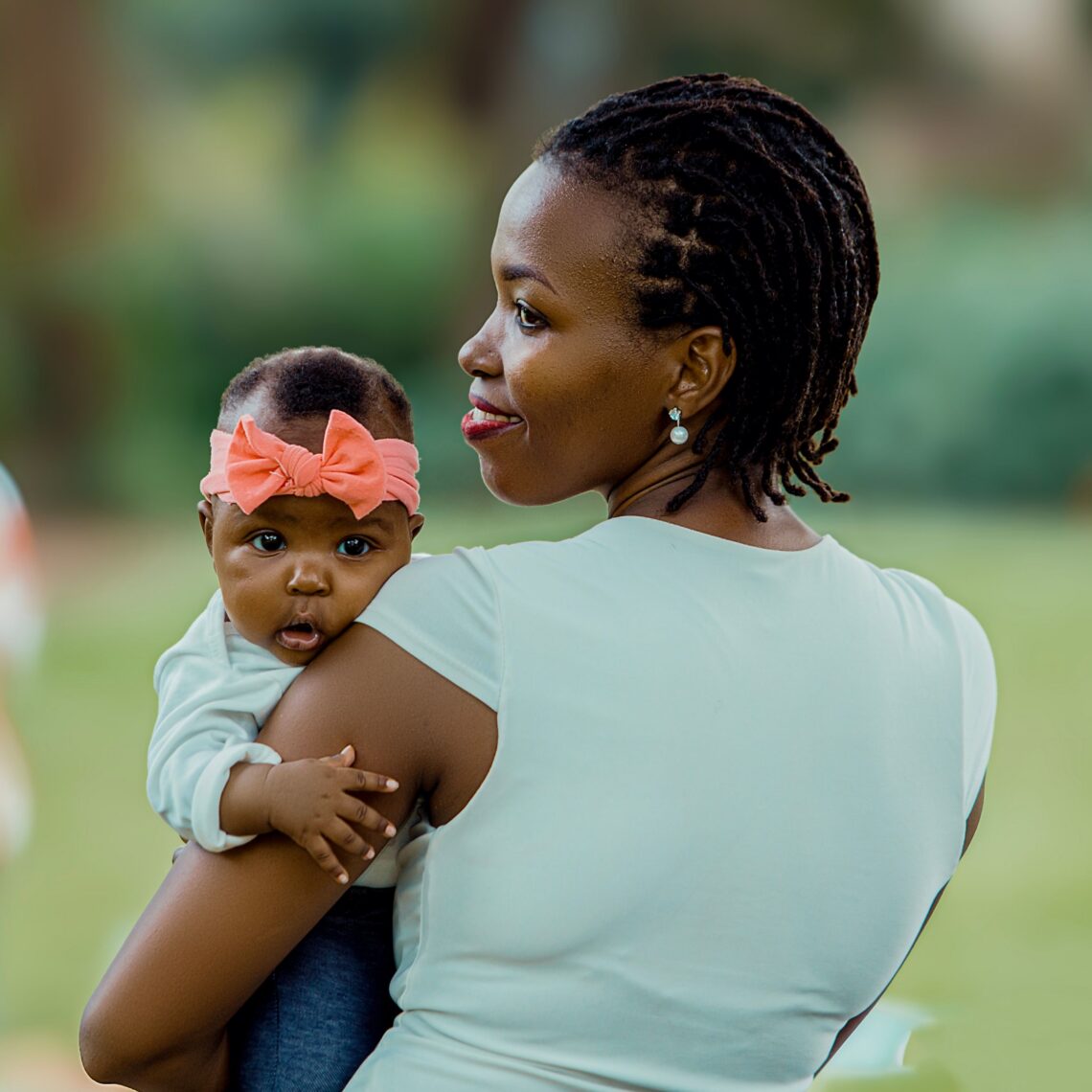
Featured photo by Chris wade NTEZICIMPA (Pexels)