I lifted my maroon apron from the cold marble slab. Its golden embroidery curled into spelling my name, Arun; Wong.
Most people stop at Arun—their eyes slide past the rest as it sits quietly, like a suitcase my family never unpacked. My grandfather first carried it to Kolkata as a young Hakka man. He worked in tanneries long before restaurants arrived and died before I ever cared to ask about the rest.
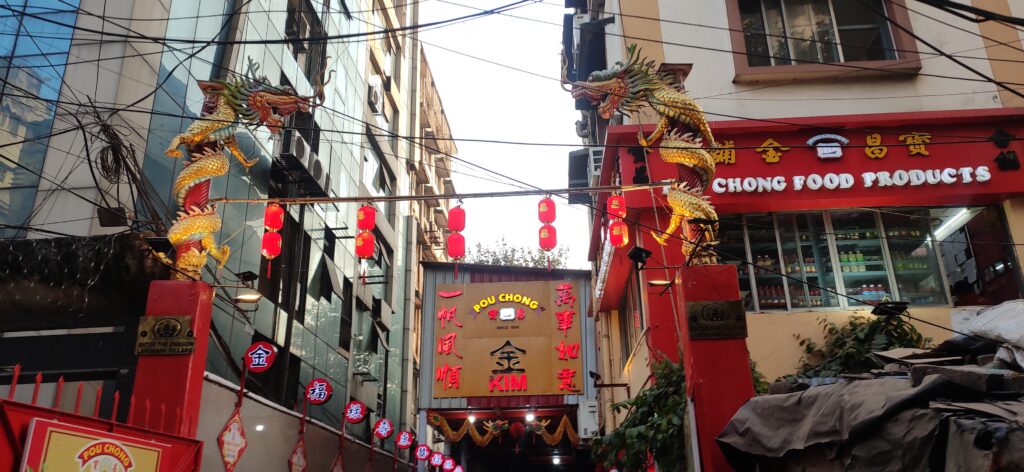
From my kitchen window, Tangra’s streets pulsed with late night traffic, cold air rising off its warm pavements. A scooter whined somewhere below, cutting past vendors still arguing over the price of green onion. Leaving the window behind, I moved quickly through the dim-lit hallway carpet. Outside, a reporter hovered near the gate, so I slipped into my car before he could snag a quote on Wong’s Kitchen, the only piece of my grandfather I actually got to keep.
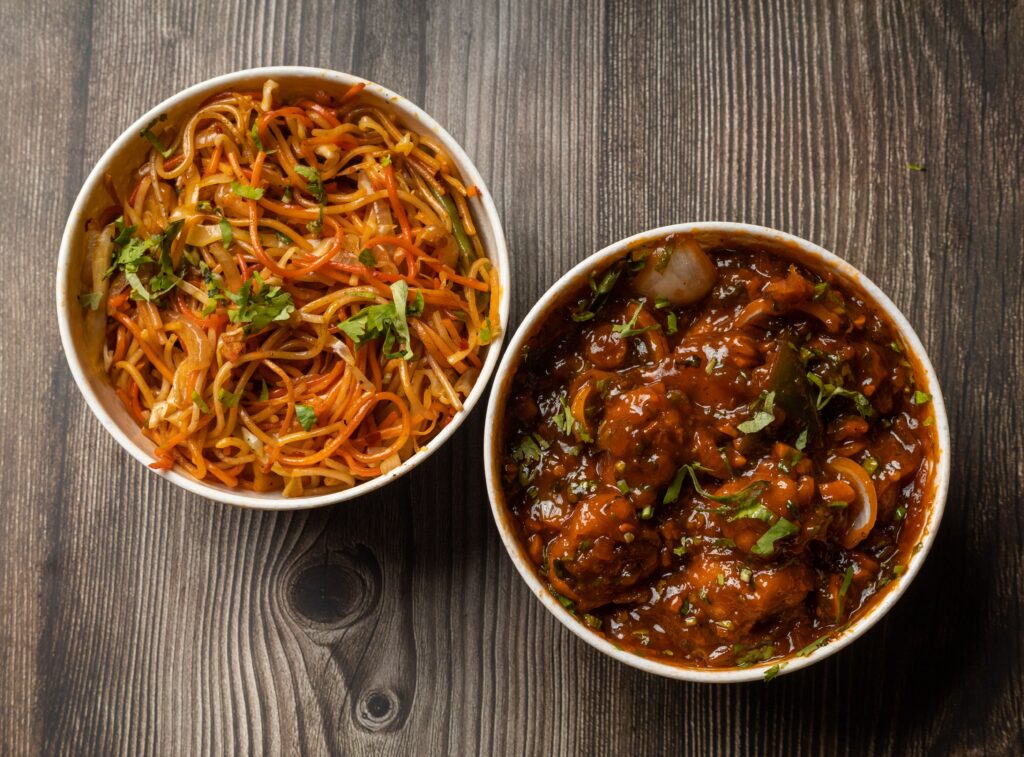
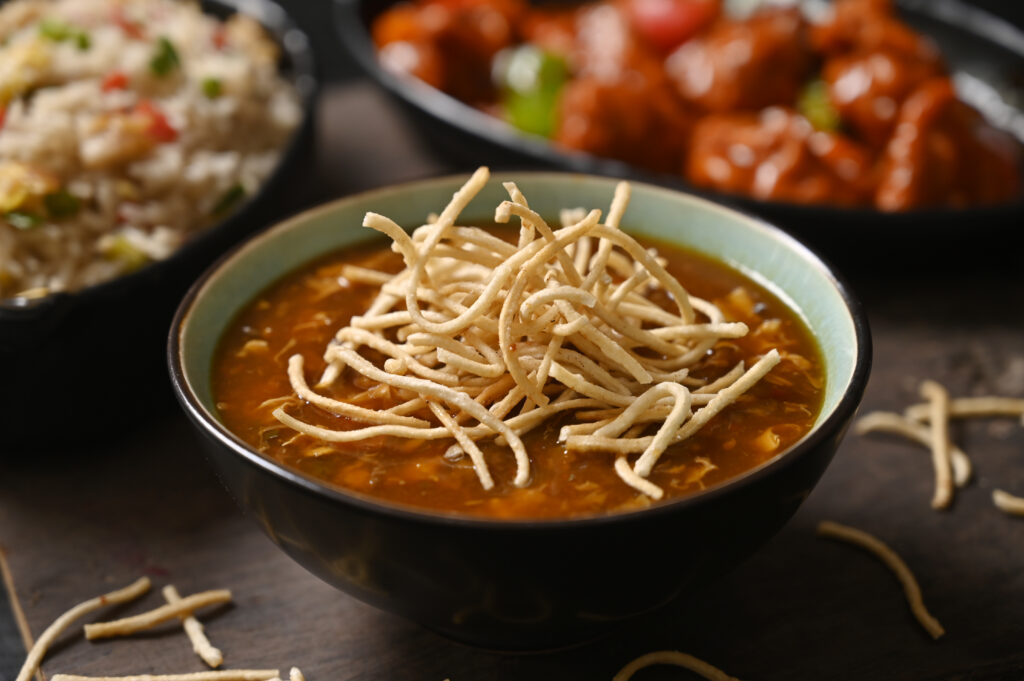
He never left me much, but that name carried the weight of the recipes that crossed continents and got twisted into the bright red menu lettering—Manchurian, Hakka, Schezwan, Chilli Chicken—the usual list. Ever since I took to wok, I knew I’d extend this list. I’d tossed enough of Wong’s chilli chicken to feed generations. My father had too. His father had too.
I wasn’t going to reheat my grandfather’s success at Wong’s Kitchen. Treating chilli chicken like the finish line felt like pretending the story ended with him. It didn’t. So instead of freezing the menu with chilli chicken, I stir-fried chilli-oil idlis and Schezwan dosas.
People devour it. Magazines quote I “elevated” Indo-Chinese. All for better quality desi sauces, and a French fryer that kept vegetables holding their shape instead of collapsing into an apology.
The critics approve. Dinners light up. And for once, the numbers on our struggling balance sheet hold authorship. The kind I would have never found in tossing cheap Hakka noodles that no one wanted.
Except the three ladies at Anjia’s care home.
Their request for the chef’s table felt different from the official invitations I was used to. I had cooked for presidents and professors, for tycoons with bloated wallets and young lovers at their wedding. Of course, it wasn’t my dream venue tonight. But when a plate of good old Hakka noodles buys you your way out of a cocky controversy, it seems like a delicious appeal. At least that’s what my PR team keeps chanting after Elle dropped: Chef Wong says, “Desi Chinese is meant for the streets, Hakka cannot belong on the gourmet plate.”
Chef Wong right beside Chinese. Rest, all the other times it was Chef Arun.
Anyway, not like I could strangle the editor.
But a free dinner at a Chinese retirement home would. It would, in fact, stain their entire story with soy and Sichuan. I counted the packets again. Two packs of Hakka noodles. A jar of Schezwan. A bottle of chilli sauce. And soy sachets. Enough to feed the trio that invited me. The car arrived at the pavement of Anjia’s Home. The alphabets in Hindi, Bengali, and English stencilled its name above the verandah. I climbed the narrow stairs, brushing past walls that stayed cold even under the sputtering yellow bulbs.
A caretaker in a soft-worn dupatta opened the door onto a room where three women sat like a council of secrets. Mahjong tiles spread out in front of them, the pieces clicking against the table. Inside, the lemon cleaner argued with the smell of boiled rice from someone’s lunch.
Then Liu, who looked twenty years older than her Yahoo icon, dragged her attention away from the mahjong table.
“You brought noodles?” Her eyes went straight to the packet before they even bothered with me. “We haven’t had proper ones since the rains.”
“Hakka in a packet?” said the other one on the table without lifting her gaze from her tiles.
Chen, the softest of them, touched my arm lightly. “Ignore Mei. She judges everyone.”
I set my jars on the kitchen counter—my chilli oil ferment, my smoked onion paste, my tamarind. Things that belonged to me more than my passport does. The kitchen bulb flickered once, then steadied, illuminating every crack between the broken tiles and dry watermarks on the steel sink.
I fell into my grandfather’s rhythm while chopping the potatoes—wrist first, breath steady.
That’s when the air shifted behind me.
Liu’s voice came in thin strands. “I’m sorry,” she said, except she wasn’t apologizing for anything I’d done. “Your chopping… it sounds like Deoli.”
My hand paused mid-air.
“Peel, chop, peel, chop,” she murmured. “Camp mornings. They woke us before the sun.”
Memory settled between us. I kept my mouth shut, unwilling to let more of her past into the room.
Then, Chen suddenly lifted a sachet, running her finger over the spelling—Szechwan, curling her lip upward at the cheap bastardization.
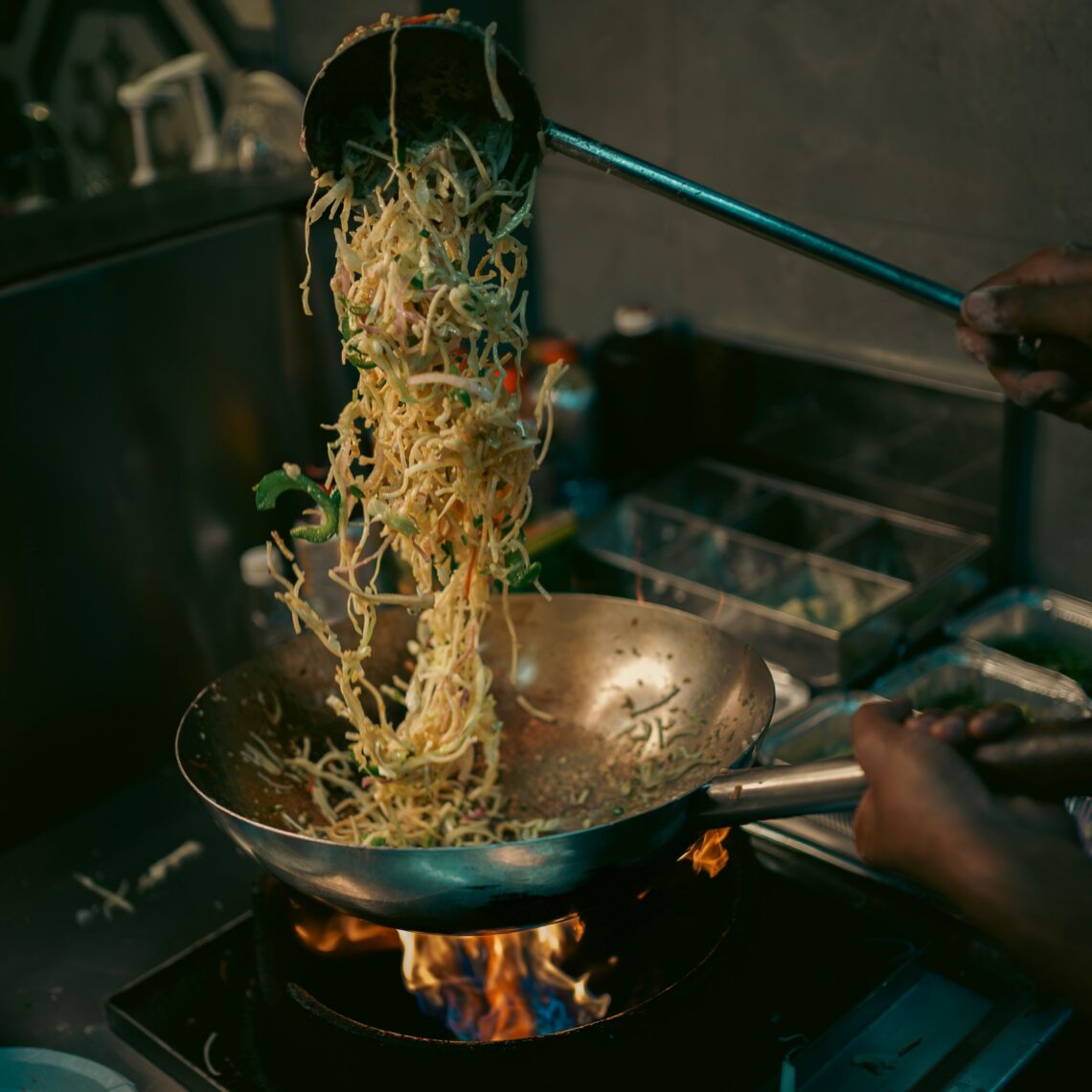
I kept the pan moving, hoping the sizzle would drown everything out as the noodles hit the wok. The smell of garlic and chilli clung to the curtains as I slapped the noodles onto the China plates they treated like heirlooms.
They ate without a word. Noise would’ve cheapened it anyway.
Mei placed her fork down, wiping the corner of her mouth. “It’s… polished,” she said. “But something’s missing.”
“Where is the tannery?” she asked, almost gently.
“The rain?” Chen looked at Mei raising her chopstick.
Liu spoke again, her gaze fixed on my orphan noodles. “We ate near the factories,” she said. “Dust on our fingers, vinegar in the breath. The noodles carried it”
Then why call the chef’s table to taste something that smelled like struggle? I kept watching them confused. Maybe Marie Antoinette had a point after all.
I just wanted to bottle this moment and shove it back at Elle. Indo-Chinese cuisine was meant to be cheap.
Amidst my other thoughts of strangling the editor, a memory or a muscle flinched. I remembered, very faintly, a story my grandfather had told me in fragments about his little stall pressed between small buildings along a tight alley. The smell hit me from my pan—hot, sour, metallic—searing past the kitchen’s clean air, burning my throat. Of course, the flavours came from heat, dust, sweat, necessity. I’d spent my life sanding those stories smooth so they could shine in a restaurant review.
I wanted to run to my cart, to my jars, to my stove, and cook a bowl that would not be photographed but would be eaten cold on a step and remembered. I poured the remaining noodles into a big pot and added the leftovers from my jars—the tamarind, a spoonful of jaggery, the smoked onion paste with water from the steaming kettle. I did not measure. I stirred until my arm ached. I seasoned not with the precision of a critic but with the humility of someone asking to be forgiven.
Liu tasted first. She didn’t smile. But her eyes softened, like the edge of a knife warmed under water.
“There,” she said. “Now it tastes like Tangra!”
The bowls emptied slowly, the room filled with the kind of conversation that made me feel like a child at a doorway, listening but not invited. I washed the knife without looking at them.
When we finished, Chen held my hand and brushed her thumb along its back. “You listened,” she said. “Thank you, that’s the first honest thing a chef can do.”
My PR team listened too, with fork and knives, ready to dissect the live recording before I even got home.
Outside, the night smelled of vinegar and something older. It followed me home. Stayed in my clothes. Stayed in the air when I opened the fridge. Stayed somewhere under my ribs where breath usually lives. My hands still smelled faintly of tamarind and rust.
Back in my restaurant, the critics asked whether my experiences at the care home had changed my approach. If I’d make draught-inspired noodles into an amuse-bouche?
I did, in fact; the dish was named as “Tangra’s Hakka special” on Wong’s menu.
It isn’t one of our usual dishes, but for a second I hope the char and salt reminds you that something, somewhere, preceded the polish.
— Chef Arun Wong
Elle covered a page and a half on this. Though they still wrote Chef Arun in the final copy.
I really should’ve strangled the editor.
Shruti Goel is a marketing graduate from the University of Calcutta and a Curtis Brown Creative alum. Her work has appeared in The Piker Press, American Literary Review, and Scholastic. Beyond the page, she has worked as a restaurant consultant in the food and beverage industry.
Instagram: @shrutz_goel
Featured photo by Kunal Lakhotia (Pexels)