Wani Nazir
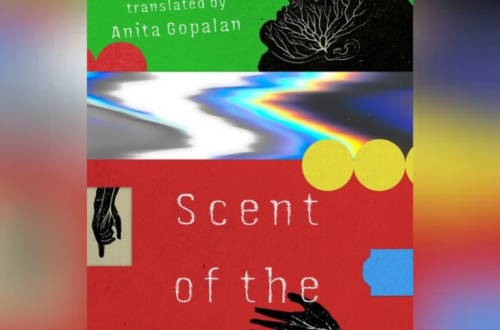
Sabika Abbas Naqvi’s English version of Rahman Abbas’s Rohzin, or The Melancholy of the Soul, which was originally written in Urdu, goes beyond what most people think of as translation. In this case, language isn’t just a way to get meaning over; it’s also a huge space full of feelings, memories, and experiences from the past. As a result, every time something is translated, it is like a rebirth: one linguistic term disappears and another one appears, changed but still keeping the core of its origin. Naqvi’s job is more than just translating the story into English. It requires replicating the whole emotional setting: the unique mood of Bombay during the monsoon, the inner battle caused by religious doubts, and the mix of love and guilt that lies beneath the city’s different lights. Naqvi’s translation doesn’t merely change Abbas’s prose into English; it also brings back the depth of Rohzin’s pain, its remarkable beauty, and its intellectual complexity. It sets up a rhythm that is both new and old, personal and universal.
The first line says, “It was the last day in the lives of Asrar and Hina.” Naqvi draws readers into a place of both devotion and imminent disaster when he says, “The sea that had its arms around Mumbai was ferocious.” The sea is shown not just as an idea, but as a living thing that can love and destroy, remember and forget. Naqvi’s English evokes the deep spirituality, sophisticated lyricism, and strong rhythms of Urdu. Words like “ferocious” and “gulp the island” show how destructive the water is and hint at a divine goal, which is similar to the Sufi search for self-loss. The translation doesn’t take away from Rahman Abbas’s main concepts; instead, it mirrors them through controlled expression. Naqvi uses the sea to show how love fails, how faith is lost in historical struggles, and how the soul is always losing things.
In parts where “Asrar had never seen so many advertisements and such bright lights,” Naqvi’s writing exposes the clash between the surface attractiveness of modernity and the city’s underlying spirituality. The translation strikes a balance between the factual and the mystical by showing both the physical aspects of Mumbai (trains, lights, coastlines) and the inner experiences of guilt, nightmares, and revelation. The train works on both a literal and a symbolic level in “Before he could get completely lost in the magic of this glamorous light, the train entered the next station.” It shows how the regularity of modern life interrupts moments of transcendence. Naqvi skilfully keeps this contradiction by writing text that is clear to the eye while keeping Urdu’s concentration on self-reflection.
The moment when “the thought of the ocean reminded him of how a day before he was sitting on the seashore. The music of the waves had slowly entered his soul and merged with it” stands out as very important. The sound of the waves slowly fills him up and becomes part of him. Naqvi doesn’t just translate words; he also understands instances when there is no sound.
In Urdu literature, there are many pauses that give the reader time to think. Naqvi makes sure that these breaks may be heard. There is something of Urdu’s soul in her English that captures the rooh that exists between recognising God and giving up.
Rohzin looks at how moral and emotional systems fall apart, while Naqvi’s English shows this as a sad look at the state of humanity as a whole. The title, Rohzin, is a word that Rahman Abbas made up to combine the words rooh (soul) and huzn (melancholy). It presents a difficult dilemma. Naqvi handles this by leaving the title the same and calling it The Melancholy of the Soul, which honours its deep meaning. Urdu is allowed to echo through English, keeping its own musicality and creating a sense of lingering sorrow and shadows of pain that can’t be translated directly. The English translation doesn’t explain things too clearly, which lets Urdu’s moral background show through in small movements and rhythms.
In the same way, she keeps the violence of the facts when she translates words full of difficult historical information, as “They knew the uniformed policemen who had killed many barbarically in the ‘Umar Ali Usman Lungi Cut Bakery’ riots but were left unpunished by the court.”
One of Naqvi’s greatest accomplishments is her ability to turn Rohzin’s dreamlike and mystical descriptions into something that fits in with the rest of the story. For instance, “It was small, but the water that fed the whirlpool was blood red in color. In fact, it wasn’t water—it was blood. This blood was not just whirling but gave rise to thousands of smaller whirlpools of blood within.” The English is easy to understand but interesting. She maintains the beat steady, and the repeated “blood” makes a chant. By repeating “blood” as it is, Naqvi makes sure that both terror and beauty are shown.
Naqvi’s English has a rhythm because he repeats words like “And the only word they uttered while laughing was love . . . love . . . love.” The missing gaps show that the laughter is fading and that love may be both a way to save and destroy. This strategy is typically used in Urdu to make things more emotive, but in English it is used to keep the impression. Her work is like Abbas’s concepts, which are the same in different languages. The sea is a recurring image in Rohzin, carrying memories, desires, and death. “That night he dreamt that Mumbai was burning… the flames were spreading everywhere and he was lying on one side of the road covered in blood.” Naqvi’s translation shows how the sea and the city are connected, with each affecting the other by feeding or drowning. The English follows the changes in the original, going from city to ocean, body to spirit, love to annihilation. The picture now serves two purposes: it shows the world merging into sight while “blood was oozing from one of his eyes.”
Philosophical parts also illustrate how poetic the translation is. For instance, “The soul came back to its senses coincidentally at the same time when the djinn was standing in front of the destroyed Buddha in Bamiyan.” Naqvi strikes a balance between odd myths and real stories here. She doesn’t try to explain the djinn or the Buddha; she allows the myth speak for itself. The structure copies the depth of discovery, which leads to a theological contemplation on the afterlife and the boundaries of what we can know.
Naqvi also does a good job of getting across the book’s emotional tone. In passages like “She wanted to laugh at what her mother had just said, but that would have hurt her,” So Hina didn’t say anything and agreed by saying, “You’re right, mother,” which indicates a delicate translation. Naqvi shows indications of submission to show how mild suppression and cultural reverence may be.
Naqvi does a good job of keeping the novel’s variety by covering a wide range of topics, including spiritual, erotic, political, and ludicrous. The horrific moment where “a teacher of Madarsa … caught molesting a white goat” is handled with care to emphasise how morally wrong the incident is. In the same way, when you translate thoughts like “This thought was fatal. It rose in his heart like a shark on the surface of the sea,” she keeps the metaphor, making it sound even more terrible via her expertise.
Naqvi’s work supports Abbas’ idea that people want to comprehend their grief. Naqvi lets the feeling of “He was thinking about his place in this world” hang in the air as an unanswered query. Through her words, the story becomes a meditation on life, looking at why people love, suffer, and remember things. When you say, “This brief fusion between memories and dream occurred in such a flash that it didn’t feel like a memory,” Naqvi makes it both cinematic and dreamy by saying, “It felt like an elaborate film of each moment.” Her expertise lets Abbas’s reality come to life naturally, letting readers connect with both spiritual and physical parts of the story.
Abbas’s picture of Mumbai’s cultural diversity is still there, with scenes of Urdu poets in cafes and women dealing with changing customs. “An old man sitting at the counter of Bismillah restaurant was looking at the girl. He was an Urdu poet…” is a translation that makes you feel nostalgic. Naqvi shows that he knows how to use the rhythm and sound of the language. It keeps the music of the original text by including original Urdu while translating parts of ghazals like “Dikhai diye yun ke bekhud kiya…” is carefully portrayed, with Naqvi’s inclusion of the stanza and her English translation, “I lost myself seeing you, / You took away everything, including myself,” serving as a link. The reader feels the anguish of losing someone.
Naqvi shows how holy Asrar and Hina’s love is in the last line of the book: “The sea threw them to the surface twice… On both occasions they had looked into each other’s eyes for a flash.” Naqvi’s careful control makes sure that every sentence has the sadness of Urdu, where love and despair mix. In general, Rohzin, or The Melancholy of the Soul, reminds us that translation is a work of love that understands what it is to lose something. Sabika Abbas Naqvi keeps the stillness safe. It shows how the soul can live on. Rohzin gives you a silence that rings. Naqvi says that translating means really understanding another language.
Rohzin can be ordered here.

A postgraduate gold medalist in English Literature from the University of Kashmir in Srinagar, Wani Nazir, from Pulwama, India, is the author of the poetic collections, …and the silence whispered and The Chill in the Bones. Presently working as a Senior Lecturer in the Department of Education, Jammu and Kashmir, he has been writing both prose and poetry in English, Urdu, and his mother tongue, Kashmiri. Wani has poetry and prose in Kashur Qalam, The Significant League, Muse India, Setu, Langlit, Literary Herald, Cafe Dissensus, Learning and Creativity – Silhouette Magazine, The Dialogue Times, and elsewhere.