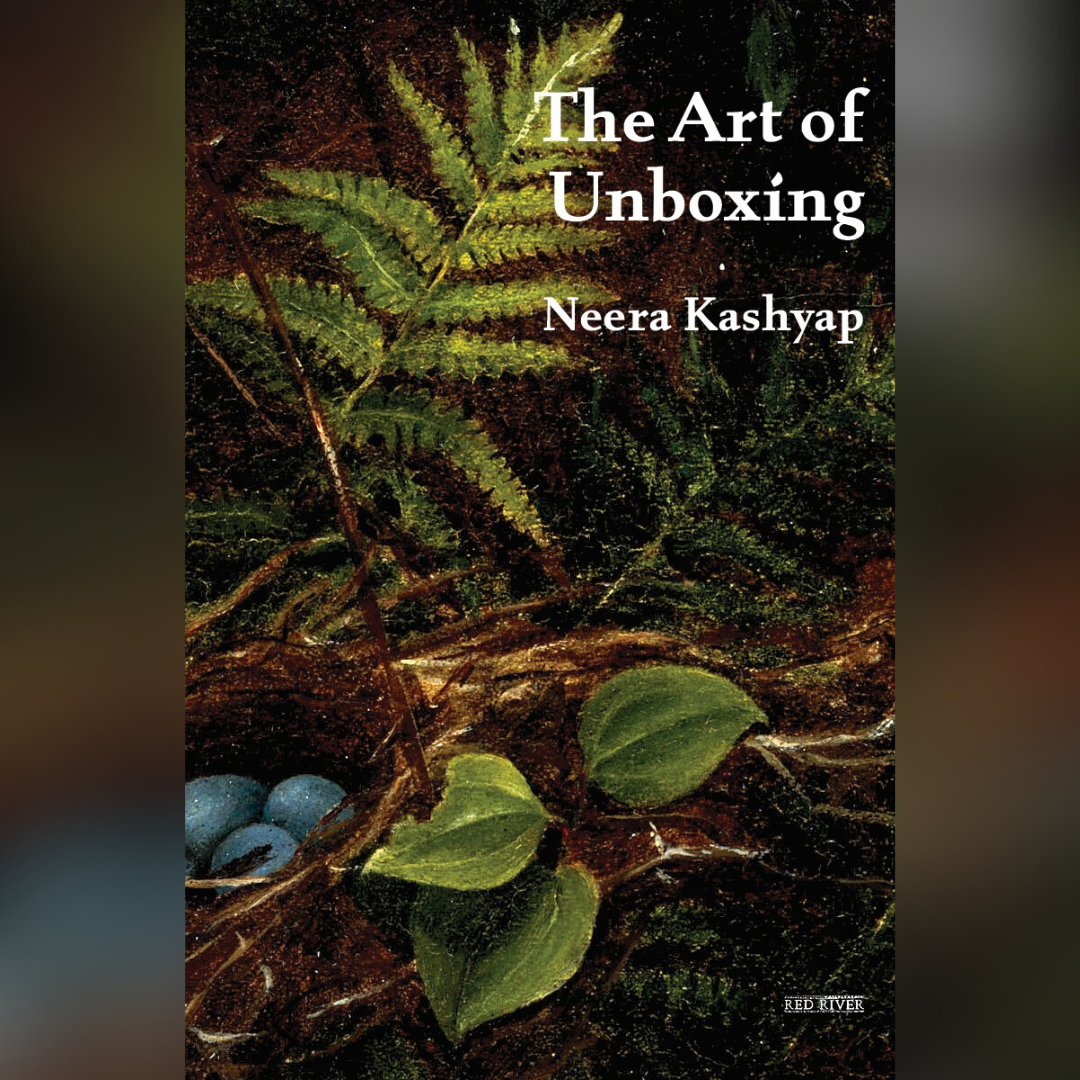
Neera Kashyap’s The Art of Unboxing is a debut collection of poems drawn from a decade of reading, writing and reviewing poetry. The poems move beyond the visible world to explore deeper questions of life, identity, and existence.
This is a collection shaped by meditative attention, where fleeting moments often open into deeper reflection. Kashyap has a keen eye for nature and the way it reveals mystery, life, and livingness itself. The Himalayas, in particular, seem deeply present in her imagination, and through rivers, forests, rain, birds and mountains, she takes readers on journeys that are both physical and deeply intimate. Her work moves through nature and human emotion as if the two are inseparable, part of the same breath. These poems quietly remind us that nature is not something distant or decorative, but something that lives within us and alongside us.
The poems pare body, mind and soul down to their essentials. Strong physical images gradually become symbols carrying emotional and spiritual meaning. What begins in the visible world slowly moves toward something quieter and more universal. Kashyap guides readers from sensation to reflection, from certainty to mystery, and from everyday experience to a larger sense of existence.
The first section, “The Sky in the Puddle”, introduces this movement beautifully. The imagery feels vivid and real, yet also fluid and dissolving. A puddle reflects the sky, a drifting leaf becomes one with the earth, and even an empty gift box gathers emotional weight. Through these images, the poems hold together opposites—movement and stillness, presence and absence, body and spirit.
Many poems in the collection are about searching, not for new places, but for a new way of seeing. Kashyap explores ideas of eternity, inner truth and spiritual connection. Some poems recognise the uncertainty and indifference of life, yet they also point toward acceptance, self-awareness and inner balance.
Nature remains central throughout the book. Trees, seeds, rivers and mountains are not just landscapes but reflections of humanity’s emotional and spiritual condition. In poems about ecological destruction and hatred, Kashyap suggests that the harm done to nature mirrors the damage people inflict upon themselves.
The collection also examines illusion and identity. Mirrors, masks and personas appear repeatedly, reminding readers how often people hide behind appearances and social roles. The poems suggest that real understanding begins only when these layers are stripped away.
Some of the most moving poems revolve around the poet’s mother. In ‘Stories’ and ‘Farewell by the River’, personal grief expands into a meditation on memory, continuity and death. Death is presented not as an ending, but as a return to something larger and timeless. Everyday objects such as an earthen pot or river water become vessels carrying memory, inheritance and connection.
Kashyap also writes about inequality, displacement, and the lives of women. Her poems portray women carrying burdens quietly and enduring violence, labour and invisibility, yet continuing with resilience and dignity. Even while acknowledging suffering, the poems hold on to the possibility of hope, harmony and healing.
In the final sections, the collection becomes more inward-looking. The poems dwell on silence, reflection, longing and self-discovery.
The “unboxing” of the title ultimately becomes spiritual, a gradual uncovering of the self through letting go of illusion, noise, and attachment. At times, the recurring movement toward transcendence and inner stillness creates a sameness in tone across sections, though this also reflects the poet’s sustained spiritual vision. Through simple yet layered language, Kashyap creates poems that are calm, searching, and deeply contemplative.
The Art of Unboxing can be purchased here.

Born in Allahabad, schooled for a time in the UK, Anjana Basu has to date published ten novels and two books of poetry. Her novel Curses in Ivory was published by HarperCollins in 2003. In 2004, she was awarded a Hawthornden Fellowship in Scotland, where she worked on her second novel, Black Tongue, published by Roli in 2007. She began writing for children in 2010 when Roli brought out Chinku and the Wolfboy. Her Jim Corbett’s ghost series for TERI deals with big cat conservation for children—the fourth in the series, Hide and Seek Tiger, was published in June 2019. Conspiracy of Aunts, her first adult novel after years, was brought out by Readomania in the same month. Her byline has appeared in Outlook and Outlook Traveller. She has worked on the dialogues for the Amitabh Bachchan starrer The Last Lear, directed by Rituparno Ghosh. Anjana Basu lives and works as an advertising consultant in Calcutta.