India’s rich and vibrant culture can only be delved through the kaleidoscope of the country’s marvelous village spirit. From time immemorial, artwork has been an integral part of our immensely diversified culture, a doctrine looked upon as a talisman by village folks who maintain it as a root of their life with unparalleled tenacity.
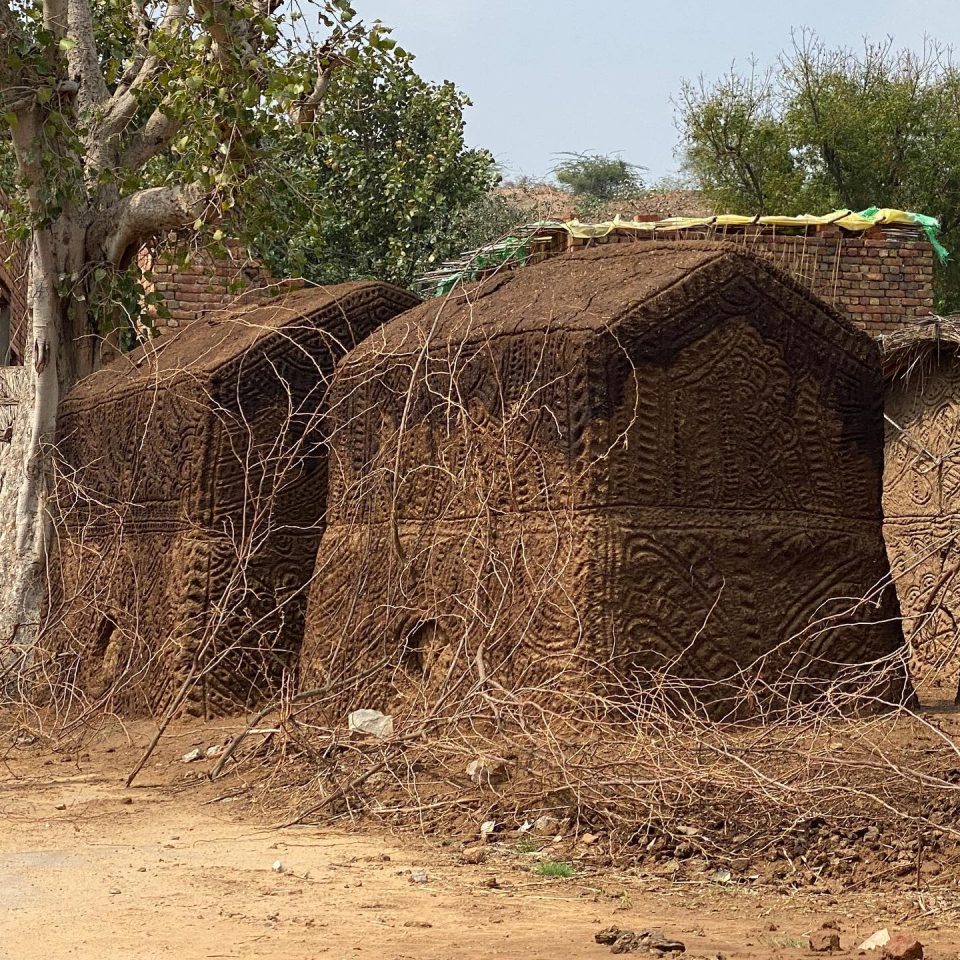
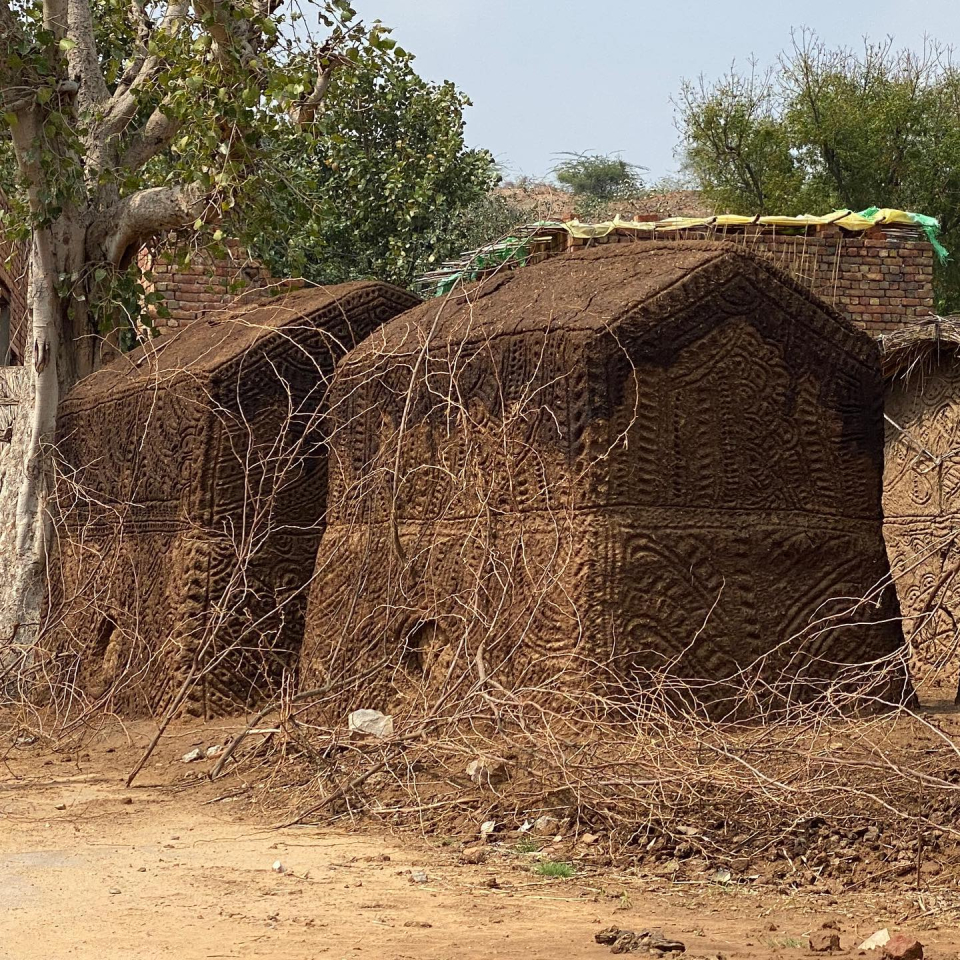
Such a specimen of art is beautifully and meticulously showcased in remote pockets of rural India, like in western Uttar Pradesh’s Mathura district. Besides being the country’s religious epicenter where streets and lanes are teeming with devout pilgrims and devotees bathed in an untainted Krishna Bhakti, the place boasts of being the abode of a unique tradition. The village women here are credited with designing a special form of handicraft—a storehouse of cow dung cakes. Locally known as bitoda, bitaura or bathiya in western parts of Uttar Pradesh, this is a unique testimony of a legacy handed down from the past.
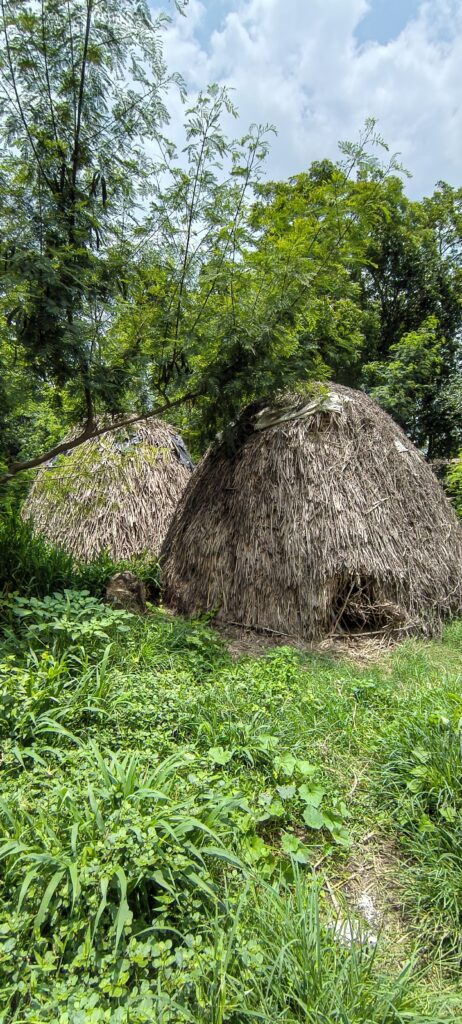
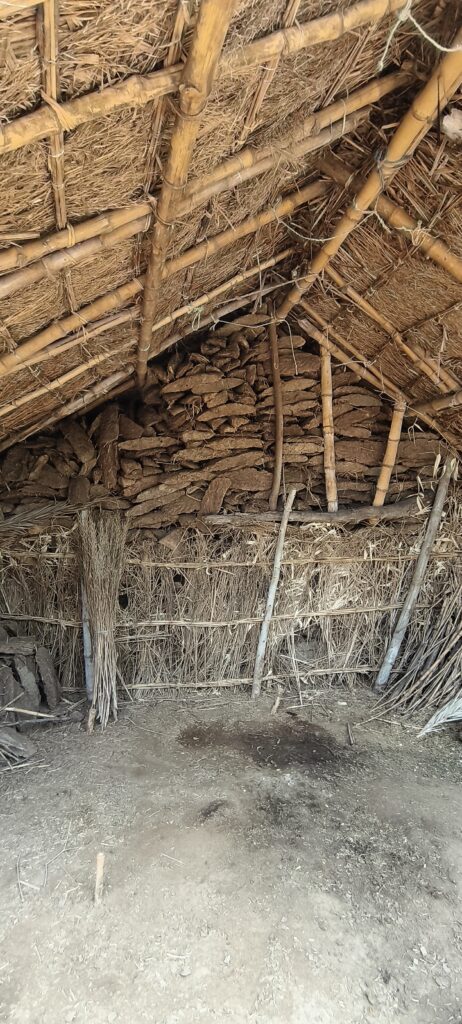
A bitoda is constructed in the month of January. After the cow dung cakes are heaped in proper shape and order, a thick layer of cow dung paste is plastered on them giving the case of cow dung cakes their desirable shapes, some like huts, oblong and perfect triangular-roofed.
The ornamental outer surface displays well-crafted designs of flowers, peacocks and other traditional faiths and beliefs from Indian mythology, such as Lord Hanuman lifting a mountain, or Lord Krishna playing the flute. On the completion of a bitoda, a puja is solemnised maintaining rituals followed by distributing sweets. For the village folks a bitoda is the symbol of good fortune and benediction that drives away poverty, protecting the household from the miseries of life.
Peacocks are often found perched atop the bitodas in the month of shravan (monsoon), confirming a belief that they protect those eggs from snakes which are very often laid by peahens inside them.
Quite surprisingly, a bitoda is never constructed within the compound of a house, maintaining its sanctity. An emblem of sanctity and good fortune, a bitoda is meant to be away from all kinds of household mess, thus maintaining its reverential status.
Humble and hard-working as the village folk are, living in this fertile terrain of western Uttar Pradesh, the singsong of their life chants the odes of honesty and devotion. Locally known as kanda, the cow dung cakes are kept securely inside the protective shelter of the bitoda to be used year-round by the villagers.
Thus, Mathura, besides being the abode of untainted spirituality and religious fervour, evokes a dynamic sense of aesthetic beauty and this ritualistic structure of bitoda is its testimony.
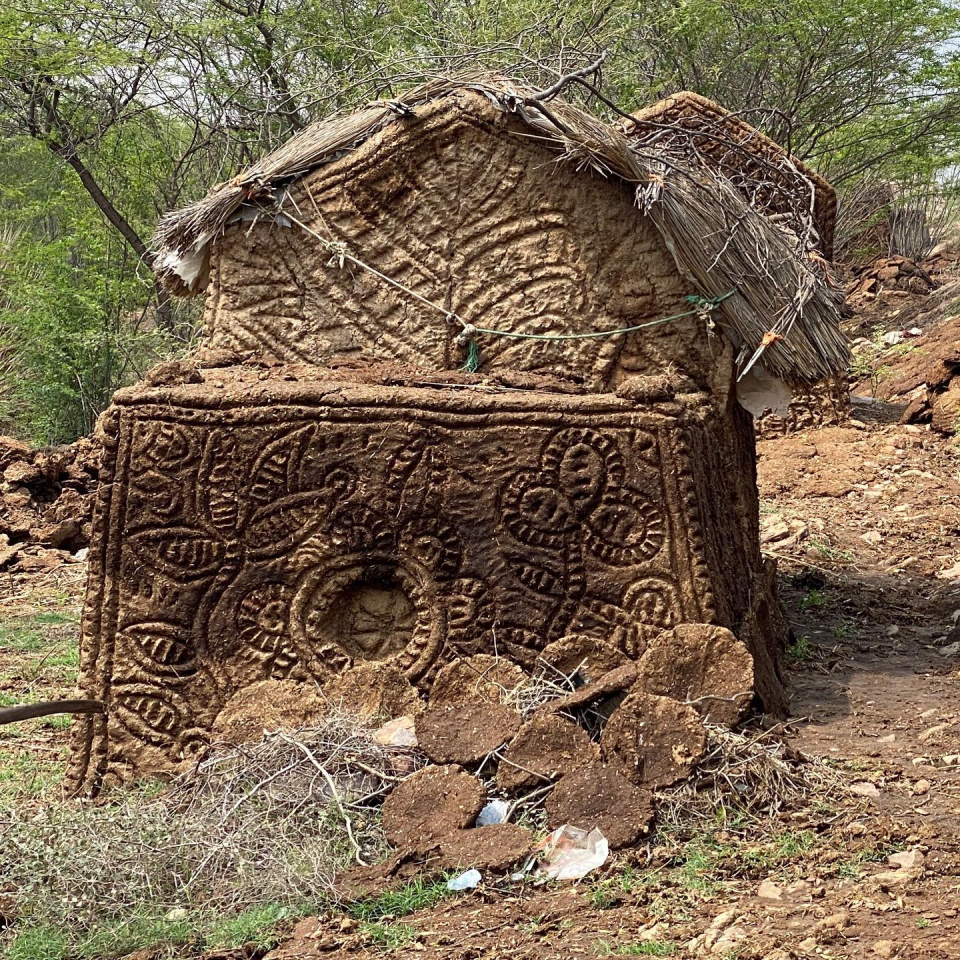
Cow-dung storage in Braj, by Rohan Shivkumar (Architexturez Newsletters). Used for representative and educational purposes under Title 17 U.S.C. § 107 (Non-Profit Fair Use).
Photos by Dhananjay Trivedi
Debasish Banerjee writes from India.